Naval oceanographers and Arctic-route planners now operate the ex-RV Petrel, whose record of deep recoveries gives the service an immediate edge in seabed mapping north of the Bering Strait.
Advertisement
Advertisement
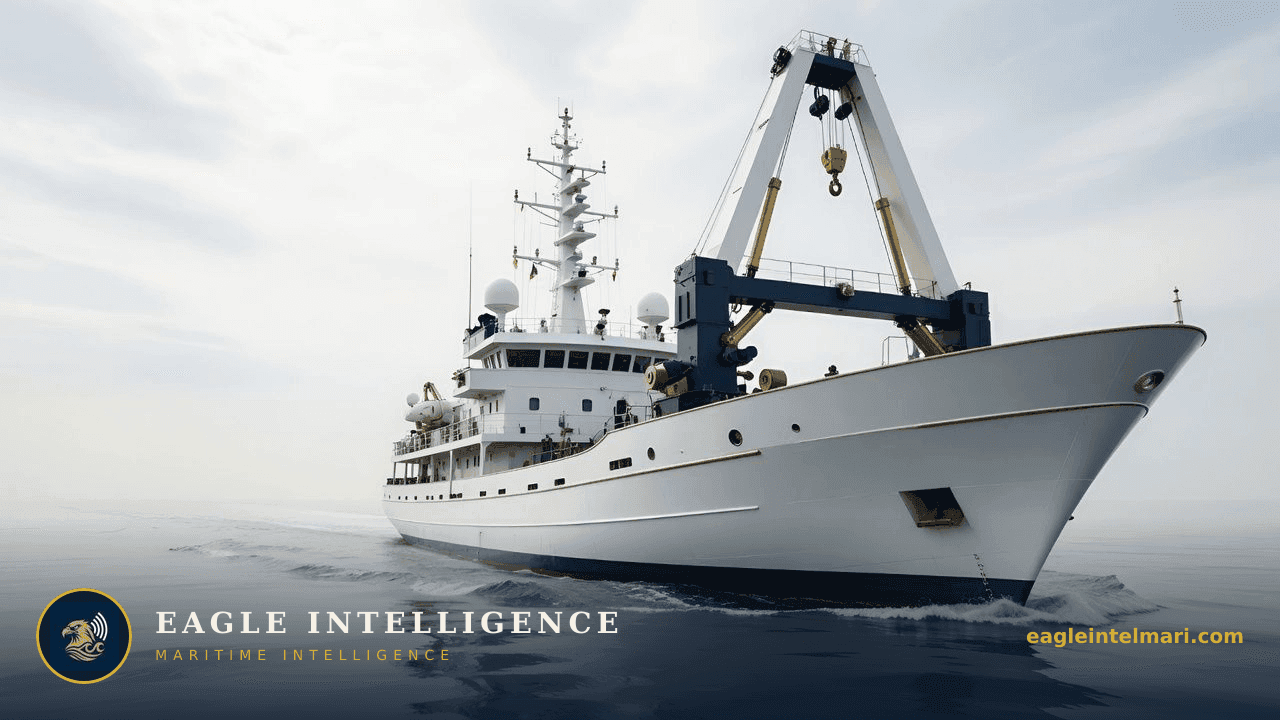
Naval planners tracking Arctic sea-lane development now hold a proven deep-ocean asset after the service acquired Paul Allen’s former research vessel and renamed it MV Sarah Lynn.
The Navy purchased the vessel in 2022 for $12.5 million. Service officials confirmed the identity after Sarah Lynn completed work off Alaska earlier this year. The 250-foot platform had previously located USS Indianapolis, USS Juneau, IJN Kaga, USS Lexington, USS Wasp and USS Hornet at depths that remain beyond most commercial survey spreads.
At $12.5 million the Navy acquired a ship already fitted with heavy-duty ROV systems, dynamic positioning and long-endurance fuel capacity. These features normally command far higher charter rates on the open market; the low acquisition cost reflects a private-sale transaction rather than a competitive bid. For hull insurers the move resets the vessel’s valuation benchmark for similar former superyacht conversions.
Sarah Lynn’s Alaska deployment signals priority focus on the Bering and Chukchi shelves. Naval oceanographers require updated bathymetry to support future surface and submarine transits as ice cover recedes. Charterers watching Northern Sea Route economics now face a data set that could shorten voyage planning cycles by weeks once new charts are released.
The transition places former Petrel technicians under Navy civilian or contractor status. Manning agencies that rotate deep-water ROV pilots through the Gulf of Mexico or North Sea will see demand rise for personnel already cleared for classified seabed work. P&I clubs covering research vessels should expect notification of the new operating authority and revised war-risk endorsements.
Removal of one of the few privately owned vessels capable of 6,000-meter recoveries tightens availability for energy companies planning pipeline or cable route surveys. Owners still marketing similar tonnage can expect modest upward pressure on day rates, particularly for projects requiring both sidescan sonar and precision ROV intervention.
The U.S. Navy has repeatedly absorbed civilian research platforms during periods of rapid Arctic interest; the 1960s conversion of the icebreaker Burton Island offers the closest precedent. In both cases the service gained immediate deep-water competence without waiting for new construction, yet the ships arrived with maintenance profiles already shaped by private ownership.
Watch for the next public notice of Sarah Lynn’s operating area or any follow-on ROV deployment; that announcement will reveal whether the Navy intends to treat the vessel as a permanent Arctic asset or a flexible surge hull.
Advertisement
Advertisement
⚠️ Intelligence Disclaimer: This analysis is produced by Eagle Intelligence's AI-assisted automated analysis system and is provided for informational purposes only. See our editorial standards. It is not a substitute for official maritime safety advisories from UKMTO, MSCHOA, IMO, or flag state authorities. Operational decisions should always be based on official guidance and professional judgment. Eagle Intelligence accepts no liability for any loss arising from reliance on this content.
Live chokepoint status, war-risk shifts, and the daily maritime wire, straight to your inbox. Free.
Leave a comment
All comments moderated for quality
