Baltic LNG operators and their insurers must now decide whether to reroute, arm escorts or accept combatant status for Russian energy hulls after Estonia documented heavy machine guns on one of Moscow’s key carriers.
Advertisement
Advertisement
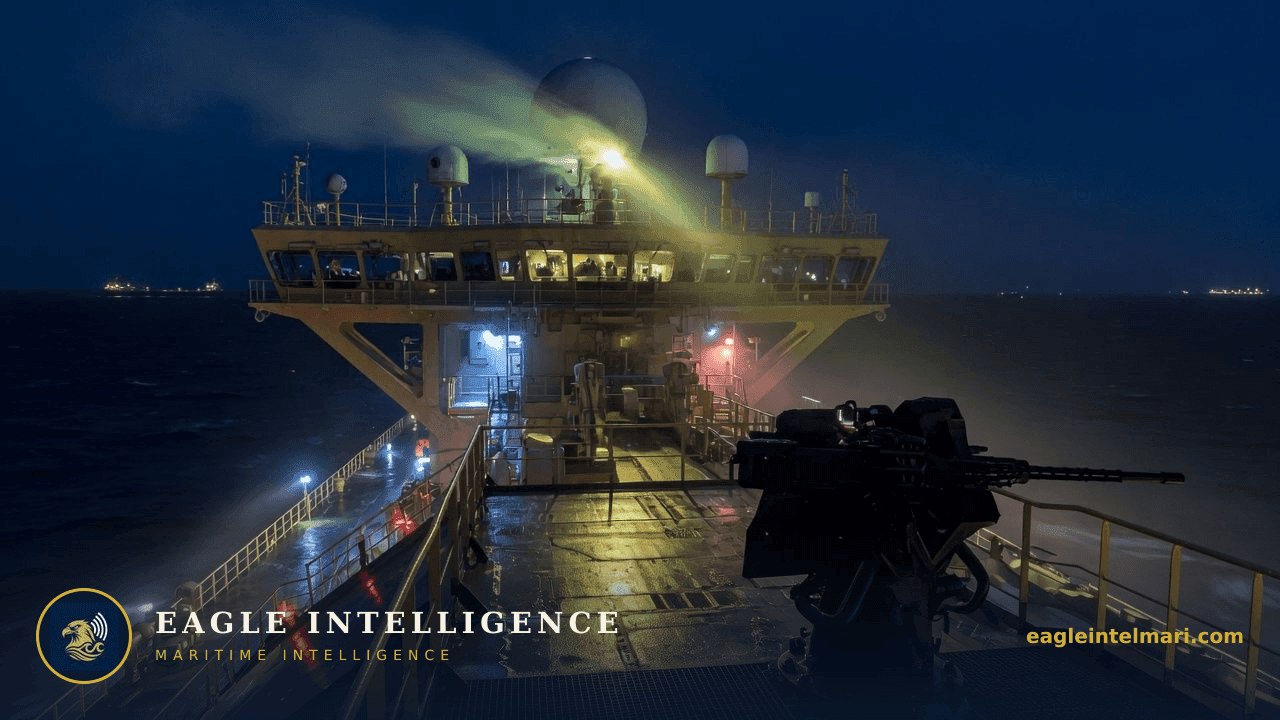
Owners and underwriters with exposure in the Gulf of Finland now confront an immediate routing and insurance decision after Estonian border photographs showed heavy machine guns mounted on a Russian Arc7-class LNG carrier.
The images, released 29 June 2026, capture what appear to be at least two pintle-mounted heavy machine guns on the weather deck of an LNG tanker transiting near Estonian waters. The vessel belongs to the small fleet that moves Yamal LNG cargoes westward when the Northern Sea Route is closed. No prior public record exists of Russian state energy carriers carrying crew-served weapons in the Baltic; the step crosses a line previously observed only with naval auxiliaries.
For owners of non-Russian LNG tonnage sharing the same narrow channels, the practical question is whether ports in Finland and Estonia will now apply enhanced security checks or simply decline Russian-linked vessels. Charterers holding contracts with Novatek or Rosneft face force-majeure language that may be triggered by “militarized merchant vessels.” P&I clubs, already quoting elevated Baltic war-risk premiums, must recalculate whether this configuration voids standard cover or triggers the war-risk exclusion clause.
The move echoes Russia’s 2022–2023 practice of placing small arms teams aboard grain carriers in the Black Sea before the grain corridor collapsed. Those teams were later withdrawn after Turkish and Ukrainian protests; the Baltic deployment appears more permanent and is occurring in waters bordered by NATO members. The difference in legal status is material: the Black Sea grain ships were under Turkish inspection, while the Baltic offers no comparable neutral gatekeeper.
Manning agencies supplying officers to Arc7 vessels will now confront refusals from crew who view the weapons as turning the ship into a legitimate target. Some masters may demand armed-guard teams of their own, pushing daily operating costs above $12,000. Alternative routing via the Danish Straits remains open but adds four to six days and exposes vessels to additional scrutiny from Swedish and Danish authorities already tightening reporting rules for Russian-flagged or Russian-managed tonnage.
Estonia and Finland have both signaled they will treat any further sightings as a security incident. If similar mountings appear on additional Yamal carriers, Tallinn could move to close its territorial sea to the class entirely under Article 19 of UNCLOS, forcing traffic into a narrower corridor already used by NATO surface groups. Russia’s choice of flag—currently Cyprus and Liberia for several units—may also come under pressure; both registries have withdrawn cover from sanctioned vessels in the past.
Hull and machinery underwriters are expected to attach new endorsements within days requiring declaration of any weapons fit. War-risk syndicates at Lloyd’s have already circulated draft wording that classifies any LNG carrier mounting crew-served weapons as a “de facto naval auxiliary.” That classification would lift premiums by an estimated 35–50 basis points for the remainder of the policy year.
Track whether additional Arc7 or Arc5 LNG carriers receive the same fit-out during their next Baltic transit window in July; any second confirmed sighting will likely trigger coordinated NATO statements and a formal review by the Baltic Sea states’ maritime authorities.
Advertisement
Advertisement
Live 1–5 shipping war-risk level across monitored chokepoints.
⚠️ Intelligence Disclaimer: This analysis is produced by Eagle Intelligence's AI-assisted automated analysis system and is provided for informational purposes only. See our editorial standards. It is not a substitute for official maritime safety advisories from UKMTO, MSCHOA, IMO, or flag state authorities. Operational decisions should always be based on official guidance and professional judgment. Eagle Intelligence accepts no liability for any loss arising from reliance on this content.
Live chokepoint status, war-risk shifts, and the daily maritime wire, straight to your inbox. Free.
Leave a comment
All comments moderated for quality
