The blockade is formally lifted under a 60-day memorandum, yet U.S. naval units stay on station to police compliance while nuclear talks resume.
Advertisement
Advertisement
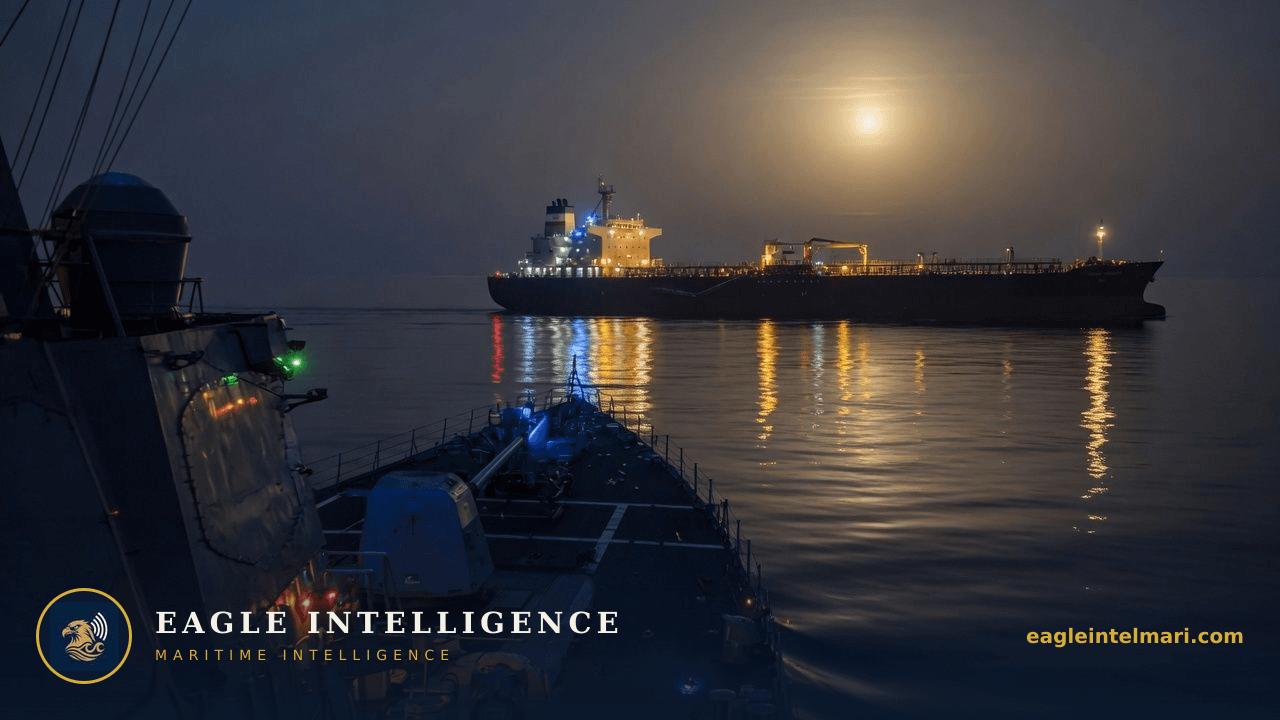
U.S. Central Command’s terse X post confirming the blockade’s end also locked in a continuing surface-group presence, shifting the risk profile from outright closure to monitored compliance over the next sixty days.
The announcement explicitly states that naval assets will remain “to make sure that all aspects of the agreement are adhered to.” This language moves the mission from blockade enforcement to verification and rapid-response interdiction if violations occur. Operators now treat the remaining carrier strike group and destroyers as a de-facto floating inspection regime rather than a barrier.
Tehran and Washington have sixty calendar days to convert the memorandum into a longer-term framework covering enrichment limits and inspection access. Any extension beyond that date will require fresh political capital in both capitals; markets are therefore pricing a binary outcome at the end of August. Charterers booking August and September liftings are inserting 72-hour cancellation clauses tied to the expiry.
Hull and war-risk underwriters have already begun quoting reduced but non-zero additional premiums for transits inside 100 nm of Iranian territorial waters. The fact that a U.S. surface action group remains on station keeps the “war-like acts” clause active on most policies, preventing a full return to pre-2024 rating levels. P&I clubs are expected to issue their first circular on the new exposure within 72 hours.
With the physical barrier removed, Iranian and Saudi VLCCs have resumed daylight transits through the Strait; the 11 million barrels cited earlier are now moving under normal daylight pilotage. Several Greek and Norwegian owners have re-flagged one or two vessels to Marshall Islands or Liberia for the next two months to avoid any Iranian-linked port-state complications once the MOU period ends.
Bandar Abbas and Jubail have both reopened 24-hour berthing slots. The immediate bottleneck has shifted from naval interdiction to terminal throughput and ullage availability after weeks of suppressed loadings. Feeder operators serving smaller Gulf ports are accelerating vessel repositioning to capture the sudden surge in intra-Gulf parcels.
If enrichment talks produce a verifiable cap by mid-August, war-risk premiums could drop another 30–40 percent and the surface group could be thinned to a single destroyer squadron. A stalemate or Iranian walk-out would likely trigger selective re-boarding operations and a spike in fixtures avoiding the Strait altogether. A partial deal that freezes but does not roll back enrichment would probably leave the current force posture unchanged and keep premiums elevated through the autumn.
Advertisement
Advertisement
Indicative Additional War Risk Premium (AWRP) ranges — not a binding insurance quote.
Live Hormuz transit status and war-risk band.
Live 1–5 shipping war-risk level across monitored chokepoints.
⚠️ Intelligence Disclaimer: This analysis is produced by Eagle Intelligence's AI-assisted automated analysis system and is provided for informational purposes only. See our editorial standards. It is not a substitute for official maritime safety advisories from UKMTO, MSCHOA, IMO, or flag state authorities. Operational decisions should always be based on official guidance and professional judgment. Eagle Intelligence accepts no liability for any loss arising from reliance on this content.
Live chokepoint status, war-risk shifts, and the daily maritime wire, straight to your inbox. Free.
Leave a comment
All comments moderated for quality
