A US-Iran memorandum keeps the door ajar for tolls in the Strait of Hormuz after sixty days, with President Trump asserting Washington rather than Tehran will hold collection rights.
Advertisement
Advertisement
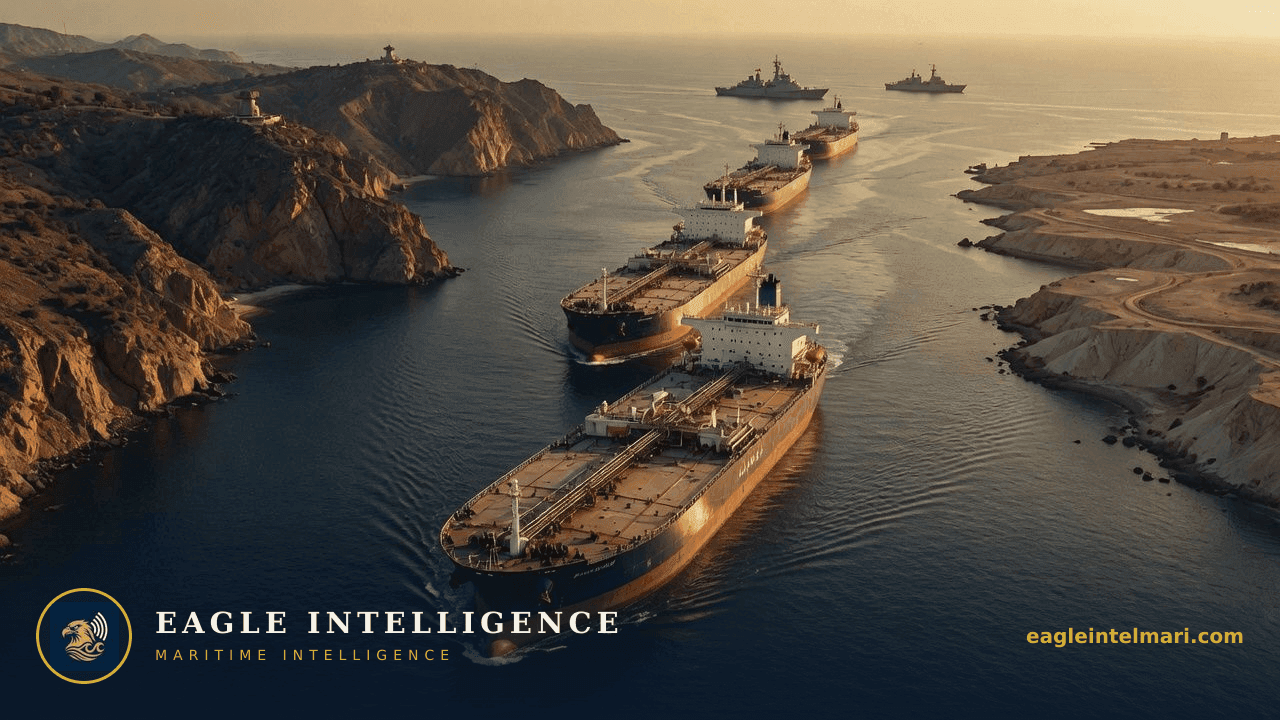
The latest US-Iran understanding leaves the Strait of Hormuz under an ambiguous revenue-sharing regime that could reshape every VLCC and Suezmax fixture from the Gulf within weeks.
The memorandum explicitly preserves the option for tolls once the initial grace period ends. Trump’s public statements frame this as a US prerogative, effectively warning Tehran that any Iranian attempt to impose its own charges would breach the understanding. The distinction matters because Hormuz handles roughly one-fifth of global oil and condensate movements; even a modest per-barrel levy would alter the delivered cost of Middle East crude into Europe and Asia.
Operators fixing cargoes for August loading are already inserting new clauses that allocate responsibility for any future Hormuz transit fee. Charterers with Eastbound VLCC stems are the most exposed, because alternative routing around the Cape adds 12–14 days and roughly $1.8 million in extra fuel and hire at current bunker prices. Several large Asian refiners have begun exploring partial diversions via the East Africa route on a trial basis, testing whether the added cost can be absorbed without triggering force-majeure provisions downstream.
War-risk underwriters in London and Singapore moved within hours of the announcement to widen Hormuz loadings by 8–12 basis points for vessels transiting after the 60-day mark. P&I clubs are reviewing whether any new toll regime would constitute a “government act” that could shift liability for delays or seizures onto owners rather than clubs. The precedent of the 1980s Iran-Iraq “Tanker War” suggests that once transit fees become politicised, detention and confiscation risks rise sharply for vessels whose flags are perceived as aligned with one side.
Liberia and Panama, which together flag more than 35 percent of the Hormuz tanker fleet, have quietly begun consultations with owners on contingency registries. Several operators have asked whether a US-backed toll could be treated as a lawful transit due under UNCLOS, thereby shielding vessels from Iranian retaliation. In parallel, Omani and Emirati port authorities are modelling surge capacity at Fujairah and Khor Fakkan should a significant share of eastbound tonnage elect to lighter or transship outside the strait to avoid disputed fees.
Brent-WTI spreads have already widened two dollars on the possibility that any US toll would be passed through to delivered prices in Asia. Freight derivatives for July–September VLCCs on the Ras Tanura–Ningbo route have risen 15 percent since the announcement, reflecting both the risk premium and the prospect of reduced tonnage availability if owners park vessels outside the Gulf. LNG carriers are less immediately affected but charterers of Qatari megaships are monitoring whether a toll precedent could migrate to the Strait of Malacca or other chokepoints.
If Washington and Tehran maintain the current understanding, a modest US-administered toll of roughly 15–20 cents per barrel could be introduced in September, generating several hundred million dollars annually while deterring Iranian freelancing. A second scenario sees Tehran testing the limits by levying its own “security surcharge” on non-US-flagged vessels, prompting a rapid spike in war-risk premiums and possible naval escorts. The third, lower-probability path involves outright rejection of any toll regime, with both sides reverting to the pre-memorandum status quo of free transit and heightened naval presence. The decisive trigger in each case will be the first documented attempt by either party to collect revenue after the 60-day window closes.
Advertisement
Advertisement
Live Hormuz transit status and war-risk band.
Live 1–5 shipping war-risk level across monitored chokepoints.
⚠️ Intelligence Disclaimer: This analysis is produced by Eagle Intelligence's AI-assisted automated analysis system and is provided for informational purposes only. See our editorial standards. It is not a substitute for official maritime safety advisories from UKMTO, MSCHOA, IMO, or flag state authorities. Operational decisions should always be based on official guidance and professional judgment. Eagle Intelligence accepts no liability for any loss arising from reliance on this content.
Live chokepoint status, war-risk shifts, and the daily maritime wire, straight to your inbox. Free.
Leave a comment
All comments moderated for quality
