Greek owners are shifting vessels nearer the Strait in anticipation of renewed access and exceptional earnings, a move that exposes multiple parties to rapid shifts in risk and reward.
Advertisement
Advertisement
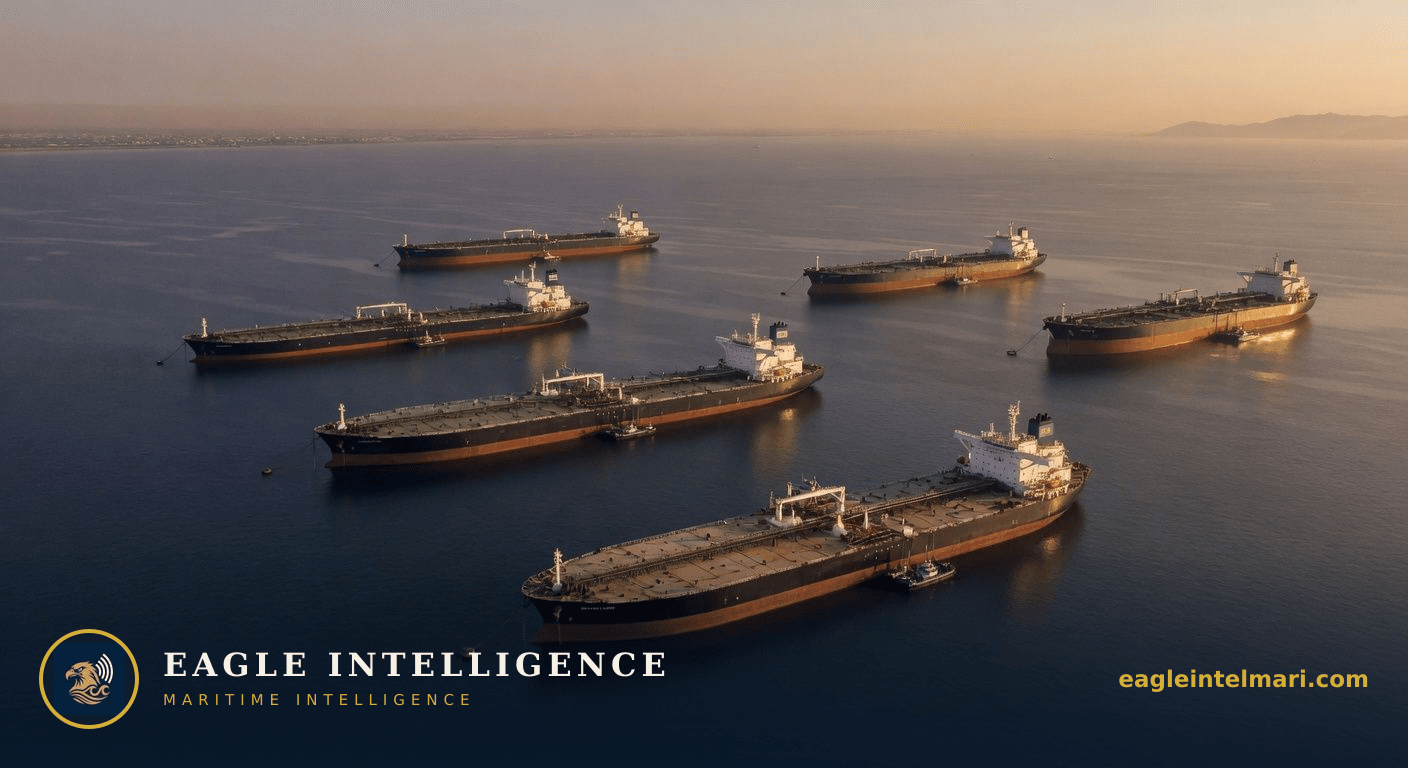
Greek tanker owners are shifting vessels closer to the Persian Gulf entrance, positioning for what they calculate will be a short-lived window of elevated rates once the Strait of Hormuz reopens.
Owners are accepting the cost of idle time and higher insurance near a contested waterway in exchange for the prospect of capturing peak spot earnings. The tactic reflects a belief that any reopening will be abrupt and that the first vessels able to load will command outsized premiums from anxious charterers.
Historical precedents show that even brief reopenings after Hormuz tensions have lifted VLCC rates by 150-300 percent within days. Owners now weigh daily fuel and crew costs against the possibility of securing fixtures at levels last seen during the 2019-2020 flare-ups, when some voyages exceeded $300,000 per day. The wager hinges on timing rather than volume; a one-week reopening could generate enough revenue to offset weeks of positioning losses.
Oil traders and refiners must decide whether to lock in tonnage now at elevated but certain prices or risk waiting for post-reopening supply that may not materialize quickly enough to meet delivery windows. Those with Asian discharge obligations are particularly exposed, as alternative routes around the Cape add 12-18 days and erode margins on Middle East crude.
P&I clubs and hull underwriters are already fielding queries about coverage limits for vessels lingering near the Strait. Premiums have risen sharply in recent weeks; any reopening announcement is likely to trigger immediate downward adjustments, rewarding owners who maintained cover during the positioning phase. Those who let policies lapse face gaps that could prove costly if incidents occur in the final hours before access is restored.
Crews on repositioned tankers confront extended periods in a high-threat zone with limited shore leave and heightened security protocols. Flag states, especially those with large Greek-managed fleets, may face pressure to issue guidance or temporary restrictions if tensions persist, adding another layer of operational friction.
A swift reopening within 30 days would validate the Greek positioning play and flood the market with prompt tonnage, quickly eroding the rate spike. A prolonged closure beyond 90 days would turn the wager into a cash-burn exercise, forcing owners to divert vessels toward West African or Latin American loadings. An oscillating access regime—partial openings punctuated by renewed restrictions—would sustain elevated volatility, benefiting only those operators with flexible charters and robust war-risk coverage.
Advertisement
Advertisement
Live Hormuz transit status and war-risk band.
Live 1–5 shipping war-risk level across monitored chokepoints.
⚠️ Intelligence Disclaimer: This analysis is produced by Eagle Intelligence's AI-assisted automated analysis system and is provided for informational purposes only. See our editorial standards. It is not a substitute for official maritime safety advisories from UKMTO, MSCHOA, IMO, or flag state authorities. Operational decisions should always be based on official guidance and professional judgment. Eagle Intelligence accepts no liability for any loss arising from reliance on this content.
Live chokepoint status, war-risk shifts, and the daily maritime wire, straight to your inbox. Free.
Leave a comment
All comments moderated for quality
