The Strait of Hormuz shutdown has forced a sharp rerouting of crude and product carriers through the Suez Canal, pushing April transits nearly 30% higher and revenues to their strongest level since early 2024.
Advertisement
Advertisement
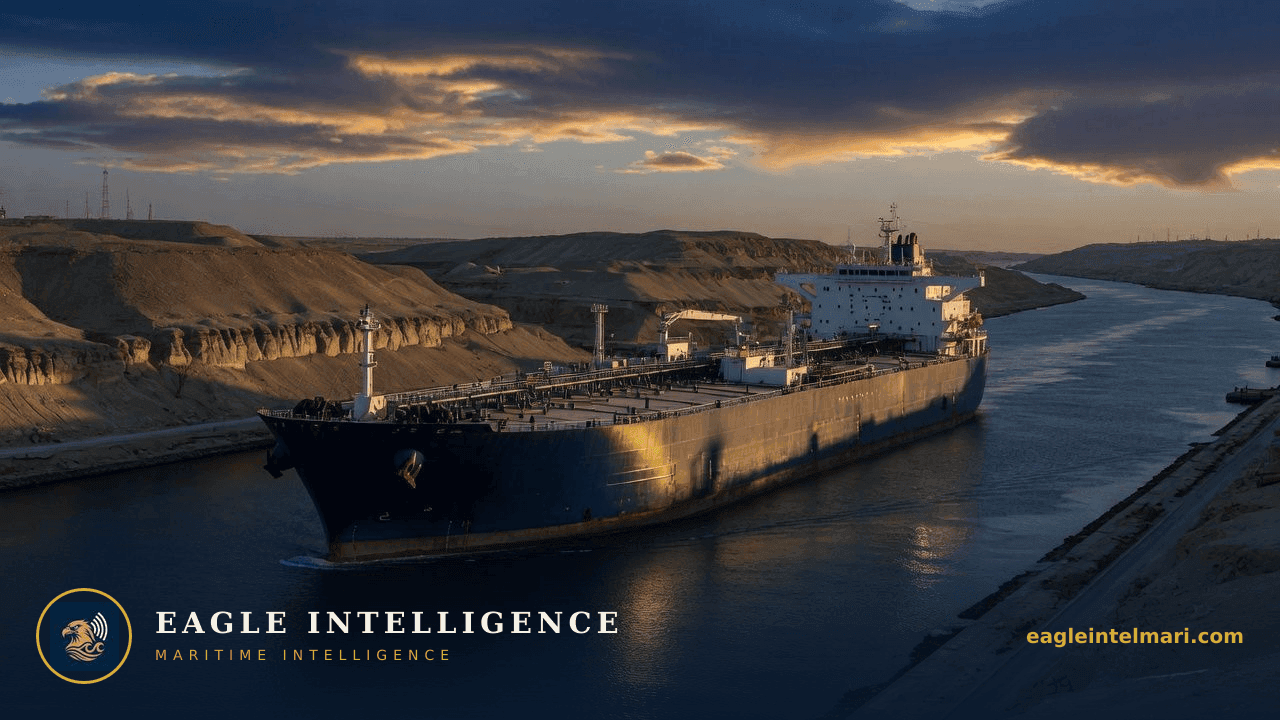
The abrupt closure of the Strait of Hormuz has triggered an immediate and measurable shift in global oil-tanker routing, with the Suez Canal recording an almost one-third surge in laden and ballast oil-tanker transits during April and generating the highest monthly revenue since the first quarter of 2024.
Oil originating from the Persian Gulf must now reach Asian, European and North American markets via the longer Cape or Suez routes. April data show the canal captured a disproportionate share of that diverted volume, particularly VLCCs and Suezmaxes carrying Middle East crude to the Mediterranean and Northwest Europe. The Red Sea passage adds roughly 12–15 days compared with the Hormuz-to-Arabian Sea leg, yet remains shorter and cheaper than the full Cape route for most destinations west of Singapore.
Egyptian authorities recorded the strongest oil-tanker receipts in 27 months. At prevailing SCNT tariffs, the additional 30% volume equates to an extra $12–15 million in monthly income, partially offsetting earlier losses from Red Sea security disruptions. However, the authority remains vulnerable: any renewed Houthi threat or further escalation could again empty the waterway of laden tonnage within weeks.
Owners of modern VLCCs and Suezmaxes have seen spot rates on the Ras Tanura–Suez–Mediterranean route climb 18–22% since the Hormuz closure was confirmed. Charterers, particularly Mediterranean refiners and European utilities, have absorbed higher freight and extended voyage times, prompting some to switch to West African or Brazilian grades. Time-charter fixtures for 2026 delivery now carry war-risk clauses that were largely dormant only six months ago.
P&I clubs and hull war-risk underwriters moved first, widening the additional-premium zone to encompass the entire southern Red Sea and Gulf of Aden. Rates for a typical 300,000 dwt VLCC have risen from 0.08% to 0.22% of hull value per transit. Several clubs have introduced voyage-specific deductibles tied to missile or drone incidents, shifting more residual risk onto owners who elect to continue using the canal.
Seafarers’ unions have issued fresh guidance urging members to exercise the right to refuse passage through the extended high-risk area. Some owners have begun offering 25–30% danger-money uplifts and mandatory crew-change rotations at Suez or Djibouti, adding further cost layers that charterers are resisting in current fixtures.
If Hormuz remains closed beyond August, the canal could sustain 25–30% higher oil-tanker volumes, pushing annual revenues above $1.1 billion and locking in elevated war-risk premiums through year-end. A rapid diplomatic reopening would trigger an immediate reversal, with Gulf loadings resuming via the strait and Suez traffic falling back toward pre-crisis averages within 30–45 days. A partial or intermittent closure—marked by occasional safe-passage windows—would produce the most volatile outcome: erratic tonnage swings, frequent rate spikes, and sustained high insurance costs as the market prices daily uncertainty.
Advertisement
Advertisement
Live Hormuz transit status and war-risk band.
Live 1–5 shipping war-risk level across monitored chokepoints.
⚠️ Intelligence Disclaimer: This analysis is produced by Eagle Intelligence's AI-assisted automated analysis system and is provided for informational purposes only. See our editorial standards. It is not a substitute for official maritime safety advisories from UKMTO, MSCHOA, IMO, or flag state authorities. Operational decisions should always be based on official guidance and professional judgment. Eagle Intelligence accepts no liability for any loss arising from reliance on this content.
Live chokepoint status, war-risk shifts, and the daily maritime wire, straight to your inbox. Free.
Leave a comment
All comments moderated for quality