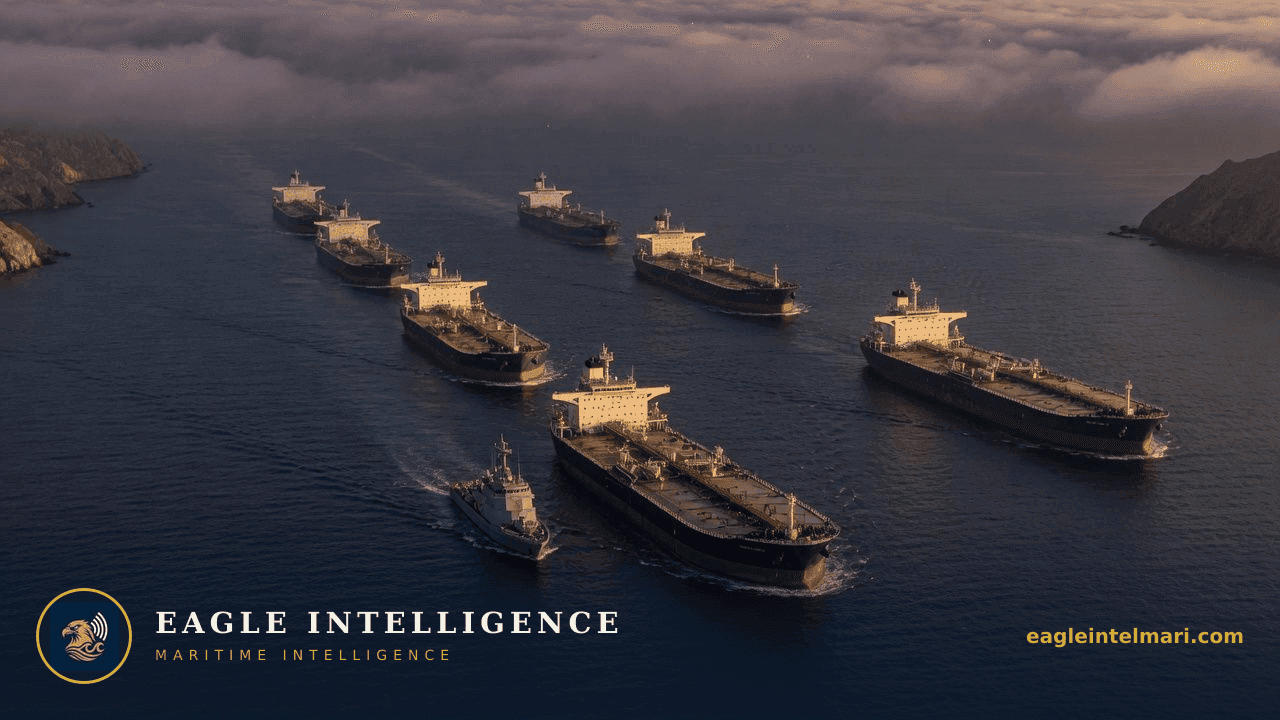
Vessels now face two distinct operational and regulatory tracks through the Strait of Hormuz, forcing owners and charterers to weigh route choice against insurance, timing and exposure.
Advertisement
Advertisement
Shipowners and charterers are confronting a practical bifurcation in Hormuz transits, where the choice of route now carries different compliance, insurance and scheduling consequences.
Hull and P&I underwriters have begun differentiating premiums and conditions according to the path declared in the voyage plan. One corridor aligns with longstanding traffic-separation protocols while the second appears to operate under additional reporting or escort expectations. This split forces risk managers to model two separate exposure profiles for the same cargo movement.
Time-charter and voyage-charter contracts are already showing disputes over which route satisfies “usual and customary” language. Charterers seeking to minimise delay push for the faster lane; owners resist when the alternative route triggers higher war-risk premiums or crew objections. Several fixture negotiations have stalled this month over clauses that allocate the incremental cost of the second regime.
Seafarers’ unions and flag administrations are reviewing whether transit under the second set of rules requires updated risk assessments or additional compensation. Some registries have quietly advised masters to log the chosen lane and any accompanying instructions, creating a paper trail that could affect future port-state inspections or insurance claims.
The added friction at Hormuz has begun to widen the spread between West and East of Suez tanker rates. Energy traders are pricing in longer effective voyage times and higher war-risk surcharges for cargoes that must declare the more restrictive route. Forward curves for June–August loadings already reflect a modest but measurable premium for vessels electing the standard lane.
If both regimes remain stable, operators will settle into parallel scheduling systems with predictable cost differentials. A sudden tightening of one lane—through new reporting mandates or physical constraints—would accelerate diversion to the other route and spike spot rates. A broader closure or insurance embargo on either corridor would force longer-haul alternatives around the Cape or via pipeline swaps, reshaping both crude and product flows for the balance of the year.
Advertisement
Advertisement
Live Hormuz transit status and war-risk band.
Live 1–5 shipping war-risk level across monitored chokepoints.
⚠️ Intelligence Disclaimer: This analysis is produced by Eagle Intelligence's AI-assisted automated analysis system and is provided for informational purposes only. See our editorial standards. It is not a substitute for official maritime safety advisories from UKMTO, MSCHOA, IMO, or flag state authorities. Operational decisions should always be based on official guidance and professional judgment. Eagle Intelligence accepts no liability for any loss arising from reliance on this content.
Live chokepoint status, war-risk shifts, and the daily maritime wire, straight to your inbox. Free.
Leave a comment
All comments moderated for quality
