EU Naval Forces data show seven hijacks already this year and three vessels still held for ransom, indicating Somali piracy groups have rebuilt operational depth and financing lines.
Advertisement
Advertisement
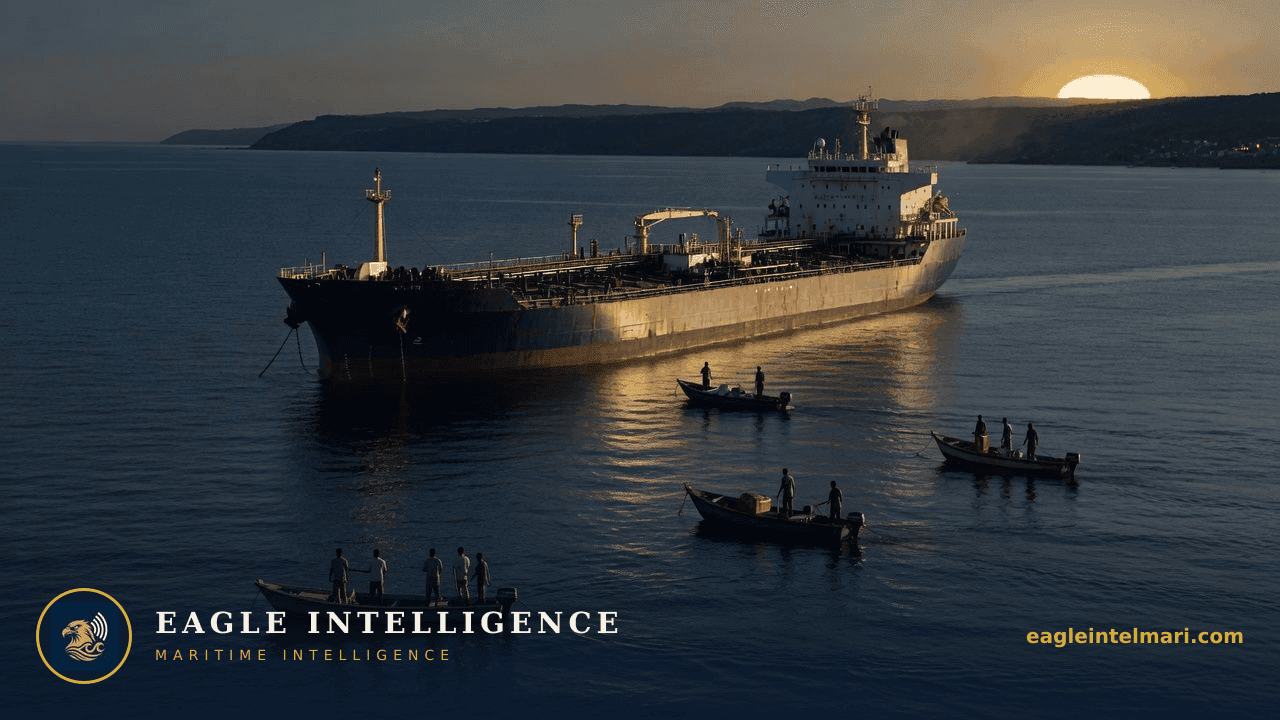
EU Naval Forces briefings delivered in early June reveal a clear resurgence of Somali piracy, with seven successful hijacks recorded since January and three ships plus their crews still anchored off the coast awaiting ransom negotiations.
The seven incidents span cargo dhows, fishing vessels and product tankers, showing that pirate groups are no longer limiting themselves to slow, low-freeboard targets. Tanker seizures in particular signal renewed ability to operate farther offshore and to handle larger crews, a capability that had largely atrophied after 2012.
As of the first week of June, three ships remain under pirate control. Their prolonged detention indicates that ransom demands are being calibrated to current market realities rather than the inflated figures seen during the 2008–2012 peak. Owners and P&I clubs are therefore facing extended negotiation timelines and the logistical challenge of crew relief and supply deliveries under armed escort.
Hull and war-risk underwriters have already begun widening the high-risk zone east of longitude 55°E. Early indications point to a 30–50 percent rise in additional premiums for transits inside the revised area, with some syndicates applying seasonal loadings tied to monsoon windows when skiff activity historically spikes. Charterers are absorbing part of the increase through rider clauses that shift the cost once a vessel crosses the new threshold.
Dhow operators trading between Oman, Yemen and East Africa report sharply higher insurance deductibles and some banks refusing letters of credit for voyages that skirt the Somali basin. Larger container and bulk carriers are diverting an extra 200–300 nautical miles south of the usual lanes, adding roughly two days and $80,000 in fuel and time-charter costs per round voyage. Commodity traders moving gasoil and jet fuel into the Red Sea are already embedding these delays into June and July pricing.
Seafarers aboard the detained vessels include mixed nationalities typical of regional dhow traffic; their prolonged captivity raises both humanitarian and legal questions for flag states that have limited consular reach in Somalia. Several P&I clubs have activated their seafarers’ rights clauses, triggering daily hardship payments while simultaneously pressing owners to conclude negotiations before fatigue or health issues escalate.
The pattern mirrors 2005–2006, when pirate clans first consolidated protection rackets around fishing grounds before graduating to larger tonnage. Today’s groups appear to benefit from similar financing networks, now augmented by diaspora remittances and informal fuel-trading profits. EU Naval Forces assess that the absence of sustained international naval presence since 2023 has allowed these structures to re-form faster than anticipated.
If naval patrols remain at current levels and no fresh ransom payments are confirmed by August, activity is likely to plateau with sporadic dhow seizures only. A single high-value tanker ransom settled above $3 million would, however, finance additional skiff groups and push hijack numbers toward fifteen by year-end. Should monsoon conditions combine with reduced naval coverage, the most aggressive scenario sees coordinated attacks on slow-moving tankers inside the Gulf of Aden itself, forcing a rapid reintroduction of convoy systems and a further spike in insurance rates.
Advertisement
Advertisement
Indicative Additional War Risk Premium (AWRP) ranges — not a binding insurance quote.
Live 1–5 shipping war-risk level across monitored chokepoints.
⚠️ Intelligence Disclaimer: This analysis is produced by Eagle Intelligence's AI-assisted automated analysis system and is provided for informational purposes only. See our editorial standards. It is not a substitute for official maritime safety advisories from UKMTO, MSCHOA, IMO, or flag state authorities. Operational decisions should always be based on official guidance and professional judgment. Eagle Intelligence accepts no liability for any loss arising from reliance on this content.
Live chokepoint status, war-risk shifts, and the daily maritime wire, straight to your inbox. Free.
Leave a comment
All comments moderated for quality
