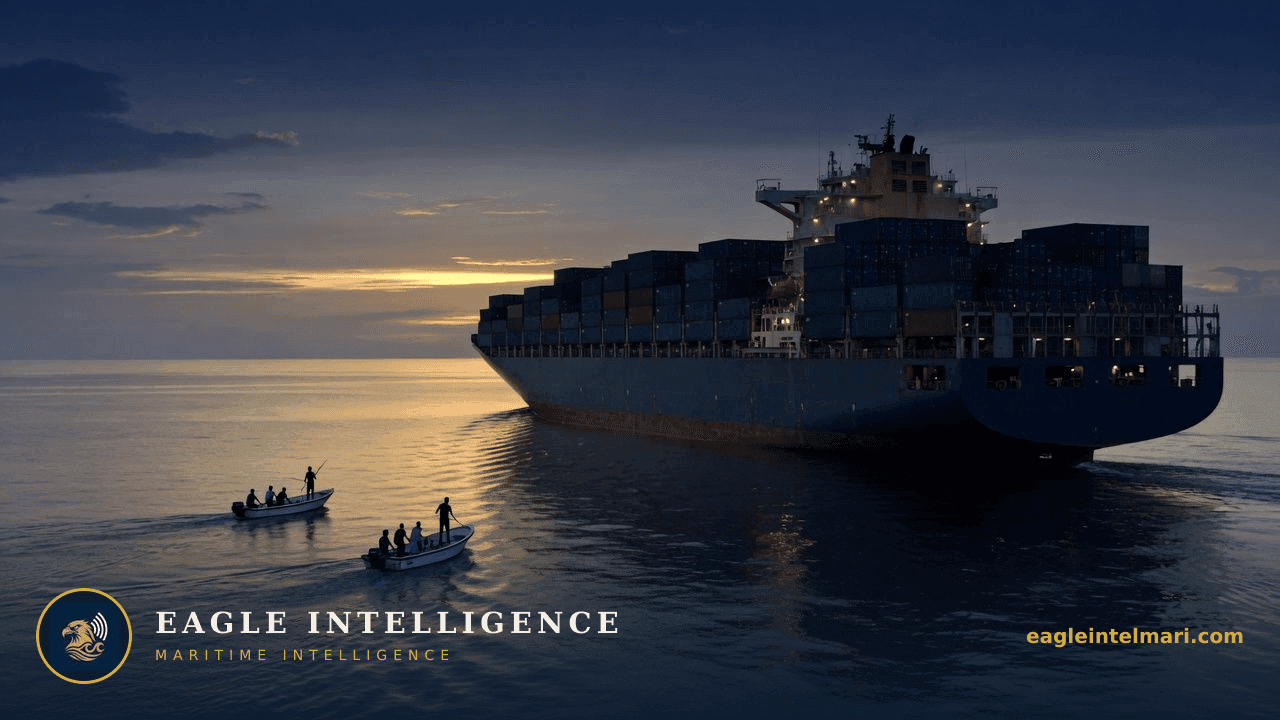
A transiting vessel was approached by armed pirates off Yemen, underscoring the re-emergence of Somali piracy after years of relative calm in the Gulf of Aden.
Advertisement
Advertisement
A commercial vessel was approached by armed pirates off Yemen in an incident that aligns with a documented resurgence of Somali piracy activity in the Gulf of Aden over recent months.
The Gulf of Aden remains one of the narrowest chokepoints on the Europe-Asia trade lane, funnelling roughly 10 percent of global seaborne oil and a far larger share of container and bulk volumes. Any uptick in pirate activity forces masters and charterers to weigh the direct costs of rerouting against the slower but steadier exposure of remaining inside the risk envelope. Historical precedent from 2008-2012 shows how quickly a handful of successful boardings can shift the entire calculus for owners and their insurers.
Masters now face pressure to increase speed, post additional lookouts, and activate citadel procedures even on routine passages. Private maritime security teams, largely stood down after 2015, are being re-engaged on short-notice contracts. Some operators have already instructed vessels to maintain at least 18 knots through the western Gulf of Aden, adding measurable fuel burn on eastbound and westbound legs alike.
War-risk underwriters are expected to widen the existing high-risk area or introduce supplemental piracy loadings within weeks. Hull and machinery policies may follow with higher deductibles or outright exclusions for vessels lacking approved security measures. P&I clubs, which absorbed much of the crew and liability exposure during the last cycle, are already circulating updated circulars reminding members of best-management-practice obligations.
Seafarers transiting the area are reporting elevated anxiety levels, with unions flagging the psychological toll of prolonged high-alert passages. Retention risk is rising fastest among junior officers and ratings on smaller operators that lack robust security budgets. Flag states with large crews in the region, particularly those under open registries, face quiet diplomatic pressure to accelerate naval coordination.
Charterers of time-chartered tonnage are already seeking clauses that shift piracy-related deviation costs back to owners. Energy traders moving crude and refined products from the Arabian Gulf to Europe are modelling a potential 3-5 day extension via the Cape route should the threat curve steepen. Dry-bulk operators carrying grain and coal face thinner margins and less flexibility to absorb extra steaming days.
If naval presence and embarked teams remain limited, the number of approaches could climb toward the 2009-2010 pattern, triggering broad war-risk declarations. A second pathway sees flag states and regional navies quietly expand patrols, capping incidents at nuisance level without restoring full confidence. The third, and currently least likely, scenario involves a single high-profile hijacking that forces a sudden, sustained spike in insurance premiums and forces a measurable share of traffic around the Cape for the remainder of 2026.
Advertisement
Advertisement
Live 1–5 shipping war-risk level across monitored chokepoints.
⚠️ Intelligence Disclaimer: This analysis is produced by Eagle Intelligence's AI-assisted automated analysis system and is provided for informational purposes only. See our editorial standards. It is not a substitute for official maritime safety advisories from UKMTO, MSCHOA, IMO, or flag state authorities. Operational decisions should always be based on official guidance and professional judgment. Eagle Intelligence accepts no liability for any loss arising from reliance on this content.
Live chokepoint status, war-risk shifts, and the daily maritime wire, straight to your inbox. Free.
Leave a comment
All comments moderated for quality
