A new Congressional Research Service assessment details the steady rise in combined Russian-Chinese naval exercises and patrols across the Asia-Pacific, directly affecting commercial routing, insurance pricing and force-protection decisions for vessels transiting the region.
Advertisement
Advertisement
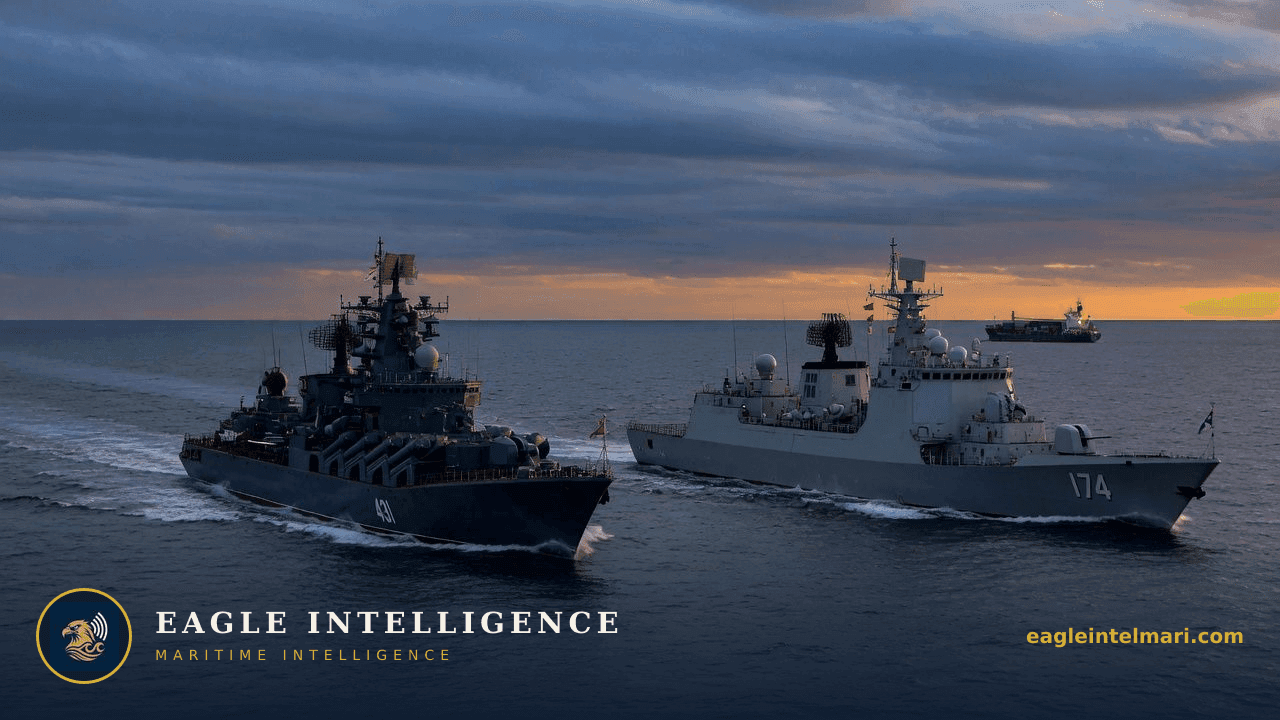
Russia’s deepening naval coordination with China is moving from symbolic gestures to sustained operational presence in waters that carry one-third of global container traffic.
The June 2026 CRS report records a clear uptick in coordinated surface and submarine activity since 2022, with task groups operating near the Tsushima Strait, the Luzon Strait and the approaches to the Malacca Strait. These routes handle the majority of Northeast Asian energy imports and European-bound exports; any sustained presence raises the probability of accidental close-quarters encounters with merchant vessels.
Several large container and LNG operators have begun adding 12-18 hours of steaming time by routing south of the Philippines or east of Japan when Russian-Chinese drills are announced. The incremental fuel and schedule cost is still modest, yet it is now factored into quarterly bunker budgets and charter-party clauses that allow deviation without penalty when military activity is declared.
Hull and war-risk underwriters are quietly widening the geographic scope of their Asia-Pacific exclusion zones. Premiums for transits through the East China Sea and northern Philippine Sea have increased 15-25 basis points year-on-year, with further adjustments expected once the next renewal cycle incorporates the CRS findings. P&I clubs are also reviewing whether current kidnap-and-ransom wordings adequately cover detention arising from sovereign naval interdiction.
The report’s emphasis on live-fire serials and electronic-warfare drills underscores elevated risk for crews. Several Greek and Japanese managers have begun offering hazard bonuses for passages through the Sea of Japan and the Yellow Sea, while others are accelerating the rotation of Filipino and Ukrainian ratings away from vessels likely to be routed through exercise areas.
Tokyo and Manila have both signaled they will increase warship and coast-guard presence during announced Russian-Chinese serials. Singapore and Hong Kong port authorities are considering enhanced notice requirements for vessels arriving from exercise zones, potentially adding 24-48 hours of administrative delay. The flag states of convenience most used by bulk carriers have yet to issue guidance, leaving owners to decide whether voluntary reporting to local naval coordination centers is prudent.
If the current tempo continues without incident, commercial adaptation will remain incremental and largely absorbed in freight rates. A single collision or aggressive intercept would likely trigger a sharp, short-term spike in war-risk premiums and force several operators to reroute around the entire Philippine archipelago. A broader U.S. or allied naval response, perhaps involving freedom-of-navigation assertions timed with the next round of exercises, could compress available sea room and raise the daily cost of insurance by an order of magnitude for any vessel still accepting the northern routes.
Advertisement
Advertisement
Indicative Additional War Risk Premium (AWRP) ranges — not a binding insurance quote.
Live 1–5 shipping war-risk level across monitored chokepoints.
⚠️ Intelligence Disclaimer: This analysis is produced by Eagle Intelligence's AI-assisted automated analysis system and is provided for informational purposes only. See our editorial standards. It is not a substitute for official maritime safety advisories from UKMTO, MSCHOA, IMO, or flag state authorities. Operational decisions should always be based on official guidance and professional judgment. Eagle Intelligence accepts no liability for any loss arising from reliance on this content.
Live chokepoint status, war-risk shifts, and the daily maritime wire, straight to your inbox. Free.
Leave a comment
All comments moderated for quality
