Legal disclosures show Mercuria secured Hormuz transits for crude via direct government arrangements, highlighting how select traders are maintaining flows while private operators face sharply elevated risks during the Iran conflict.
Advertisement
Advertisement
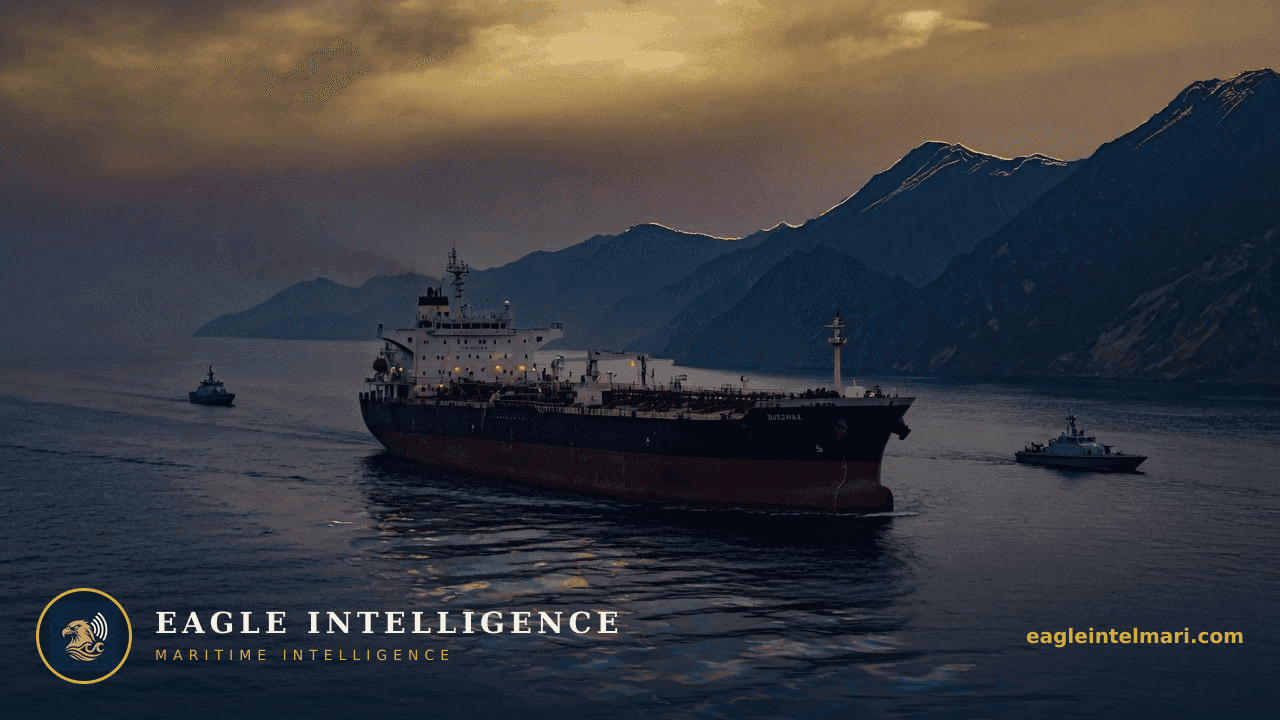
Mercuria Energy Group has continued moving oil through the Strait of Hormuz by relying on government-brokered arrangements, according to court filings that offer a rare window into wartime commodity logistics.
The filings indicate that Mercuria’s cargoes moved under explicit state facilitation rather than standard charter-party terms. In a contested chokepoint where roughly 20 percent of global oil supply normally transits, such deals effectively substitute sovereign guarantees for commercial insurance and flag-state protection. This model allows selected traders to maintain volume while the majority of independent operators wait for clearer risk parameters.
Charterers without access to similar state backing now face a bifurcated landscape. Spot fixtures for Hormuz loadings have thinned dramatically, with many owners demanding voyage-by-voyage renegotiation or outright refusal. The result is a visible split between a narrow group of state-linked traders and the broader commercial fleet, echoing the division seen in sanctioned Russian crude movements after 2022 but compressed into a far more kinetic environment.
Hull and P&I underwriters are already adjusting terms. Policies covering Hormuz transits now routinely exclude government-brokered cargoes or attach heavy additional premiums that only state-backed entities can absorb. This pricing shift protects insurer balance sheets but also accelerates the withdrawal of standard commercial tonnage, tightening available liftings for non-favored players and pushing some cargoes onto older, lower-spec vessels.
The situation recalls the 1984–1988 Tanker War, when both Iran and Iraq targeted neutral shipping yet certain flag arrangements and naval escorts allowed limited flows to continue. Today’s government deals appear to replicate that selective protection function without requiring visible naval convoys, reducing the political cost of direct intervention while still enabling crude to reach buyers willing to accept the opacity.
Seafarers on vessels outside these arrangements face rising pressure. Several flags have quietly advised masters to avoid the strait unless under sovereign protection, creating crewing shortages for remaining commercial voyages. Flag states balancing commercial tonnage with reputational risk are quietly steering owners toward alternative routes around the Cape, adding roughly 12–15 days to Asia-bound voyages and driving up bunker consumption at a time when fuel prices remain elevated.
If Iranian forces maintain current targeting patterns and no broader naval escalation occurs, government-brokered volumes could stabilize at 300,000–500,000 barrels per day by late summer, sufficient to ease some Asian refinery pressure but not enough to restore normal freight differentials. A second pathway opens if one or more additional traders secure comparable state cover, gradually widening the two-tier market and pulling more older tonnage back into service. The third scenario sees a single high-profile incident involving a non-protected vessel, triggering a rapid spike in war-risk rates above $1 million per transit and forcing even state-linked movements to pause while naval postures are reassessed.
Advertisement
Advertisement
Live Hormuz transit status and war-risk band.
Live 1–5 shipping war-risk level across monitored chokepoints.
⚠️ Intelligence Disclaimer: This analysis is produced by Eagle Intelligence's AI-assisted automated analysis system and is provided for informational purposes only. See our editorial standards. It is not a substitute for official maritime safety advisories from UKMTO, MSCHOA, IMO, or flag state authorities. Operational decisions should always be based on official guidance and professional judgment. Eagle Intelligence accepts no liability for any loss arising from reliance on this content.
Live chokepoint status, war-risk shifts, and the daily maritime wire, straight to your inbox. Free.
Leave a comment
All comments moderated for quality
