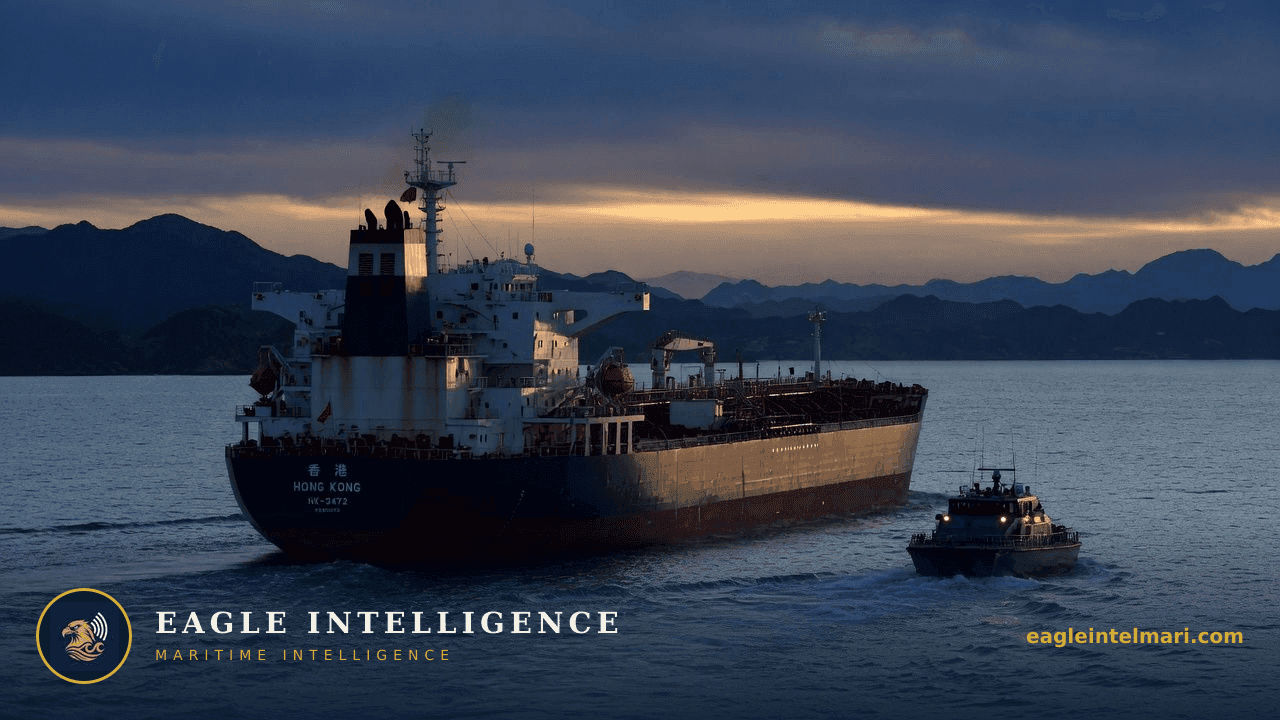
A Hong Kong tanker came under attack in the Strait of Hormuz hours before a possible US-Iran peace accord, showing that maritime violence has not paused for diplomacy.
Advertisement
Advertisement
A Hong Kong tanker came under attack in the Strait of Hormuz hours before a possible US-Iran peace accord, showing that maritime violence has not paused for diplomacy.
Even with negotiators reportedly close to initialling a deal within 24 hours, the strait continues to register direct strikes on merchant hulls. The latest incident follows a pattern in which proxy or state-linked actors treat the narrow waterway as an asymmetric pressure valve, able to impose costs without triggering open naval clashes. Tanker operators therefore cannot treat diplomatic timelines as operational safety guarantees.
Hong Kong-flagged vessels already carry elevated war-risk loadings; this strike will accelerate charterer demands for convoy routing or longer Cape voyages. For owners locked into period charters, the immediate question is whether force-majeure clauses activate and who absorbs the extra bunker and time costs. Those able to pivot ballast legs toward the Cape or the Cape-plus-Suez combination will likely see utilisation drop as spot cargoes shift to larger, better-protected tonnage.
Hull and P&I underwriters will watch for any Iranian denial or tacit acceptance before the next renewal window. A single unattributed hit has historically lifted VLCC war-risk premiums by 30-50 basis points within days; sustained incidents could push the Hormuz add-on above the $100,000-per-vessel mark again. Reinsurers are already modelling a 10-14 day “noise period” during which claims are expected to spike even if the political track improves.
Hong Kong crews and third-country ratings on similar tonnage will face fresh pressure from unions and families to refuse Hormuz transits. Manning agencies report rising numbers of seafarers invoking the right to refuse dangerous voyages when the same strait is simultaneously the subject of peace-talk headlines. Retention bonuses and hazard pay are likely to reappear in next-month contracts.
Hong Kong’s maritime authority now confronts a direct test of its reputation for safety oversight. Neighbouring flag states may impose additional security declarations or even temporary routing restrictions for their own tonnage, creating a patchwork of compliance that slows traffic further. Omani and Emirati ports, already sensitive to queue lengths, will monitor whether the incident triggers any closure or inspection surge.
If the accord is signed within the reported 24-hour window and Tehran publicly reins in proxies, attacks could fall to nuisance level within two weeks, restoring normal VLCC flows. Should the deal stall or suffer immediate spoiler incidents, a second wave of strikes becomes probable, pushing average transit delays to 10-12 days and forcing widespread Cape diversions. A third, more volatile path sees low-level harassment continue regardless of signature, keeping war-risk markets elevated through the summer and permanently shifting some Middle East crude to non-Hormuz export routes.
Advertisement
Advertisement
Live Hormuz transit status and war-risk band.
Live 1–5 shipping war-risk level across monitored chokepoints.
⚠️ Intelligence Disclaimer: This analysis is produced by Eagle Intelligence's AI-assisted automated analysis system and is provided for informational purposes only. See our editorial standards. It is not a substitute for official maritime safety advisories from UKMTO, MSCHOA, IMO, or flag state authorities. Operational decisions should always be based on official guidance and professional judgment. Eagle Intelligence accepts no liability for any loss arising from reliance on this content.
Live chokepoint status, war-risk shifts, and the daily maritime wire, straight to your inbox. Free.
Leave a comment
All comments moderated for quality
