The Black Sea chokepoint registered the clearest movement this week as Ukrainian drone attacks expanded beyond Russian shadow fleet targets to Western-affiliated vessels operating under the G7 price cap, forcing immediate questions over routing, insurance pricing and crew willingness to transit. Red Sea attacks continued in parallel but produced no comparable shift in established patterns.
Advertisement
Advertisement
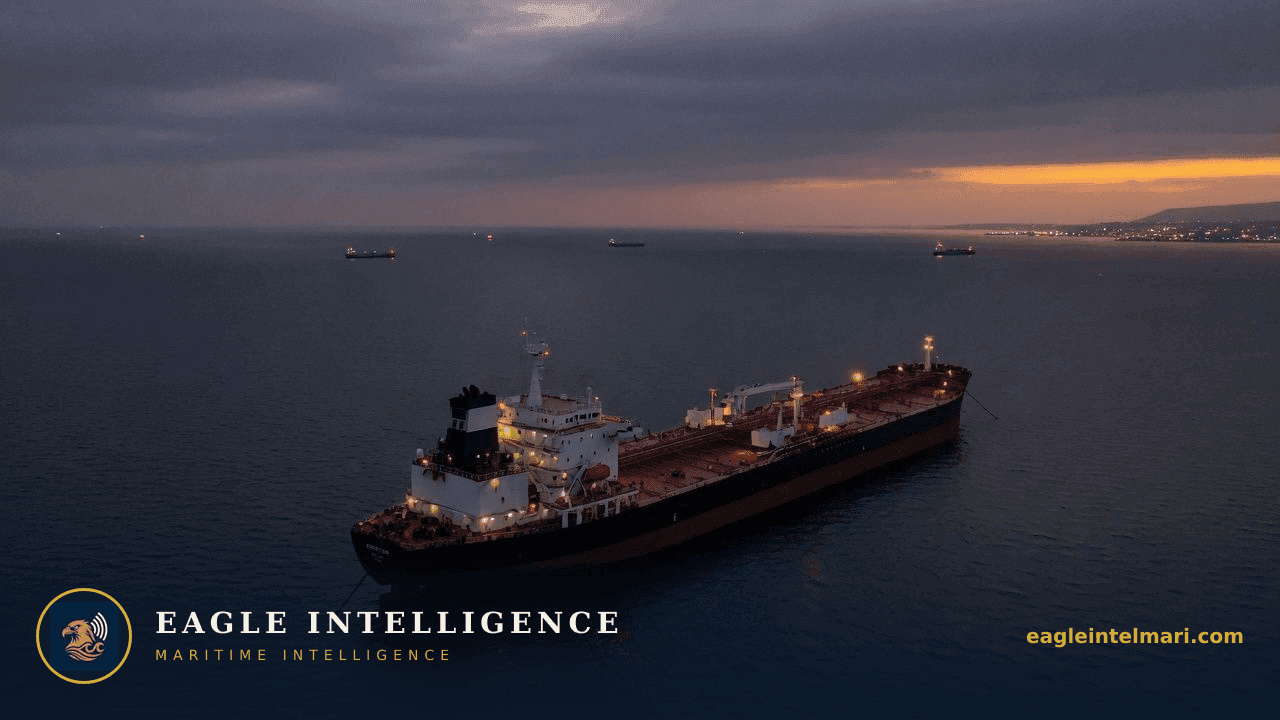
Ukrainian forces struck a Greek-owned tanker near Taman on 1 August and hit five additional Western-affiliated tankers in the same period, according to reporting from Hellenic Shipping News. These strikes mark the first documented extension of the drone campaign to tonnage that had previously been regarded as insulated by the G7 Oil Price Cap regime. The attacks occurred close to Novorossiysk and Taman, directly affecting both crude and product carriers that had continued to load despite earlier Russian-Ukrainian exchanges.
The immediate operational consequence is visible in loading data. BIMCO analyst Niels Rasmussen reported that dirty tanker loadings from Russian Black Sea and Sea of Azov ports fell 62 percent in the last two weeks of July, averaging 0.98 million barrels per day against a prior four-week average of 2.59 million barrels per day. Two shipping lines have already suspended service to the ports, and the Caspian Pipeline Consortium loadings, which account for roughly 1.8 percent of global oil supply, have been repeatedly halted for lack of available tankers. Owners are now routing some cargoes via longer alternatives or holding vessels at anchor while reassessing exposure.
No public figures for additional war-risk premiums or breach loadings on Black Sea transits have been published in the supplied evidence. The absence of quoted rates leaves owners and charterers without a transparent benchmark for the new risk layer, increasing the chance that negotiations will occur case-by-case rather than through standard market schedules.
Houthi forces claimed an eighth attack on a Saudi oil tanker and responsibility for striking an Indian-flagged cargo vessel, MSV Faize Noore Oliya, which overturned and sank with 14 crew members aboard. UK Maritime Trade Operations issued a separate warning after an explosion near another vessel and a ship was reported sunk off southwest Yemen following a drone-boat strike. These incidents follow the established pattern of Houthi operations rather than indicating a sudden escalation in intensity or geographic spread.
Transit volumes through the strait have already been heavily reduced by prior attacks, and the latest claims do not appear to have triggered a further measurable diversion wave in the evidence. Routing decisions remain dominated by the cumulative effect of earlier months rather than any single new incident on 5 August.
No updated additional-premium quotations for Red Sea or Gulf of Aden transits appear in the supplied reporting. The market continues to operate under whatever schedules were set after the previous round of attacks, with no indication that the latest claims have forced immediate re-pricing.
Developments around the Strait of Hormuz centre on diplomatic language rather than kinetic events. Iran and Oman announced they are finalising coordinates for a shipping route and that a joint declaration is imminent, while separate reporting indicated a draft arrangement that would give Iran greater control over Gulf-bound traffic. Warnings against potential compulsory transit fees were issued by industry bodies to the United Nations and IMO. These items represent continuation of an already prominent storyline rather than a material shift in the risk picture this week.
Because the last three Eagle flagships addressed Hormuz, the editorial rotation directs attention elsewhere unless the evidence demonstrates unavoidable and materially new risk movement. The current items do not meet that threshold for a fresh kinetic or insurance-market development.
No incidents or regulatory changes affecting transit volumes, routing or war-risk premiums through the Suez Canal were reported in the supplied evidence. The picture remains unchanged from prior weeks.
No incidents or regulatory changes affecting transit volumes, routing or war-risk premiums through the Malacca or Singapore Strait were reported in the supplied evidence. The picture remains unchanged from prior weeks.
No incidents or regulatory changes affecting transit volumes, routing or war-risk premiums in the Gulf of Guinea were reported in the supplied evidence. The picture remains unchanged from prior weeks.
No incidents or regulatory changes affecting transit volumes, routing or war-risk premiums in the Baltic were reported in the supplied evidence. The picture remains unchanged from prior weeks.
No incidents or regulatory changes affecting transit volumes, routing or war-risk premiums in the Taiwan Strait or South China Sea were reported in the supplied evidence. The picture remains unchanged from prior weeks.
The evidence contains no published additional-premium rates, breach loadings or withdrawals of cover for any chokepoint this week. Owners and charterers therefore lack a clear market signal on how underwriters have priced the expansion of Ukrainian drone strikes to Western tonnage. This information gap forces individual negotiations and raises the possibility that some insurers will quietly tighten conditions or decline renewals rather than post public schedules. The lack of transparent pricing also complicates charter-party negotiations, particularly where war-risk clauses allow owners to refuse orders once a threshold premium is exceeded.
K&R and crew war-risk bonus arrangements are similarly unreported in the supplied items. Without fresh data it is not possible to determine whether existing warlike-operations area designations have been expanded or whether additional payments have been triggered for Black Sea or Red Sea passages.
The sinking of the Indian-flagged MSV Faize Noore Oliya with 14 crew members illustrates the direct human exposure created by the latest Red Sea attacks. No details on crew nationalities, contract terms or family support arrangements were provided in the evidence. In the Black Sea, the extension of drone strikes to Western-affiliated vessels increases the likelihood that seafarers on price-cap-compliant tonnage will face pressure to accept higher-risk transits without corresponding contractual safeguards.
The ITF and IBF warlike-operations area designations are not addressed in the supplied reporting. Consequently it is not possible to establish whether any formal re-designation process has begun or whether crews retain the contractual right to refuse Black Sea or Red Sea orders on existing agreements. Manning agencies and unions will be watching for any formal notifications that could alter refusal rights or bonus entitlements in the coming days.
What concrete evidence would demonstrate that Ukrainian forces have shifted from targeting shadow-fleet tonnage to a broader campaign against any vessel loading Russian-origin crude, and which classification societies or flag states would be the first to signal that change?
Which specific additional-premium schedules, if published by leading war-risk underwriters within the next seven days, would trigger a further measurable drop in Black Sea loadings beyond the 62 percent already recorded by BIMCO?
How many Western-affiliated tankers remain committed to Black Sea fixtures under existing charters, and what contractual mechanisms allow owners to renegotiate or refuse without incurring off-hire disputes?
If Houthi claims of an eighth Saudi tanker attack are verified by independent sources within 48 hours, would that single confirmation alter the current additional-premium regime or merely reinforce existing routing patterns?
Which named vessels or operators have already invoked force-majeure or war-risk refusal clauses in the Black Sea since 1 August, and what precedent does that create for the wider fleet?
Next 7 days: Publication of any additional-premium schedule by a major war-risk insurer covering Black Sea transits, or confirmation by UKMTO or a flag state that a second Western-affiliated tanker has been struck near Novorossiysk or Taman.
Next 30 days: Any formal statement by the ITF or IBF expanding warlike-operations area designations to include additional Black Sea ports, or verifiable data showing Black Sea dirty-tanker loadings falling below the 0.98 million barrels per day recorded for late July.
Next 30 days: Independent verification or denial of the reported Iran-Oman shipping-route agreement and any accompanying change in traffic patterns or insurance conditions through Hormuz.
Advertisement
Advertisement
Live 1–5 shipping war-risk level across monitored chokepoints.
⚠️ Intelligence Disclaimer: This analysis is produced by Eagle Intelligence's AI-assisted automated analysis system and is provided for informational purposes only. See our editorial standards. It is not a substitute for official maritime safety advisories from UKMTO, MSCHOA, IMO, or flag state authorities. Operational decisions should always be based on official guidance and professional judgment. Eagle Intelligence accepts no liability for any loss arising from reliance on this content.
Live chokepoint status, war-risk shifts, and the daily maritime wire, straight to your inbox. Free.
Leave a comment
All comments moderated for quality
