The Houthi naval blockade declared on 20 July 2026 against Saudi ports raises immediate questions over whether selective enforcement will sustain oil flows or force costly rerouting, with early evidence showing one confirmed strike on the products tanker Encelia and renewed upward pressure on tanker freight.
Advertisement
Advertisement
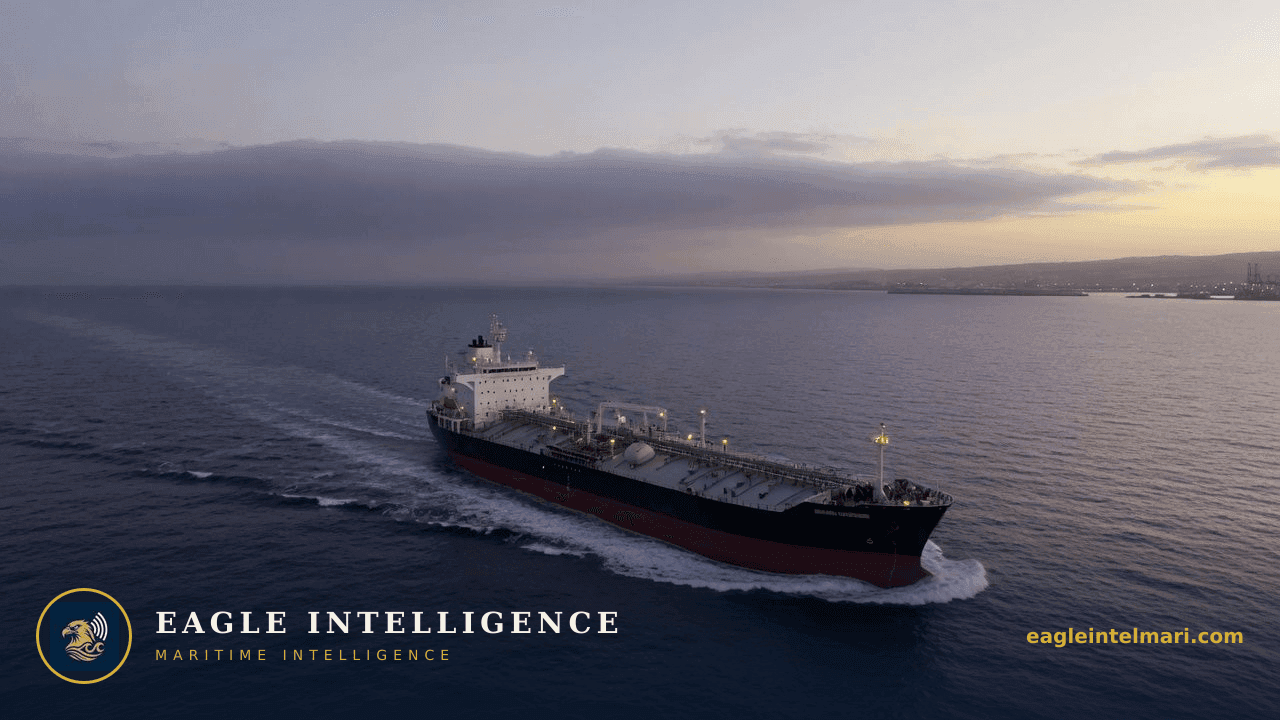
On 20 July 2026 Houthi-aligned forces announced a full naval blockade targeting Saudi Arabia, framed explicitly as retaliation for Saudi strikes on Sanaa airport. The declaration singled out Saudi, Israeli and U.S.-linked tonnage. Within days Houthi channels claimed strikes on two Saudi tankers. UKMTO logged a projectile strike on the products tanker Encelia, providing the single corroborated incident so far. This sequence sets the immediate operational stakes for any vessel calling Saudi ports in the southern Red Sea.
The blockade arrives against a backdrop of already constrained navigation through Bab el-Mandeb. Shipping that must reach the Suez Canal faces a narrowed choice: accept heightened exposure or accept longer voyages around the Cape. Gibson shipbrokers noted that renewed increases in transit times are already feeding into higher tanker rates, a direct mechanical link between declared blockade and market pricing.
What is known rests on three anchors. First, the 20 July declaration itself. Second, the UKMTO-confirmed strike on Encelia. Third, the subsequent claim by Houthis of a second Saudi tanker hit, which remains unverified by independent maritime authorities. No comprehensive list of affected vessels or port closures has been released by Saudi authorities or the Saudi Arabian Monetary Authority. The absence of such data leaves open the precise scope of enforcement.
By 26 July, shipowners had not yet published a unified response. Some Saudi crude cargoes continued to move, suggesting either gaps in Houthi surveillance or calculated risk acceptance by charterers. The pattern mirrors earlier selective enforcement episodes in the same waters, where declarations outpaced consistent interdiction.
Vessels heading to Saudi ports must now weigh the southern Red Sea corridor against the alternative of routing via the Cape of Good Hope. The extra distance adds roughly ten to fourteen days on a typical Middle East to Europe or Asia voyage, depending on speed and bunker consumption. Gibson explicitly linked these extended transit times to the fresh uptick in tanker rates observed in the latest weekly assessment.
Products tankers such as Encelia face the sharpest exposure because their typical discharge ports lie inside the declared blockade zone. Crude carriers on longer-haul Saudi export routes may retain marginally more flexibility, yet any vessel that has called a Saudi terminal in the recent past carries a detectable signature that Houthi targeting lists appear to prioritise. Crews on such tonnage now operate under elevated fatigue and alert protocols, with limited safe anchorages once inside the Red Sea.
Spot tanker rates have begun to reflect the added friction. The same Gibson report that flagged longer transit times also recorded an upward inflection in freight after the 20 July declaration. Liquid tanker spot rates had been softening earlier in the week; the reversal coincides precisely with the blockade announcement and the Encelia incident. Container rates from Asia to the U.S. West Coast moved in the opposite direction, indicating that the rate pressure is concentrated in the energy segment rather than a broad container-market phenomenon.
Saudi crude continues to reach buyers, but the cost basis has shifted. Charterers absorbing longer Cape routings pass those costs forward through higher freight or wider differentials. Buyers in Asia and Europe therefore face a choice between paying the premium or accepting greater uncertainty on delivery timing. Second-order effects include potential inventory builds at intermediate storage hubs and pressure on floating storage economics if discharge windows narrow.
War-risk premiums for Red Sea transits have historically reacted within days of confirmed strikes. The Encelia incident supplies a concrete trigger for underwriters to reassess. Standard hull and machinery policies contain war-exclusion clauses that activate once a vessel enters a listed high-risk area; owners must therefore secure additional cover or accept uncovered exposure. P&I clubs have not yet issued circulars specific to the 20 July blockade, leaving a short window in which owners must decide whether to continue calls or divert.
Flag-state obligations add another layer. Vessels registered under flags that maintain diplomatic relations with Saudi Arabia may face informal pressure to avoid the zone, while open-registry tonnage retains greater latitude. Coastal-state duties for Yemen remain contested; no recognised Yemeni government currently exercises effective control over the relevant coastal waters, creating an enforcement vacuum that both Houthis and commercial actors exploit.
Houthi strategy appears calibrated to impose economic pain on Saudi Arabia without triggering a full-scale regional escalation that would invite direct U.S. or Israeli naval intervention. By focusing on Saudi-linked tonnage and avoiding blanket closure of the strait, the Houthis preserve a degree of plausible deniability and reduce the risk of unified international naval response.
Saudi Arabia, for its part, has maintained silence on the blockade declaration while continuing selected exports. This suggests either confidence in defensive measures or a calculation that the economic cost of halting exports exceeds the physical risk. Iran, as the principal external backer, gains leverage in parallel negotiations over Hormuz without direct involvement in Red Sea incidents. The United States and its allies face the classic dilemma of protecting freedom of navigation without expanding the conflict footprint.
Crew exposure on tankers routing through or near the southern Red Sea has increased. The Encelia strike, even if it produced no reported fatalities, demonstrates that projectiles can reach vessels that have already committed to the passage. Manning agencies are likely to see requests for hazard pay or refusal-to-sail clauses in the coming weeks. Families of officers and ratings on Saudi-bound tonnage now monitor UKMTO alerts with heightened anxiety, a pattern familiar from earlier Red Sea episodes but newly intensified by the explicit blockade language.
The strongest alternative reading is that the blockade remains largely performative. Saudi crude has continued to move, and no mass diversion of tonnage has yet appeared in AIS data or broker reports. If Houthi surveillance and strike capacity prove insufficient to interdict more than a handful of vessels per month, the economic signal may dissipate quickly. In that scenario, tanker rates would revert once the initial risk premium is priced in, and the principal effect would be limited to a temporary bump in war-risk insurance rather than structural rerouting. Evidence that would support this reading includes sustained Saudi export volumes above 6 million barrels per day through August and an absence of further confirmed strikes on commercial tonnage.
Energy traders must now model two parallel supply chains: one that accepts Red Sea risk for speed and another that pays the Cape premium for certainty. Refiners in Europe and Asia will see margin compression if freight differentials widen faster than product prices adjust. Port authorities in Fujairah and Singapore may experience shifts in storage demand as cargoes linger awaiting clearer passage windows.
For shipowners, the decision tree branches into three paths: accept the risk and higher premiums, reroute via the Cape, or lay up tonnage until clarity emerges. Each path carries distinct balance-sheet implications. Charterers with fixed-price contracts absorb the immediate pain; those with floating clauses can pass costs downstream but risk losing counterparties to competitors willing to absorb more risk.
Current evidence shows only one corroborated incident; escalation thresholds remain undefined.
No public data yet quantifies the volume still moving versus diverted.
Timing of any circular would shape owner behaviour within the next seven to ten days.
Pricing changes here would reveal the market’s assessment of cumulative exposure.
Availability of suitable vessels would determine whether rate spikes persist or moderate.
Next 24 hours: Any fresh UKMTO or JMIC report of projectiles or boarding attempts inside the declared blockade zone.
Next seven days: Publication of Saudi export figures for the second half of July and any visible shift in VLCC or Suezmax fixtures avoiding the Red Sea.
Next thirty days: First renewal dates for war-risk cover on the most exposed products tanker fleet and any formal statement from the International Maritime Organization or major flag states.
Advertisement
Advertisement
Live 1–5 shipping war-risk level across monitored chokepoints.
⚠️ Intelligence Disclaimer: This analysis is produced by Eagle Intelligence's AI-assisted automated analysis system and is provided for informational purposes only. See our editorial standards. It is not a substitute for official maritime safety advisories from UKMTO, MSCHOA, IMO, or flag state authorities. Operational decisions should always be based on official guidance and professional judgment. Eagle Intelligence accepts no liability for any loss arising from reliance on this content.
Live chokepoint status, war-risk shifts, and the daily maritime wire, straight to your inbox. Free.
Leave a comment
All comments moderated for quality
