Multiple confirmed attacks on oil tankers in the Strait of Hormuz over the past week have produced at least one vessel fire, crew abandonment and a measurable reduction in transits, raising the question of how long shipowners will continue routing through the chokepoint under current threat levels.
Advertisement
Advertisement
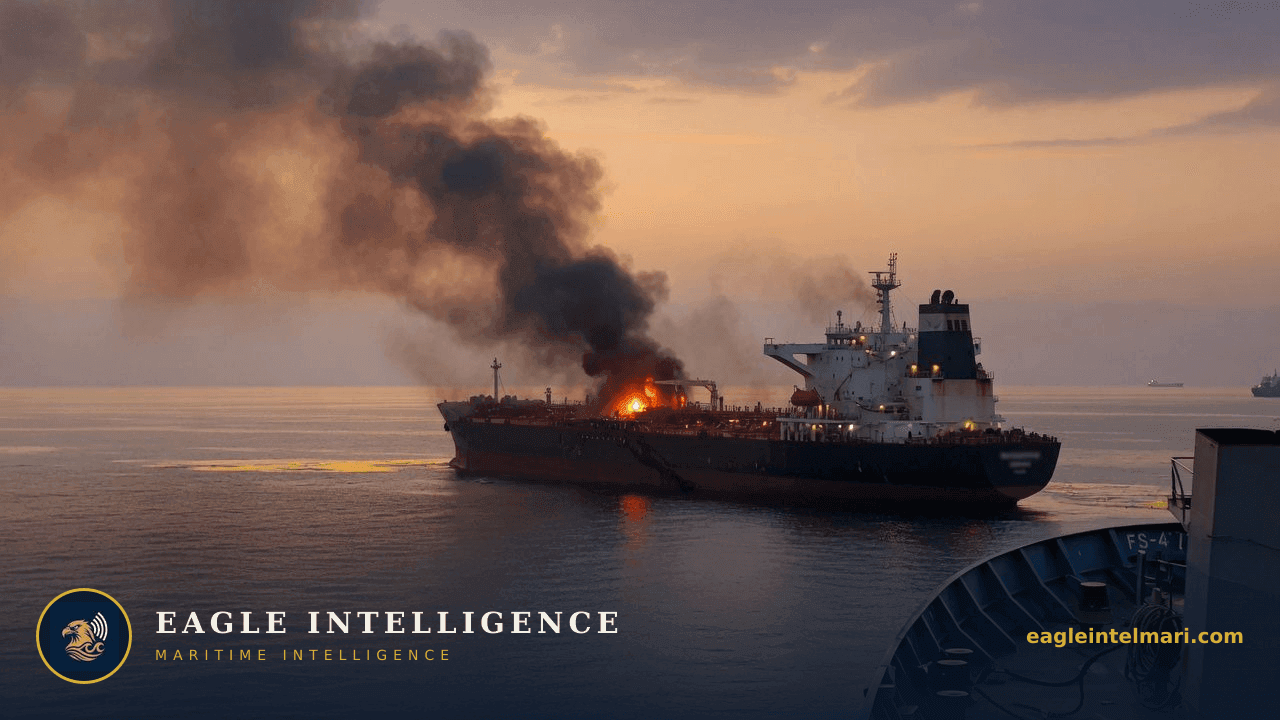
On 20 July 2026, Iranian forces claimed responsibility for disabling two unidentified oil tankers that attempted the southern passage of the Strait of Hormuz. The same day a Maltese-flagged product tanker caught fire off Oman after being struck by an unknown projectile, forcing its crew to abandon ship. These events align with statements from maritime risk executives that the waterway has returned to a worst-case scenario after repeated Iranian attacks on commercial vessels in the preceding week.
Transits through the Strait have already fallen measurably. Risk managers report crews refusing or delaying passages, directly reducing volume. The 1992-built Tanzanian-flagged chemical tanker Asana was seized by Somali pirates off Yemen on 18 July while departing Mukalla, adding a secondary threat layer on the western approaches. Routing alternatives remain limited; any sustained avoidance of Hormuz lengthens voyages by thousands of miles for Gulf crude and products.
Hull and war-risk premiums are rising in line with the observed reduction in transits. The market transmission is immediate: owners facing higher deductibles or outright refusals to cover southern-lane transits must either accept northern routes under Iranian pressure or divert around Africa. Charterers of Middle East crude are already seeing the effect in tightened availability.
The Hormuz attacks represent the single most consequential development because they combine verified kinetic action against merchant tonnage, measurable routing change and direct human risk. Arctic LNG 2 module deliveries, while sanctions-relevant, remain a slower-burn construction signal. Container softening and biofuel price movements are routine market noise.
Spanish gas prices have already reached multi-year premiums to TTF on tight LNG availability; any prolonged Hormuz disruption would intensify that premium as Atlantic basin cargoes are re-directed. Poland's planned air-cargo hub faces indirect pressure if European carriers remain locked out of Russian airspace while Chinese operators expand. Manning agencies must now recalculate war-risk bonuses and refusal-to-sail clauses for Gulf trades.
Middle East producers argue new pipelines will reduce reliance on Hormuz. This view holds only if the pipelines themselves avoid Iranian strike range and if Gulf states can secure them at acceptable cost. Evidence to date shows pipelines remain vulnerable to the same actors threatening the strait; therefore the claim that infrastructure alone neutralises the threat is weakly supported.
Current language already prices northern passages higher; formal exclusion would crystallise within seven days if one more confirmed hit occurs.
The first measurable uptick in Cape routing has appeared; a 15 % freight spike is the threshold that would confirm structural avoidance.
Public statements have referenced "US pressure"; clarification or targeting patterns over the next 72 hours will distinguish selective versus blanket interdiction.
The Asana seizure and recent Red Sea patterns suggest possible convergence; confirmation would expand the risk envelope beyond Hormuz itself.
Next 24 hours: any additional Iranian claim of tanker strikes or fresh fire reports off Oman. Next seven days: Lloyd's Joint War Committee decision on Hormuz rating or first published war-risk exclusion clause. Next thirty days: volume data from AIS showing sustained 20 % or greater reduction in Hormuz transits versus June 2026 baseline.
Advertisement
Advertisement
Live Hormuz transit status and war-risk band.
Live 1–5 shipping war-risk level across monitored chokepoints.
⚠️ Intelligence Disclaimer: This analysis is produced by Eagle Intelligence's AI-assisted automated analysis system and is provided for informational purposes only. See our editorial standards. It is not a substitute for official maritime safety advisories from UKMTO, MSCHOA, IMO, or flag state authorities. Operational decisions should always be based on official guidance and professional judgment. Eagle Intelligence accepts no liability for any loss arising from reliance on this content.
Live chokepoint status, war-risk shifts, and the daily maritime wire, straight to your inbox. Free.
Leave a comment
All comments moderated for quality
