Three tankers struck near the Strait of Hormuz and Iran’s mining plan to funnel traffic for tolls and control have prompted the US to revoke Iran’s oil-export waiver and launch fresh strikes, raising immediate war-risk premiums and re-routing decisions for owners and charterers.
Advertisement
Advertisement
Iran’s renewed missile and drone strikes on commercial traffic in the Strait of Hormuz, combined with Washington’s revocation of the Iranian oil-export waiver, have forced owners, charterers and hull insurers to reassess every transit through the waterway within the next 48 hours.
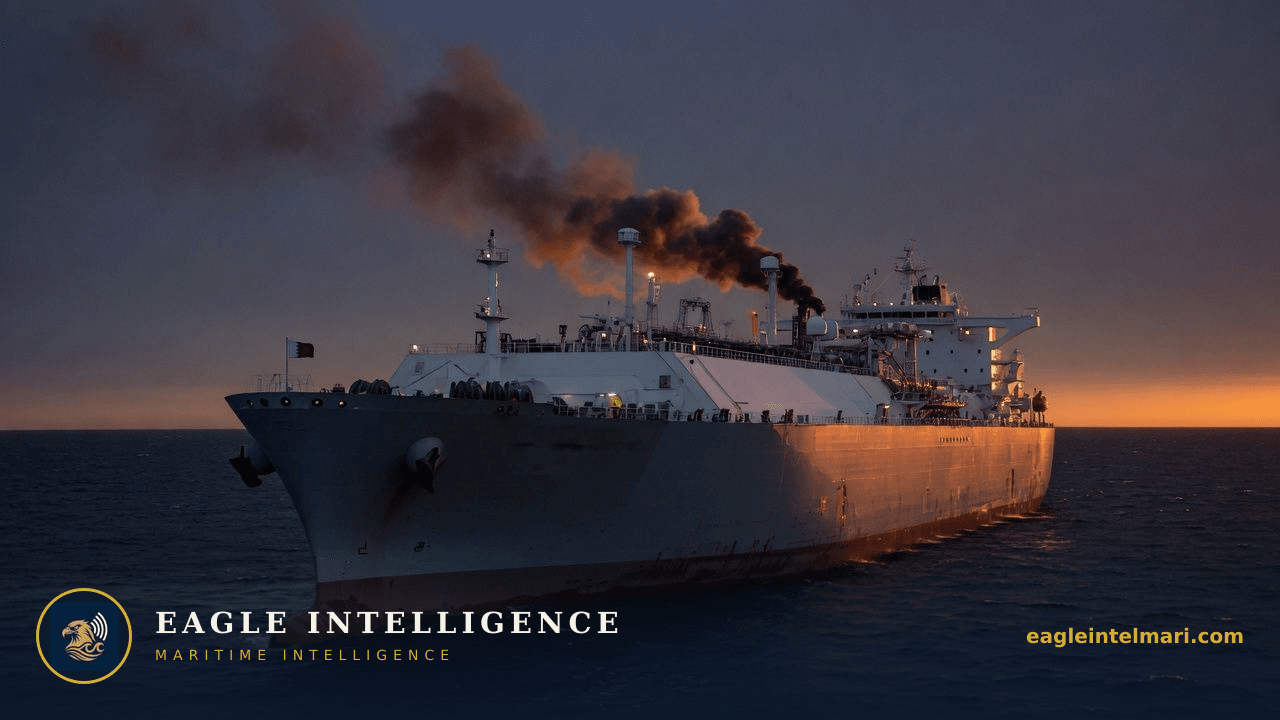
US Navy statements confirm Tehran is laying mines to push laden vessels closer to its coastline, where boarding or toll collection becomes feasible. Three separate attacks on 7 July, including an uncrewed aerial strike on a Qatari LNG carrier Al Rekayyat and a projectile hit on a Saudi crude tanker, show the tactic already in use. UKMTO and JMIC both rate the threat “severe,” with structural damage confirmed on at least two hulls.
The Trump administration cancelled the sanctions waiver and conducted new military strikes the same day. For owners with tonnage in the Gulf, the immediate consequence is a sharp rise in war-risk quotes; several London syndicates are already refusing to quote beyond 48-hour validity. Charterers fixing clean and dirty products out of the Gulf now face either doubled premiums or a 10–12 day Cape reroute around Africa.
The damaged Al Rekayyat remains at risk of explosion while under tow; salvage options are limited by the proximity of Iranian waters. Saudi crude loadings from Ras Tanura are being held or diverted to eastern discharge ports, tightening July arbitrage windows for European refiners. P&I clubs have issued circulars reminding members that any transit within 12 nm of Iranian-claimed waters voids standard cover unless additional premium is paid in advance.
While Hormuz dominates risk pricing, Super Typhoon Bavi is tracking toward the Taiwan Strait with 100-knot gusts forecast. Shanghai, Ningbo and Kaohsiung terminals have begun shutting gantry cranes; iron-ore and coal discharge schedules for the first week of August are already sliding. Pacific vessel supply will tighten as boxships and bulkers shelter, adding two to four days to transpacific round voyages.
The Baltic Dry Index closed at 2,875 points, its highest level since 8 June, supported by steady Australian and Brazilian iron-ore stems. Forward supply-demand balances show Capesize availability tightening again after mid-July, suggesting owners can maintain rate gains even if some Gulf cargoes shift to longer-haul routes.
Ukraine’s drone campaign against Russian shadow tankers supplying Crimea continues without reported spillover into commercial lanes. Separately, Chinese buyers booked six to seven US soybean cargoes (approximately 330,000 mt) for September–November shipment, a quiet vote of confidence in Pacific Northwest and US Gulf loadings that will keep handy and supramax tonnage employed through Q3.
Several leading syndicates have signalled they will quote only on a case-by-case basis with 24-hour cancellation; owners should expect premiums at least double those posted on 6 July.
Terminal operators are already advising 48–72 hour windows; vessels with tight laycans should prepare for force-majeure notices and cargo rotation changes.
With Al Rekayyat immobilised and traffic slowed, charterers are looking at spot tonnage from the Atlantic basin or extended laycans that will push some July cargoes into August.
Iranian crude previously moving under waiver will now seek alternative flags or STS transfers; this could increase inspection delays for legitimate product tankers in the eastern Mediterranean and Aegean.
ITF contracts and many national manning agreements allow seafarers to decline a transit once war-risk area designation is published; owners should check flag-state guidance before ordering the next passage.
Return tomorrow for the next update on routing costs and crew exposure.
Advertisement
Advertisement
Indicative Additional War Risk Premium (AWRP) ranges — not a binding insurance quote.
Live Hormuz transit status and war-risk band.
Live 1–5 shipping war-risk level across monitored chokepoints.
⚠️ Intelligence Disclaimer: This analysis is produced by Eagle Intelligence's AI-assisted automated analysis system and is provided for informational purposes only. See our editorial standards. It is not a substitute for official maritime safety advisories from UKMTO, MSCHOA, IMO, or flag state authorities. Operational decisions should always be based on official guidance and professional judgment. Eagle Intelligence accepts no liability for any loss arising from reliance on this content.
Live chokepoint status, war-risk shifts, and the daily maritime wire, straight to your inbox. Free.
Leave a comment
All comments moderated for quality
