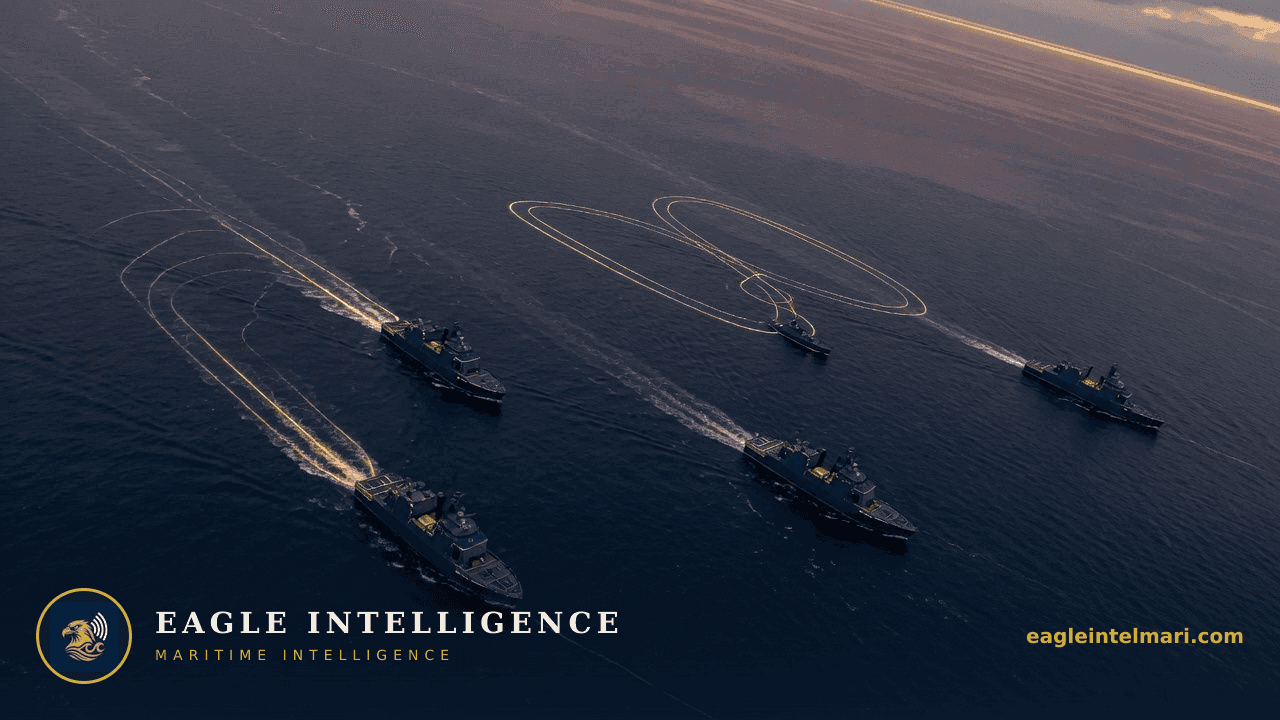
Naval planners and defense contractors now face compressed timelines for USV and UUV integration as the Defense Department places every unmanned and autonomous system under a single portfolio manager reporting directly to the Deputy Secretary.
Advertisement
Advertisement
Naval planners and defense contractors now face compressed timelines for USV and UUV integration as the Defense Department places every unmanned and autonomous system under a single portfolio manager reporting directly to the Deputy Secretary. The July 1, 2026 memorandum ends the previous fragmented approach across services and accelerates procurement and fielding decisions that will shape fleet architecture for the rest of the decade.
The new structure removes intervening layers that previously slowed joint unmanned programs. Portfolio decisions on requirements, funding allocation, and operational testing now reach the Deputy Secretary without service-level veto points. For programs already in advanced development, such as large unmanned surface vessels intended for distributed maritime operations, this shortens the window between prototype validation and low-rate production.
Unmanned surface and undersea vehicles have the most mature concepts of employment ready for scale-up. Mine countermeasures, persistent surveillance, and anti-submarine warfare missions already have defined CONOPS that can absorb additional hulls and sensors without waiting for new doctrine. The consolidation therefore tilts near-term resources toward sea-based autonomy rather than air or ground equivalents that still require more foundational work.
Prime contractors holding multiple unmanned lines must now align internal roadmaps with a single customer voice. Companies that previously balanced separate Navy, Army, and Air Force programs face pressure to prioritize maritime variants that can deliver measurable capability within the next two budget cycles. Second-tier suppliers of autonomy software and propulsion modules will see accelerated qualification requirements as the portfolio manager pushes common standards across platforms.
P&I clubs and hull underwriters that cover commercial vessels operating near military unmanned activity will confront new risk profiles once large numbers of USVs begin routine transits and loiter operations. Classification societies will be asked to develop interim guidance for mixed manned-unmanned formations before formal naval rules are published. Early movers among the societies can capture advisory work that later becomes de-facto standard.
Partners that have invested in compatible unmanned systems now have a clearer US interlocutor for data-link and command standards. Those still developing sovereign solutions risk being locked out of combined exercises if the new portfolio manager adopts proprietary architectures early. The first visible test will likely occur during next year’s major Pacific exercise cycle.
The next quarterly program review under the new portfolio manager, expected no later than October 2026, will reveal which maritime unmanned lines receive accelerated funding and which remain in study status.
Advertisement
Advertisement
⚠️ Intelligence Disclaimer: This analysis is produced by Eagle Intelligence's AI-assisted automated analysis system and is provided for informational purposes only. See our editorial standards. It is not a substitute for official maritime safety advisories from UKMTO, MSCHOA, IMO, or flag state authorities. Operational decisions should always be based on official guidance and professional judgment. Eagle Intelligence accepts no liability for any loss arising from reliance on this content.
Live chokepoint status, war-risk shifts, and the daily maritime wire, straight to your inbox. Free.
Leave a comment
All comments moderated for quality
