
Skip to content
Eagle Intelligence
Search

Maritime News Today

Live war-risk alerts, Hormuz status, regulatory changes, port disruptions and shipping-market intelligence — updated around the clock.

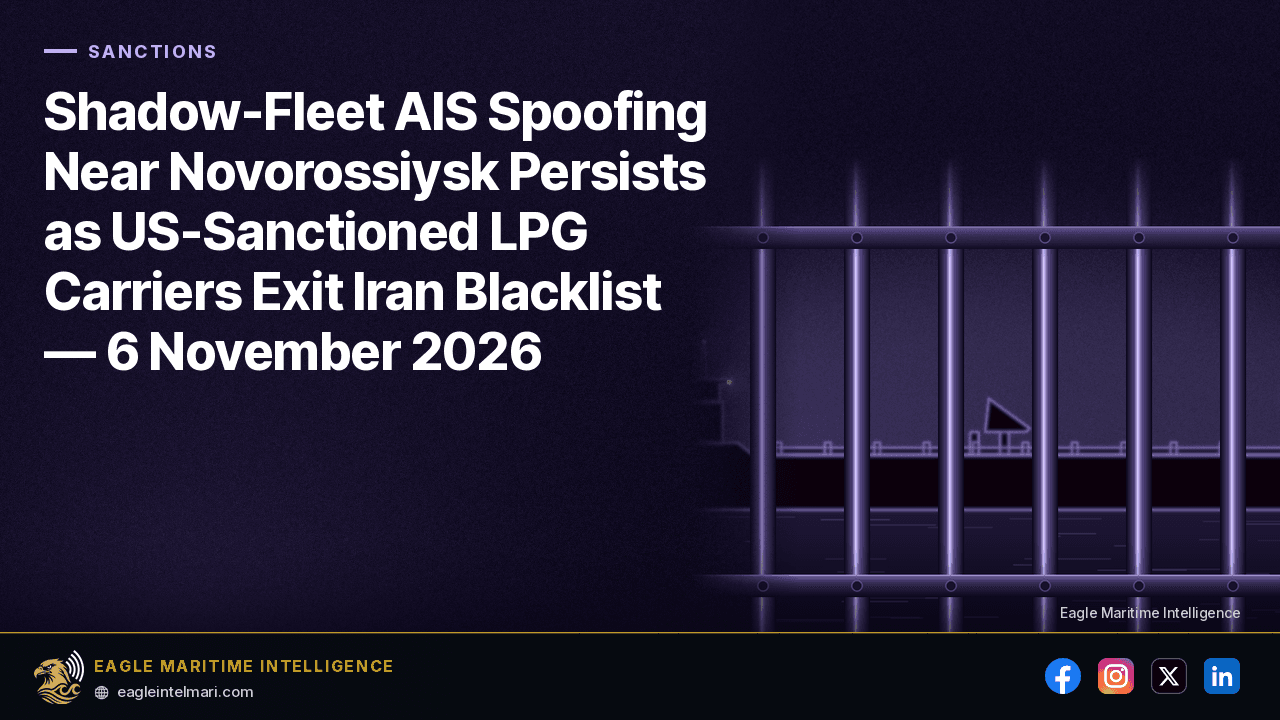
Shadow-Fleet AIS Spoofing Near Novorossiysk Persists as US-Sanctioned LPG Carriers Exit Iran Blacklist — 6 November 2026
SanctionsHIGH ALERT1d ago

Shadow-Fleet AIS Spoofing Near Novorossiysk Persists as US-Sanctioned LPG Carriers Exit Iran Blacklist — 6 November 2026

Seven sanctioned Russian tankers have been spoofing AIS signals for 90 days to mask voyages from Novorossiysk while US-sanctioned LPG carriers were removed from Iran’s PGSA non-compliance list; the pattern shows enforcement announcements outpacing actual detentions and leaves charterers, agents and crews exposed to unpaid claims and port refusals.

Eagle Intelligence · Read full article →

Week in One Page: Hormuz Attacks Disrupt Oil Flows While US Claims Record Volumes
War Risk
Critical
Sep 20·Eagle Intelligence3 min read

Week in One Page: Hormuz Attacks Disrupt Oil Flows While US Claims Record Volumes

Strait of Hormuz attacks and Iranian assertions of control dominated the week, raising direct risks to tanker routing and crew safety even as CENTCOM reported six-month-high oil shipments. The central question is whether sustained traffic volumes can continue under repeated strikes and cyber incidents without forcing wider rerouting or higher war-risk premiums.

Eagle IntelligenceRead →

Daily Brief: Hormuz Attacks Surge as LNG Tanker Reports Suspected Cyber Failure — Sep 19
Analysis
Critical
Sep 20·Eagle Intelligence Analysis1 min read

Daily Brief: Hormuz Attacks Surge as LNG Tanker Reports Suspected Cyber Failure — Sep 19

Multiple tanker attacks in the Strait of Hormuz over the past 48 hours have forced rerouting decisions and insurance adjustments, while a separate US-Europe LNG carrier suffered a crew-reported systems failure attributed to cyber intrusion. Iran has used one incident to assert control over the strait, coinciding with Trump statements on regime options and European naval moves in the Red Sea. Owners and charterers now face simultaneous physical and digital exposure across three chokepoints, with Black Sea drone strikes adding further crew and hull risk. The combination elevates the urgency of route and systems reviews rather than isolated incident response.

Eagle IntelligenceRead →
Crew-Reported Cyber Failure on US-Europe LNG Tanker Exposes Maritime Systems to Hybrid Attack
War Risk
Critical
Sep 19·Eagle Intelligence3 min read

Crew-Reported Cyber Failure on US-Europe LNG Tanker Exposes Maritime Systems to Hybrid Attack

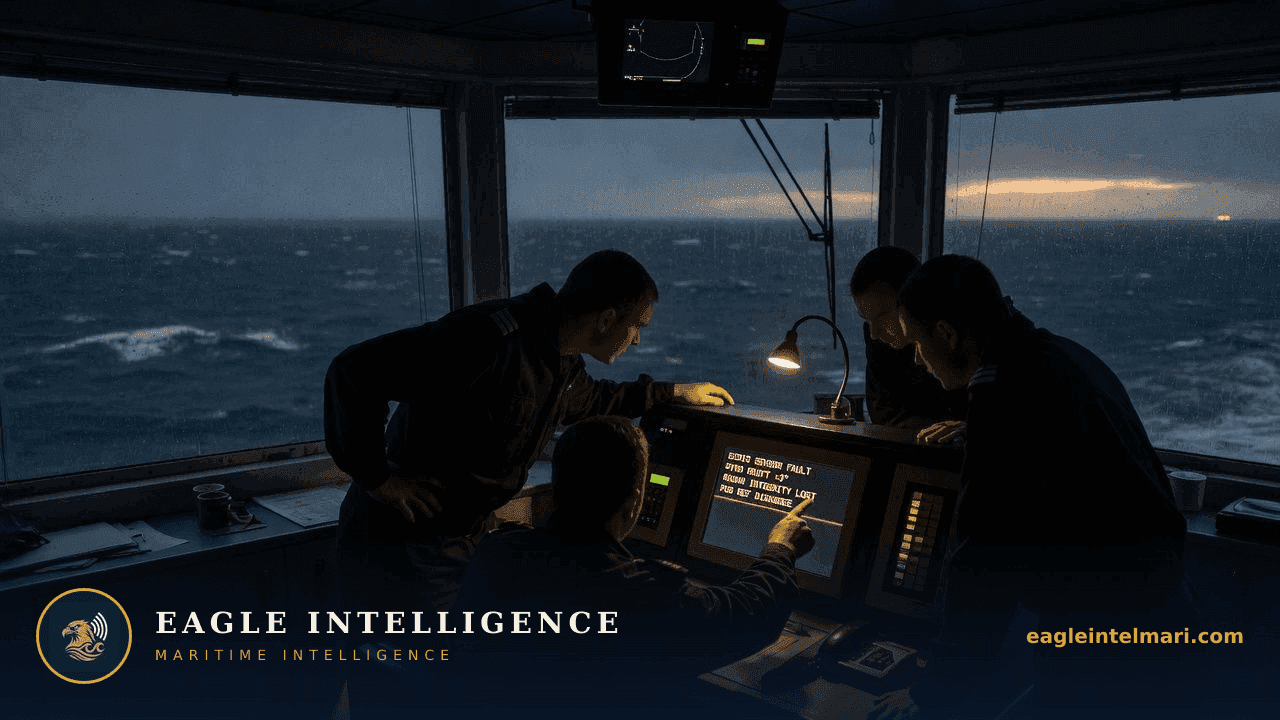
A liquefied natural gas tanker sailing from the United States to Europe suffered a systems failure that its crew attributed to a suspected cyber attack, an incident that stands apart from the day's Hormuz-focused reporting and demands examination of how digital vulnerabilities intersect with physical chokepoint disruptions.

Eagle IntelligenceRead →
Daily Brief: US Sanctions BitBank Crypto Exchange as Hormuz Attacks Kill 20 Seafarers — Sep 18
Analysis
Critical
Sep 19·Eagle Intelligence Analysis3 min read

Daily Brief: US Sanctions BitBank Crypto Exchange as Hormuz Attacks Kill 20 Seafarers — Sep 18

US Treasury sanctions on BitBank target crypto payments for Hormuz transits, exposing charterers, banks and crews to secondary sanctions while IRGC strikes continue. Eighty attacks in the strait since the conflict began have killed 20 seafarers and injured others, with a US-contracted vessel hit by four drones and a missile near the chokepoint. Container rates face upward pressure from fuel spikes, yet the scale of shadow-fleet involvement remains unquantified. Panama Canal transits have already fallen 22 percent under separate slot competition. Operators must now reassess compliance channels and routing decisions within the next 24 hours.

Eagle IntelligenceRead →
US Treasury Sanctions BitBank Crypto Exchange Over Hormuz Transit Payments — 18 September 2026
Sanctions
Critical
Sep 18·Eagle Intelligence3 min read

US Treasury Sanctions BitBank Crypto Exchange Over Hormuz Transit Payments — 18 September 2026

The US Treasury designated Iranian crypto exchange BitBank for routing hundreds of millions in payments tied to safe Hormuz transits, exposing charterers, banks and crews to fresh secondary-sanctions risk at a moment when IRGC strikes on tankers have already raised operational costs. The move targets a financial evasion channel rather than individual vessels, leaving the scale of shadow-fleet involvement unquantified in public data.

Eagle IntelligenceRead →
Daily Brief: Hormuz transit risk escalates after U.S.-contracted vessel struck — Sep 17
Analysis
Critical
Sep 18·Eagle Intelligence Analysis3 min read

Daily Brief: Hormuz transit risk escalates after U.S.-contracted vessel struck — Sep 17

Iranian drone and missile strikes on a U.S.-contracted vessel near the Strait of Hormuz produced casualties and triggered U.S. defensive action against Iranian boats. The waterway remains physically open, yet MOL has already directed crews to avoid the route and traffic counts have fallen sharply. War-risk pricing, crew availability and transit continuity now sit at the center of operator decisions. Charterers and insurers face immediate questions on routing, premiums and force-majeure exposure. The next 24 hours will test whether additional operators follow MOL or continue transits under heightened protection.

Eagle IntelligenceRead →
Hormuz War-Risk Sharpens After Direct Strikes on U.S.-Contracted Vessel
War Risk
Critical
Sep 17·Eagle Intelligence3 min read

Hormuz War-Risk Sharpens After Direct Strikes on U.S.-Contracted Vessel

The Strait of Hormuz risk picture shifted most sharply this week after Iranian drone and missile attacks struck a U.S.-contracted vessel carrying American personnel, producing casualties and prompting U.S. defensive action against Iranian boats; the development raises immediate questions over transit continuity, war-risk pricing and crew willingness in a waterway that remains physically open.

Eagle IntelligenceRead →
Daily Brief: Hormuz Tanker Attack Triggers Rate Spike and Missing Crew Search — Sep 16
Analysis
Critical
Sep 17·Eagle Intelligence Analysis3 min read

Daily Brief: Hormuz Tanker Attack Triggers Rate Spike and Missing Crew Search — Sep 16

Oman is towing the attacked tanker El Gaia to port with two crew still missing after the latest incident in the Strait of Hormuz. Iran claims it shot down a third US drone over the strait in 24 hours while the US states Iran attacked the Indian-crewed vessel rather than a mine strike. Crude tanker rates have hit new highs as hull war underwriters reassess pricing and Gulf container rates reach records. Operators and charterers now face immediate decisions on routing, insurance and crew safety for Hormuz transits.

Eagle IntelligenceRead →
Daily Brief: Hormuz Blacklist Expands to 77 Vessels as Rates Breach $1 Million Daily — Sep 15
Analysis
Critical
Sep 16·Eagle Intelligence Analysis3 min read

Daily Brief: Hormuz Blacklist Expands to 77 Vessels as Rates Breach $1 Million Daily — Sep 15

Iranian authorities added 20 more vessels to the Hormuz blacklist while strikes and mine incidents continued in the strait, pushing benchmark crude tanker rates above $1 million per day. The supply shock now converges with Houthi territorial gains at Bab el-Mandeb, sharply reducing willing tonnage for both crude and clean products. Owners, insurers and charterers face immediate decisions on routing, war-risk cover and force-majeure exposure. Oil prices remained above $100 per barrel with Oman-Iran talks postponed. The market has moved from risk premium to outright capacity rationing within 24 hours.

Eagle IntelligenceRead →
Hormuz War Squeezes Fleet as Rates Breach $1 Million a Day
War Risk
Critical
Sep 15·Eagle Intelligence3 min read

Hormuz War Squeezes Fleet as Rates Breach $1 Million a Day

Escalating strikes and Iranian actions in the Strait of Hormuz have sharply reduced willing tanker tonnage, driving benchmark crude rates above $1 million daily for the first time while new Houthi gains at Bab el-Mandeb compound the supply shock; owners, insurers and charterers now face acute decisions on exposure.

Eagle IntelligenceRead →

Showing 81–90 of 921 articles