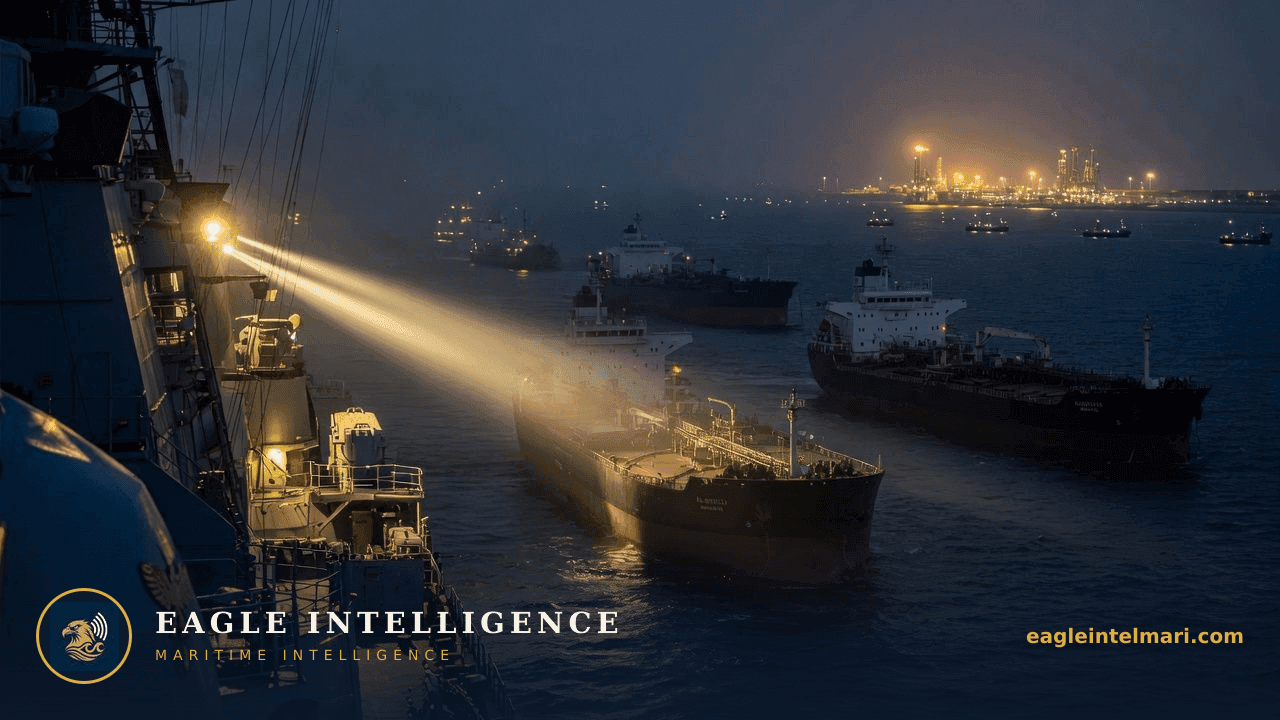
UK, French and German forces have activated an emergency maritime operation to extract and protect vessels trapped by the 2026 Strait of Hormuz crisis, exposing a new phase of state-led intervention in the world's most critical oil artery.
Advertisement
Advertisement
The joint UK-France-Germany decision to launch emergency maritime rescue operations marks a direct European naval response to the sudden immobilization of thousands of vessels inside and adjacent to the Strait of Hormuz.
The Strait remains the sole sea exit for roughly 20 percent of global oil trade and a large share of LNG cargoes from Qatar. When traffic halted, laden tankers, container ships and bulk carriers backed up in both directions, creating a queue whose length already exceeds the 2020 blockage at Suez. European naval assets are now tasked with corridor protection, towage of disabled hulls and medical evacuation of crews, roles traditionally left to flag states or private salvors.
European powers hold limited direct military presence in the Gulf compared with the United States, yet their commercial exposure is acute. Roughly one-third of EU crude imports and a growing volume of LNG transit the chokepoint. With Washington preoccupied elsewhere, the three capitals elected to field a limited escort and rescue task group rather than wait for broader coalition formation. The move also serves domestic political signaling ahead of looming energy-price spikes.
War-risk premiums for Hormuz transits have already tripled in the first 72 hours. Hull underwriters are invoking force-majeure clauses on policies that exclude “blockade or closure” events, pushing owners toward Protection & Indemnity clubs for crew and cargo claims. Charterers face cascading laytime disputes; many VLCCs are now on demurrage at rates exceeding $150,000 per day, a cost that will feed directly into refined-product prices across Europe and Asia within weeks.
Thousands of mariners are effectively marooned. Filipino, Indian and Ukrainian crews dominate the stranded tonnage; their contracts have expired and rotation flights out of Gulf airports are already oversubscribed. European rescue units are prioritizing medical cases and vessels with critical machinery failures, leaving the majority of seafarers on board with dwindling provisions and uncertain pay. Flag states with large registries, notably Panama and Liberia, have yet to issue coordinated guidance.
The current situation recalls the 1984–1988 Tanker War, when both Iran and Iraq attacked neutral shipping and European navies mounted Operation Armilla and similar patrols. The key difference today is scale: the 1980s saw dozens of attacks per month; the present crisis has idled an order of magnitude more tonnage in days rather than months. The precedent suggests that once state navies become routine escorts, the conflict risks formalization rather than rapid de-escalation.
Resolution by mid-July hinges on whether Tehran accepts monitored convoys under European flags or instead expands exclusion zones. A negotiated partial reopening would allow phased clearance starting with LNG carriers, restoring roughly 40 percent of normal flows within ten days. Prolonged closure, by contrast, would force rerouting around the Cape, adding 12–18 days to Europe-bound voyages and triggering a second wave of spot-charter spikes. The third scenario—limited kinetic exchanges between Western escorts and Iranian fast-attack craft—would likely draw in additional NATO partners and push war-risk rates above the 1988 peak.
Advertisement
Advertisement
Live Hormuz transit status and war-risk band.
Live 1–5 shipping war-risk level across monitored chokepoints.
⚠️ Intelligence Disclaimer: This analysis is produced by Eagle Intelligence's AI-assisted automated analysis system and is provided for informational purposes only. See our editorial standards. It is not a substitute for official maritime safety advisories from UKMTO, MSCHOA, IMO, or flag state authorities. Operational decisions should always be based on official guidance and professional judgment. Eagle Intelligence accepts no liability for any loss arising from reliance on this content.
Live chokepoint status, war-risk shifts, and the daily maritime wire, straight to your inbox. Free.
Leave a comment
All comments moderated for quality
