Startups supplying autonomous sea drones and robot trucks are hardening Ukraine’s defenses around Odesa, directly complicating Russian long-range drone flights across the Black Sea and altering risk calculations for every commercial operator using the port.
Advertisement
Advertisement
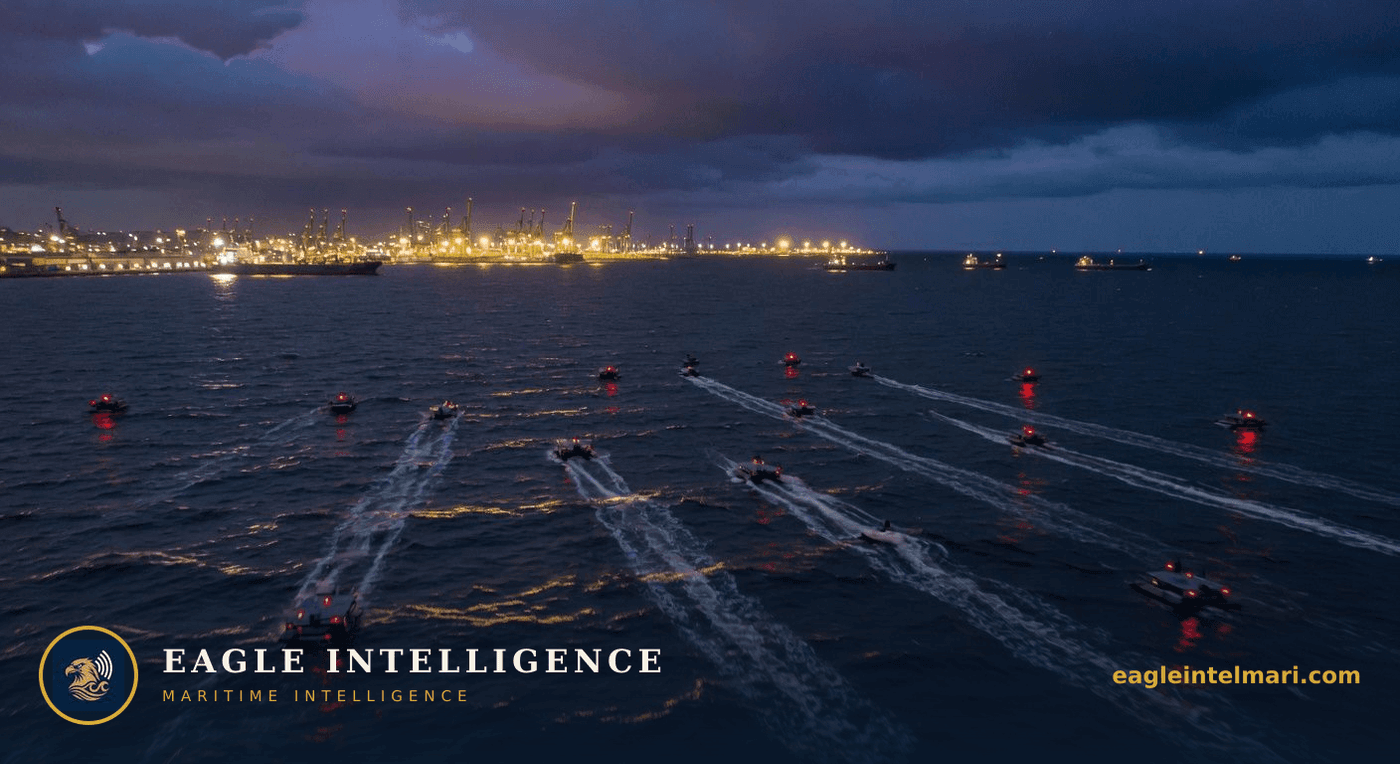
Ukrainian startups are fielding sea-drone swarms and autonomous ground vehicles to blunt undetected Russian drone flights over the Black Sea toward Odesa, the country’s last major export gateway. The move tightens an already constrained maritime corridor and forces commercial players to reassess exposure in a theater where low-cost unmanned systems now shape both attack and defense.
Charles Maher’s team identified the core vulnerability: Russian drones crossing open water at night or in poor visibility to strike Odesa’s port infrastructure. Swarms of small, radar-evading surface drones now provide persistent patrol lines that can cue air defenses or attempt kinetic intercepts. Because these platforms are cheap and attritable, Ukraine can maintain coverage even after losses, something crewed patrol craft cannot sustain.
Odesa handles the bulk of Ukraine’s remaining seaborne grain and steel shipments. Any increase in successful Russian strikes forces longer detours, tighter sailing windows, and higher war-risk premiums. Charterers already routing cargoes through the port will face tighter laycan windows and more frequent force-majeure declarations when drone activity spikes.
Hull and P&I underwriters have so far treated the Black Sea as a binary high-risk zone. The arrival of defensive sea-drone swarms introduces a new variable: reduced strike success rates could eventually support modest premium relief, yet the same technology lowers the barrier for future offensive drone use by either side. Markets are therefore likely to widen the spread between “escorted” and “unescorted” transits rather than lower rates outright.
Masters and crews already navigate minefields and missile risk. Adding persistent drone patrols increases the chance of misidentification or accidental engagement. Training requirements will shift toward rapid threat recognition and electronic-warfare countermeasures, raising crewing costs for owners willing to accept Odesa calls.
If Ukrainian drone coverage expands faster than Russian countermeasures, successful strikes on Odesa may decline, supporting a gradual rise in grain fixtures and modest premium compression. Should Russia field its own loitering munitions or electronic-warfare pods tuned to small surface drones, the advantage could reverse within weeks, triggering another surge in war-risk rates and possible port closures. A third path sees both sides reach a tacit limit on drone density, freezing the current risk level and locking Odesa into a narrow, high-cost operational window for the remainder of the season.
Flag states whose vessels continue to call Odesa will face renewed pressure from seafarer unions and domestic insurers to justify the exposure. Neighboring ports in Romania and Bulgaria may see opportunistic cargo diversion, yet their own infrastructure limits how much volume they can absorb. The net result is a further concentration of risk on a shrinking pool of tonnage willing to accept the assignment.
Advertisement
Advertisement
Live 1–5 shipping war-risk level across monitored chokepoints.
⚠️ Intelligence Disclaimer: This analysis is produced by Eagle Intelligence's AI-assisted automated analysis system and is provided for informational purposes only. See our editorial standards. It is not a substitute for official maritime safety advisories from UKMTO, MSCHOA, IMO, or flag state authorities. Operational decisions should always be based on official guidance and professional judgment. Eagle Intelligence accepts no liability for any loss arising from reliance on this content.
Live chokepoint status, war-risk shifts, and the daily maritime wire, straight to your inbox. Free.
Leave a comment
All comments moderated for quality
