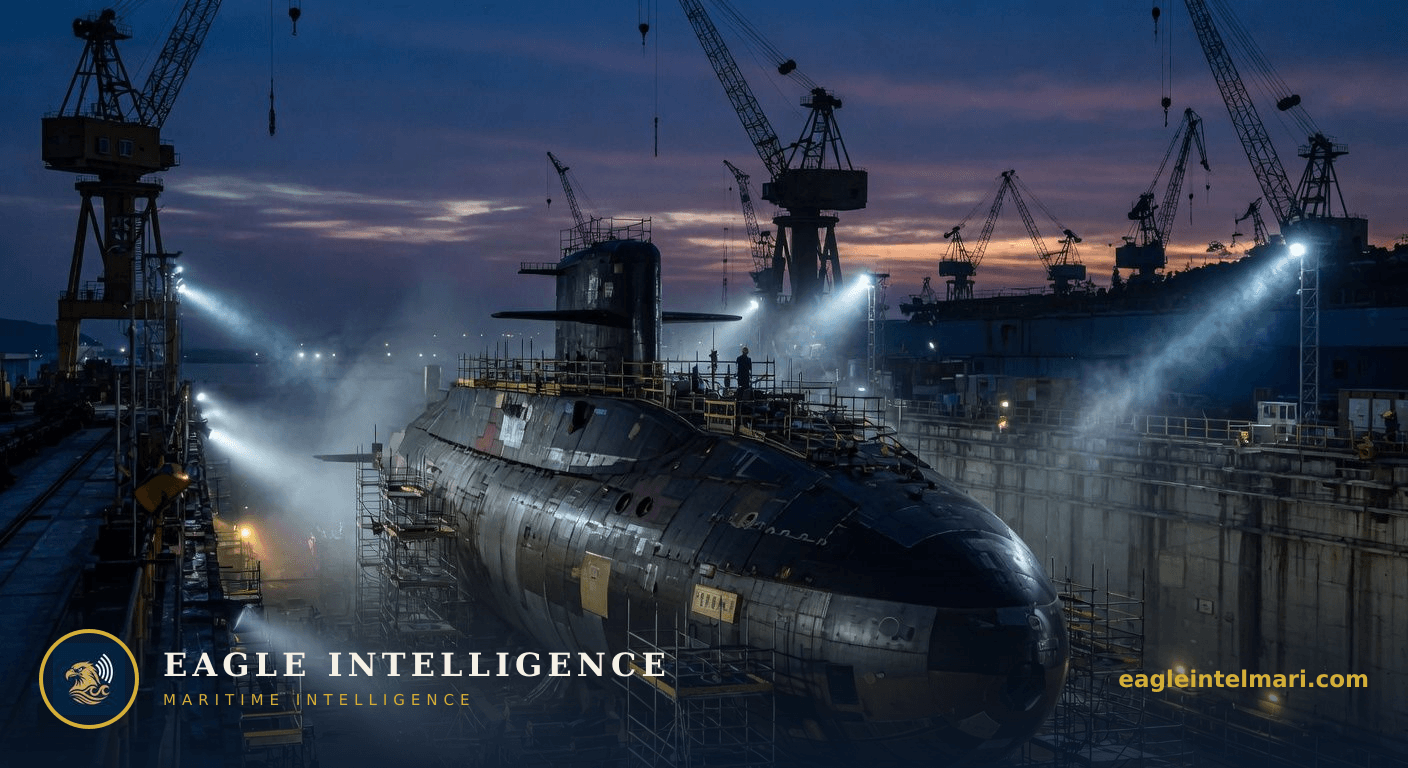
South Korea's formal launch of a fully domestic nuclear-powered attack submarine program directly counters North Korea's expanding missile-submarine threat and accelerates a regional naval arms dynamic with wide implications for Northeast Asian sea lanes.
Advertisement
Advertisement
South Korea's decision to build its own nuclear attack submarines represents a decisive step toward independent undersea deterrence, explicitly calibrated to blunt North Korea's growing ability to launch ballistic missiles from submerged platforms.
The October 2025 U.S. consent to supply nuclear fuel removed the final technical barrier for Seoul. Without that step, the 2015 Atomic Energy Agreement would have left any South Korean nuclear boat dependent on foreign reactors and fuel services. The new class will now be designed, fueled, and constructed entirely inside the Republic of Korea, shortening build timelines and eliminating foreign dependency that could be exploited during a crisis.
Pyongyang has commissioned at least two new ballistic-missile submarines since 2023 and conducted repeated test launches of the Pukguksong-5 SLBM. These boats can reach critical South Korean and Japanese ports from the Sea of Japan with minimal warning. Seoul's planners calculate that only a nuclear-powered hunter-killer force can maintain persistent surveillance and preemptive strike options against these dispersed, quiet targets.
The presence of additional nuclear submarines on both sides of the peninsula will compress the operating space for merchant shipping. Tanker and container operators already routing through the Korea Strait or the southern approaches to Busan will face higher war-risk premiums once the first ROK boat enters sea trials. Hull underwriters are expected to widen the existing Korea War Risk Exclusion Zone southward by at least 50 nautical miles within 18 months of the first keel laying.
Protection and indemnity clubs covering Korean-flagged tonnage will almost certainly impose additional declarations for vessels calling at ports within 100 nautical miles of submarine operating areas. Flag states such as Panama and Liberia, which collectively register more than 60 percent of the dry-bulk fleet trading to Northeast Asia, may face pressure to align with any new routing advisories issued by the Korean Coast Guard.
If North Korea conducts a submerged SLBM launch inside South Korea's claimed exclusive economic zone before the first ROK boat is launched, Seoul is likely to accelerate the program and request U.S. Virginia-class boats on lease. Should Washington withhold further fuel transfers in response to Chinese diplomatic pressure, Seoul could pivot toward a hybrid diesel-electric design with limited nuclear auxiliary power, extending the timeline by four to six years. A third scenario sees Japan accelerate its own Taigei-class expansion and quietly coordinate patrol zones with Seoul, creating a de facto combined undersea barrier that raises the cost of any North Korean sortie but also increases the risk of miscalculation between allied and Chinese boats.
South Korea's naval academy will need to stand up a dedicated nuclear propulsion pipeline by 2028; the current surface-fleet officer cohort lacks the required certification hours. Shipyards in Geoje and Ulsan, already stretched by commercial LNG carrier orders, will have to ring-fence skilled welders and pipefitters for the submarine program, potentially delaying delivery of commercial tonnage and tightening the global very-large gas carrier market.
Advertisement
Advertisement
Live 1–5 shipping war-risk level across monitored chokepoints.
⚠️ Intelligence Disclaimer: This analysis is produced by Eagle Intelligence's AI-assisted automated analysis system and is provided for informational purposes only. See our editorial standards. It is not a substitute for official maritime safety advisories from UKMTO, MSCHOA, IMO, or flag state authorities. Operational decisions should always be based on official guidance and professional judgment. Eagle Intelligence accepts no liability for any loss arising from reliance on this content.
Live chokepoint status, war-risk shifts, and the daily maritime wire, straight to your inbox. Free.
Leave a comment
All comments moderated for quality
