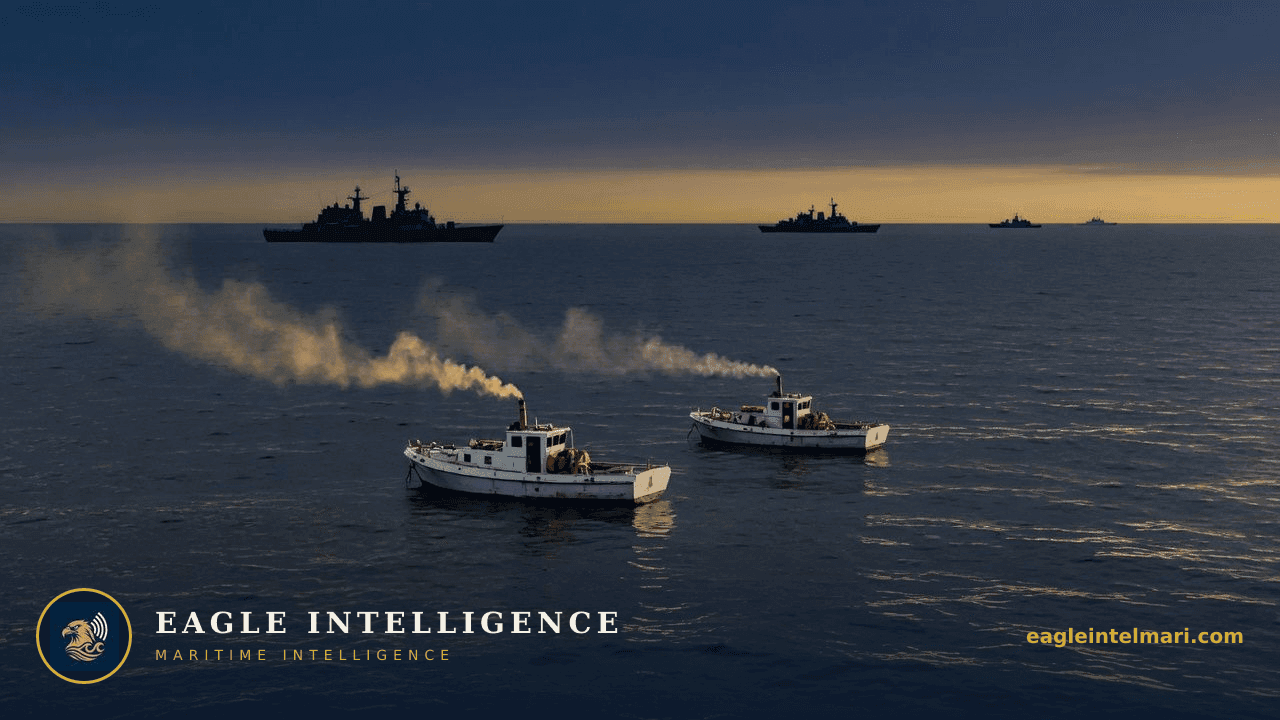
Russian forces struck two civilian search-and-rescue vessels in Ukrainian waters on 6 June, injuring crew and signalling that even humanitarian craft now fall inside the target envelope.
Advertisement
Advertisement
Russian forces struck two civilian search-and-rescue vessels in Ukrainian waters on 6 June, injuring crew and signalling that even humanitarian craft now fall inside the target envelope.
The attack, confirmed by Deputy Prime Minister Oleksiy Kuleba, targeted boats explicitly described as civilian rescue assets rather than naval auxiliaries. Ukrainian waters in this context point to the northern Black Sea approaches, where search-and-rescue coverage supports both coastal traffic and any residual grain or fuel movements. The choice of target extends the risk perimeter that owners and masters already apply to military-adjacent hulls.
Hull and P&I underwriters active in the region will now treat rescue craft as non-exempt. Premium loadings for calls inside the Ukrainian war-risk zone, already elevated, face another upward revision once claims details circulate. Clubs that had maintained limited cover for humanitarian operations will likely tighten exclusions or demand additional declarations before vessels depart Odessa or other western ports.
Injured personnel on the two boats reduce available rescue capacity at the precise moment when any commercial casualty would require those same assets. Masters transiting the area now confront a narrowed safety net: longer response times, uncertain coordination with shore authorities, and the added hazard that rescue units themselves may draw fire. Crew managers are expected to issue fresh guidance restricting non-essential personnel movements near the conflict littoral.
Grain and energy charterers who had resumed limited fixtures following earlier corridor arrangements must recalculate the operational window. Any vessel requiring external rescue support now carries an implicit delay risk that could breach laycan clauses. Forward freight curves for Black Sea loadings will reflect this friction through wider bid-offer spreads and heavier reliance on Turkish or Romanian transshipment options.
The incident recalls documented cases in the Red Sea and Gulf of Aden where rescue or aid craft were struck, producing sustained insurance-market withdrawal and multi-month route deviations. In both theatres, once SAR platforms were hit, commercial traffic adjusted by widening stand-off distances and increasing reliance on armed escort or convoy protocols. The Black Sea offers fewer alternative sea rooms, amplifying the effect.
First, a contained pattern in which Russian forces continue selective strikes on Ukrainian state-linked craft while sparing foreign-flagged commercial traffic, keeping war-risk premiums elevated but stable. Second, escalation if Ukrainian forces respond symmetrically, prompting broader exclusion zones and possible NATO mine-countermeasure activity that further crowds the waterway. Third, de-escalation only if both sides tacitly restore respect for rescue craft, an outcome dependent on back-channel understandings that have so far proved fragile. The trigger point for each path will be visible in the next four to six weeks through targeting patterns and insurance circulars.
Advertisement
Advertisement
Indicative Additional War Risk Premium (AWRP) ranges — not a binding insurance quote.
Live 1–5 shipping war-risk level across monitored chokepoints.
⚠️ Intelligence Disclaimer: This analysis is produced by Eagle Intelligence's AI-assisted automated analysis system and is provided for informational purposes only. See our editorial standards. It is not a substitute for official maritime safety advisories from UKMTO, MSCHOA, IMO, or flag state authorities. Operational decisions should always be based on official guidance and professional judgment. Eagle Intelligence accepts no liability for any loss arising from reliance on this content.
Live chokepoint status, war-risk shifts, and the daily maritime wire, straight to your inbox. Free.
Leave a comment
All comments moderated for quality
