Philippine acquisition of a U.S. Coast Guard cutter and advancing talks for Japanese destroyer transfers signals accelerated naval modernization that will raise operating costs and insurance exposure for commercial traffic through the Spratlys and Second Thomas Shoal corridors.
Advertisement
Advertisement
U.S. and Japanese commitments to supply decommissioned warships to Manila mark the most tangible reinforcement of Philippine maritime capability since the 2016 arbitral ruling, directly increasing the density of gray-hull presence in waters where Chinese maritime militia and coast guard units already operate daily.
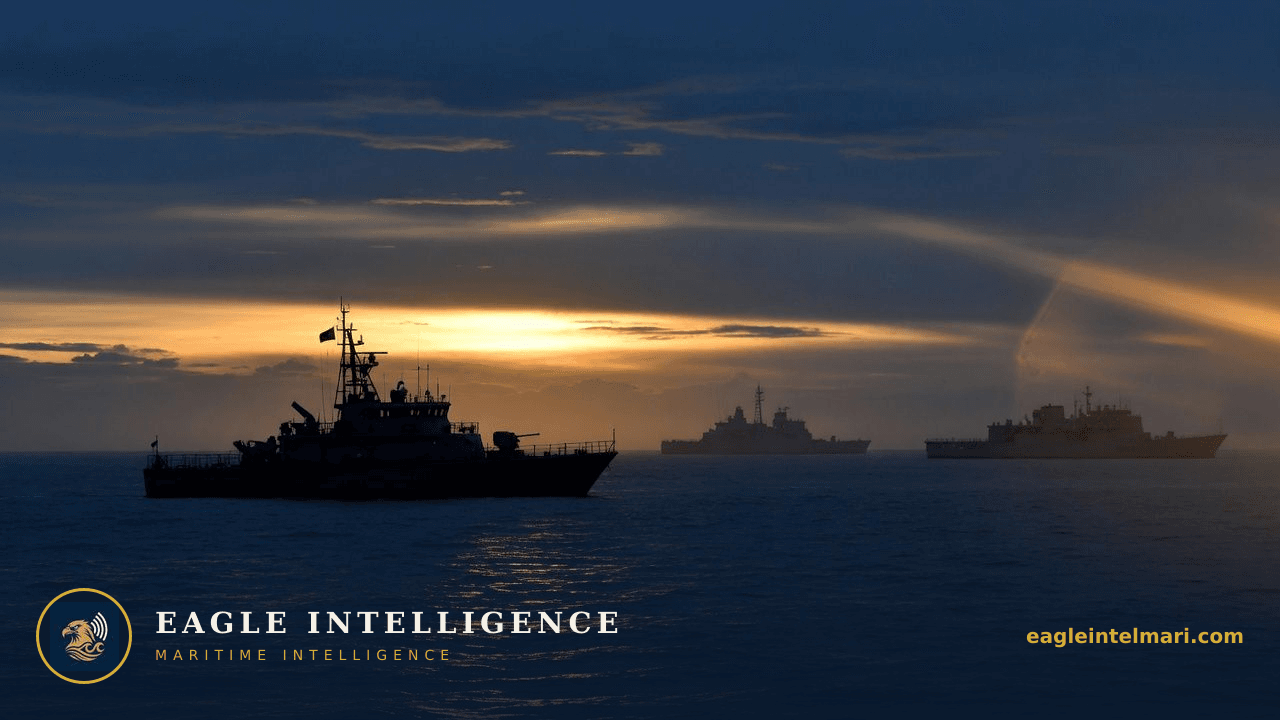
The immediate transfer of an American cutter gives Manila a vessel with greater range and sea-keeping than its current 56-meter patrol craft. At 110 meters and roughly 2,000 tons, such platforms can remain on station for 20–25 days instead of the five-to-seven-day cycles typical of smaller Philippine boats, extending coverage around Second Thomas Shoal and the Spratly features where resupply missions for the grounded Sierra Madre occur.
Commercial operators running liquefied natural gas from Bintulu to northeast Asia or coal from Kalimantan to southern China will see marginally higher encounter rates with Philippine vessels asserting exclusive economic zone rights. Hull and war-risk underwriters already price these lanes at 0.15–0.25 percent of hull value; the new cutter’s presence is likely to push those figures toward the upper end of the band within six months.
Parallel discussions with Tokyo focus on an Abukuma-class or similar 2,500-ton destroyer slated for imminent decommissioning. Unlike the cutter, the Japanese vessel carries a 76 mm gun and ASW suite, giving Manila its first credible surface combatant since the 1990s. Delivery timelines hinge on legal export approvals and crew training, yet the political signal is immediate: Tokyo is willing to transfer kinetic capability, not merely coast-guard tonnage.
For owners of bulk carriers and product tankers, the distinction matters. A Philippine destroyer can conduct live-fire exercises and shadow Chinese survey ships at standoff ranges that previously required U.S. or Australian involvement. Charterers booking spot voyages through the Palawan Passage are therefore likely to demand war-risk clauses that allow deviation or cancellation if live-fire notices are issued.
P&I clubs and hull markets have already begun modeling a “Philippine EEZ enforcement premium” analogous to the one applied off Yemen’s coast. If Manila stations the cutter or future destroyer within 12 nautical miles of contested reefs on a persistent basis, London syndicates are expected to widen the “listed areas” definition to include specific coordinates around Mischief Reef and Fiery Cross. Flag states such as Panama and Liberia may face pressure from shipowners to avoid routes inside the new high-risk box.
Filipino-crewed vessels constitute roughly 25 percent of the global merchant fleet. Any escalation that leads to Philippine-flagged or Philippine-owned ships being targeted for harassment increases personal risk for those seafarers. War-risk policies that exclude crew kidnap or detention liabilities are likely to proliferate, forcing owners to purchase separate kidnap-and-ransom cover or reroute via the eastern Philippine Sea at a 12–18 percent fuel penalty.
China’s response will probably combine intensified militia presence and legal-diplomatic pressure on Singapore and Malaysia to limit resupply access. A parallel acceleration of Chinese coast-guard cutter deployments to the same area could compress the buffer zone between opposing forces to under five nautical miles on peak days, raising collision probability for innocent passage traffic.
The most likely trajectory sees steady Philippine patrols backed by the new cutter and eventual destroyer arrival, producing a slow ratchet of insurance rates without open conflict. A sharper escalation path opens if Beijing conducts a sustained blockade of Second Thomas Shoal resupply; in that case, war-risk premiums could triple within weeks and force some operators to declare the entire Spratly box off-limits. The least probable but highest-impact scenario involves an accidental collision between the new Japanese-origin destroyer and a Chinese militia vessel, triggering mutual invocation of defense treaties and immediate market shutdown for all traffic west of Palawan.
Shipowners, charterers and insurers now have a narrow window to model these three cases against their 2026–2027 fixture lists before the next Shangri-La cycle hardens commitment timelines.
Advertisement
Advertisement
Live 1–5 shipping war-risk level across monitored chokepoints.
⚠️ Intelligence Disclaimer: This analysis is produced by Eagle Intelligence's AI-assisted automated analysis system and is provided for informational purposes only. See our editorial standards. It is not a substitute for official maritime safety advisories from UKMTO, MSCHOA, IMO, or flag state authorities. Operational decisions should always be based on official guidance and professional judgment. Eagle Intelligence accepts no liability for any loss arising from reliance on this content.
Live chokepoint status, war-risk shifts, and the daily maritime wire, straight to your inbox. Free.
Leave a comment
All comments moderated for quality
