A disabled merchant vessel abandoned off Oman triggered a coordinated merchant and U.S. Navy rescue of 14 Indian crew, underscoring crew exposure and operational fragility on one of the world's busiest chokepoints.
Advertisement
Advertisement
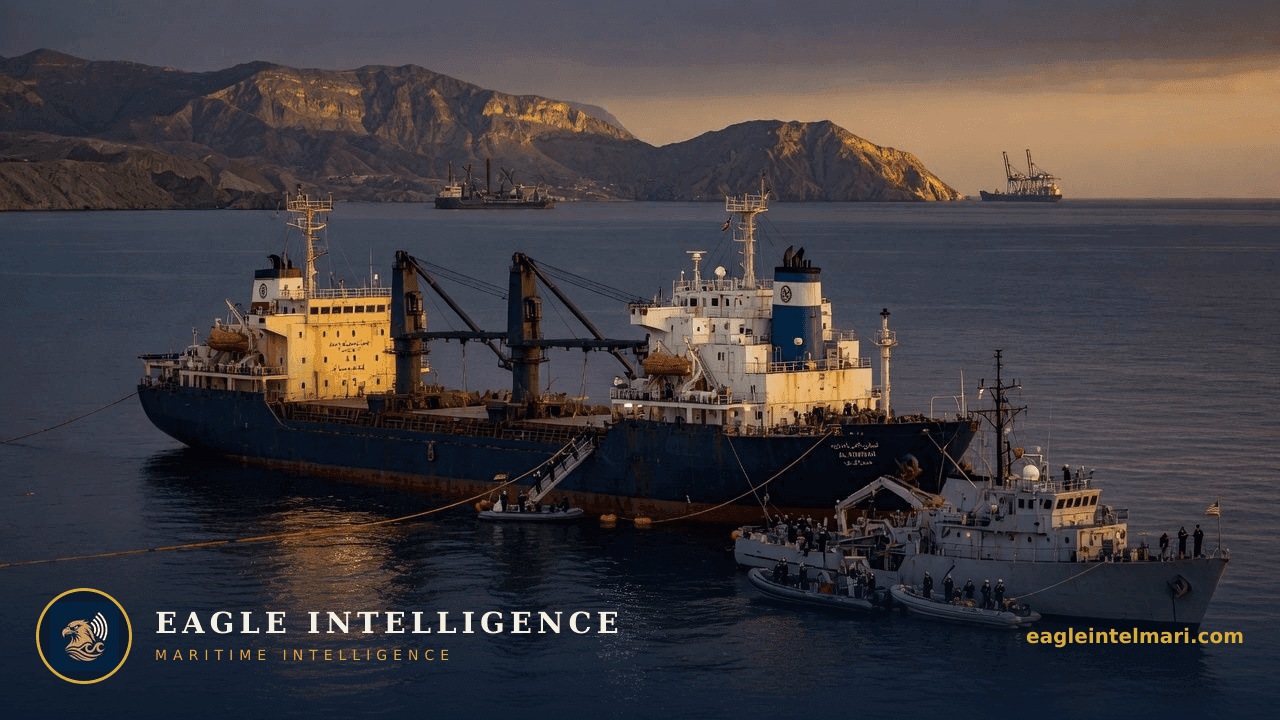
A disabled merchant vessel abandoned off the Omani coast near the Strait of Hormuz led to the rescue of 14 Indian mariners through joint action by a passing merchant ship and U.S. Navy assets. The incident, while resolved without reported casualties, spotlights recurring vulnerabilities for crews transiting the critical waterway.
The Strait of Hormuz funnels roughly one-fifth of global oil trade through a corridor barely 21 nautical miles wide at its narrowest. Any vessel that loses propulsion risks drifting into traffic lanes or Omani territorial waters within hours. In this case the disabled ship was abandoned, forcing rapid external intervention rather than onboard repairs. Such events compress decision timelines for masters and underline why even routine mechanical faults carry outsized consequences in confined waters.
Indian nationals constitute one of the largest single nationalities in the global merchant fleet, often serving on bulkers, tankers and product carriers that routinely call at Gulf terminals. When a vessel is abandoned, these crews lose immediate access to personal effects, wages and repatriation logistics. The 14 rescued mariners now face flag-state investigations, possible detention as witnesses and the administrative burden of proving their vessel's status before new employment can be secured. Insurers and manning agencies will absorb medical checks and lost-time claims, yet the reputational pressure on Indian crewing agents remains immediate.
The diversion of a commercial vessel to stand by until naval forces arrived demonstrates an evolving burden-sharing model in high-risk zones. Owners of the assisting ship will likely submit claims for deviation costs and fuel under general average or special compensation clauses. Hull underwriters, meanwhile, gain a documented case of proactive risk mitigation that may influence future war-risk premium calculations for Hormuz transits. The episode quietly tests the limits of SOLAS obligations versus commercial realities when naval presence is finite.
Although the rescue occurred outside port limits, the disabled vessel's drift trajectory likely prompted Omani coast-guard alerts and possible anchorage coordination. Local agents and salvage contractors stand to benefit from any subsequent tow or wreck-removal contract. Flag states whose vessels frequent Omani waters may accelerate vetting requirements or mandate additional redundancy checks for machinery spaces before clearance is granted.
Continued low-level mechanical failures could normalize joint merchant-navy rescues, gradually embedding deviation-cost recovery into charter-party clauses and pushing P&I clubs toward standardized Hormuz contingency funds. A single incident involving a laden tanker, however, would trigger immediate war-risk surcharges and force charterers to divert larger volumes around the Cape. Persistent abandonment cases without clear ownership chains risk drawing flag-state blacklisting pressure, particularly if Indian authorities press for faster crew-welfare safeguards.
P&I clubs will examine whether the vessel's abandonment complied with crew-safety conventions or reflected cost-cutting decisions. Hull insurers face subrogation questions if the vessel is later declared a total loss. For energy traders, the episode is a reminder that even non-hostile disruptions can tighten tanker availability and lift freight differentials on the Oman-India route within days.
Advertisement
Advertisement
Live Hormuz transit status and war-risk band.
Live 1–5 shipping war-risk level across monitored chokepoints.
⚠️ Intelligence Disclaimer: This analysis is produced by Eagle Intelligence's AI-assisted automated analysis system and is provided for informational purposes only. See our editorial standards. It is not a substitute for official maritime safety advisories from UKMTO, MSCHOA, IMO, or flag state authorities. Operational decisions should always be based on official guidance and professional judgment. Eagle Intelligence accepts no liability for any loss arising from reliance on this content.
Live chokepoint status, war-risk shifts, and the daily maritime wire, straight to your inbox. Free.
Leave a comment
All comments moderated for quality
