Chinese warships and coast guard vessels blocked a Philippine humanitarian resupply mission to Second Thomas Shoal on 25 September 2026, placing Filipino personnel at immediate risk and testing the operational limits of sustained presence operations in the South China Sea.
Advertisement
Advertisement
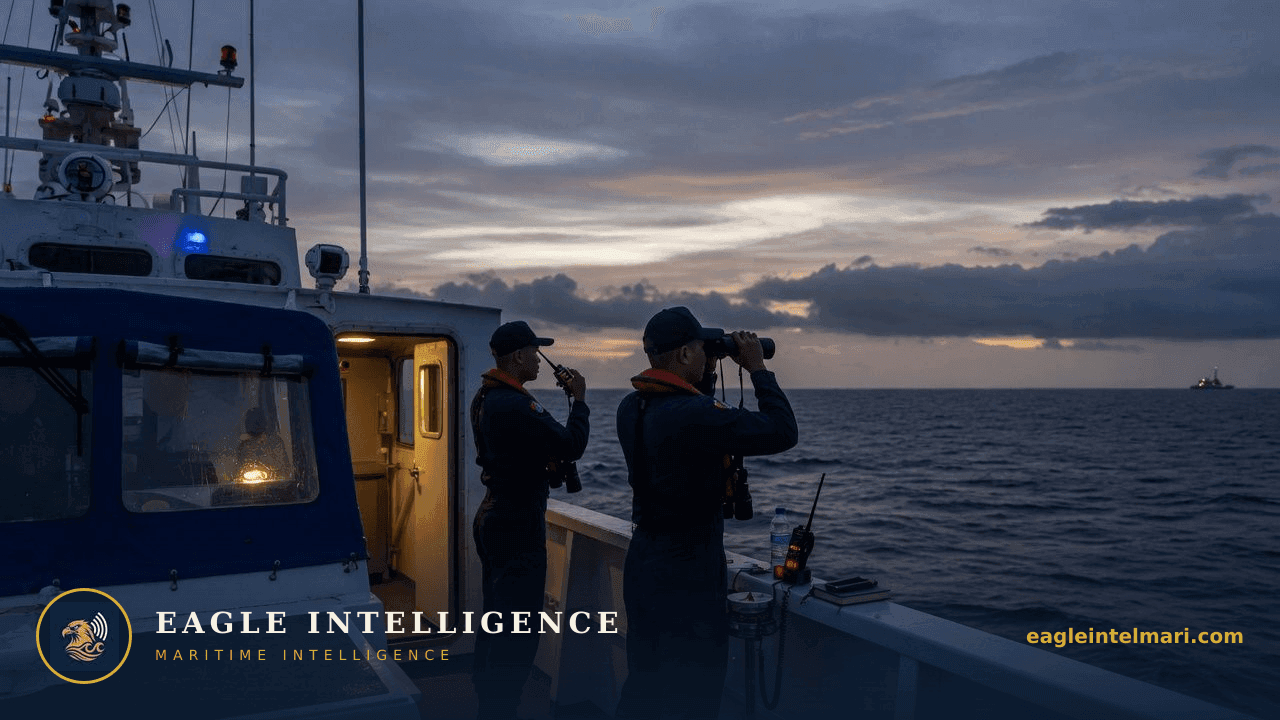
On 25 September 2026 the People’s Liberation Army Navy and China Coast Guard physically hindered the Philippine Navy resupply ship Lapu Lapu while it was supported by the patrol vessels BRP Malabrigo and BRP Cabra. Manila’s National Task Force for the West Philippine Sea stated that the Chinese units attempted to “hinder” the mission, thereby putting Filipino personnel at risk and obstructing a legitimate humanitarian and sustainment operation. This incident constitutes the most significant development at the feature since the current cycle of tensions began.
The event occurred during an established pattern of Philippine efforts to rotate personnel and deliver food, water and construction materials to the grounded Sierra Madre. Unlike earlier shadowing or radio challenges, the 25 September action involved coordinated blocking by both naval combatants and coast-guard cutters, raising the physical proximity and collision risk for the three Philippine vessels. The statement from Manila explicitly frames the operation as humanitarian, underscoring the legal and operational distinction between military reinforcement and crew sustainment.
The resupply ship Lapu Lapu and its two coast-guard escorts operate in a confined area around the shoal where manoeuvring room is limited by the wreck itself and surrounding reefs. Any attempt by larger Chinese units to position themselves across the approach vectors forces the smaller Philippine vessels into tighter turns and slower speeds, increasing the chance of allision with the Sierra Madre or grounding on the shoal. The patrol vessels BRP Malabrigo and BRP Cabra are 44-metre multi-role craft whose primary mission is fisheries enforcement; they lack the displacement or armour to absorb ramming or heavy water-cannon impact.
Crew endurance is already strained by repeated missions conducted under constant surveillance. The 25 September blockage extended the time the vessels remained on station while Chinese units maintained blocking positions, directly lengthening exposure to fatigue and equipment stress. Fuel, fresh water and medical supplies for the embarked personnel become critical variables once the planned rotation window is missed. Port constraints in Palawan and the need to stage from forward bases further compress planning margins when missions are delayed or aborted.
Manila’s characterisation of the mission as humanitarian and sustainment invokes both the 1982 UN Convention on the Law of the Sea provisions on innocent passage and the duty to render assistance at sea. The Chinese actions are presented by the Philippines as obstruction of a legitimate operation, potentially engaging the International Regulations for Preventing Collisions at Sea if close-quarters manoeuvres occurred. Flag-state obligations for the Philippine vessels remain unchanged, yet the coastal-state duties of China are disputed because Beijing asserts sovereignty over the feature.
Insurance clauses covering war-risk and piracy may be triggered if the incident is classified as a hostile act rather than a routine law-enforcement encounter. P&I clubs will examine whether the three vessels were operating within the bounds of their declared humanitarian purpose or whether any deviation occurred that could void coverage. Seafarer rights under the Maritime Labour Convention become relevant if extended deployment leads to fatigue-related incidents or if crew members are injured during evasion manoeuvres.
Although the immediate volume of cargo affected is small, the incident reinforces the perception that any vessel operating near Second Thomas Shoal carries elevated political and physical risk. Charterers and insurers will price that risk into contracts for Philippine-flagged or Philippine-destined tonnage, even if the cargo itself is unrelated to the shoal. Regional feeder services that routinely pass within visual range of the feature may face higher war-risk premiums or outright refusal by some owners.
Second-order effects appear in the timing of crew changes and spare-parts deliveries to the wider Philippine archipelago. When resupply missions are delayed, the Sierra Madre garrison must draw on emergency stocks, increasing the frequency of future missions and the cumulative exposure of the same small pool of naval and coast-guard personnel. This creates a feedback loop that amplifies both operational cost and human risk without any change in the underlying territorial dispute.
Beijing’s decision to deploy both navy and coast-guard assets in a single blocking action signals a willingness to escalate the threshold of interference while still remaining below the level of direct fire. The coordinated presence tests Manila’s resolve and the speed of any allied response, particularly from the United States, whose mutual-defence commitments are invoked whenever Philippine public vessels come under attack. The timing, immediately after the US Navy’s announcement of a new deputy chief of naval operations for sustainment, may be coincidental but underscores the contrast between shore-infrastructure challenges in Washington and at-sea presence requirements in Manila.
Manila’s public statement serves both domestic and international audiences. Domestically it reinforces the government’s commitment to the West Philippine Sea; internationally it documents the incident for possible arbitration or diplomatic demarches. The explicit reference to “Filipino personnel at risk” is calculated language designed to trigger alliance consultation mechanisms without crossing into a formal invocation of collective defence.
The personnel aboard Lapu Lapu, Malabrigo and Cabra face immediate physical danger from collision or boarding attempts, followed by the longer-term psychological burden of repeated high-stress transits. Families ashore monitor open-source tracking and official statements, creating uncertainty that compounds with each delayed return. If missions are suspended, the garrison on the Sierra Madre itself faces isolation, with consequences for morale and medical contingencies.
Philippine manning agencies already operate under tight crewing margins; any injury or repatriation requirement removes experienced personnel from the rotation pool and triggers replacement costs. The absence of detailed public information on the exact duration of the blockage or the closest point of approach leaves families without concrete timelines, amplifying anxiety.
We know that on 25 September 2026 Chinese navy and coast-guard units physically obstructed the Lapu Lapu resupply mission, that two named Philippine patrol vessels were present, and that Manila publicly characterised the action as endangering personnel and obstructing a humanitarian operation. We do not know the precise closest points of approach, whether water cannon or ramming occurred, the exact duration of the blockage, or whether any vessel sustained damage. We also lack independent verification of Chinese rules of engagement during the encounter.
Eagle Assessment: The 25 September action represents a deliberate raising of the operational cost for Philippine sustainment of Second Thomas Shoal. The involvement of both PLAN and CCG units indicates centralised coordination rather than local initiative. Confidence is medium that this marks a new steady-state level of interference; confidence is low that the next mission will pass without further escalation or an accidental collision.
An alternative reading holds that the Chinese action was a calibrated law-enforcement response to an unauthorised approach to a feature Beijing regards as sovereign territory, comparable to earlier non-violent interferences that did not result in sustained blockage. Under this view the mission was delayed but not prevented, no vessel was damaged, and the incident will be followed by diplomatic protest rather than kinetic escalation. Evidence that would support this reading includes Chinese public statements framing the event as fisheries or environmental enforcement, rapid release of the Philippine vessels once identification was confirmed, and absence of similar actions against subsequent resupply attempts in the following week.
How will Philippine naval planners adjust the next resupply window to reduce exposure time given the demonstrated blocking tactic?
Will P&I underwriters apply a standing war-risk surcharge to all Philippine government vessels operating west of Palawan, or only to those scheduled for Second Thomas Shoal missions?
What threshold of interference would trigger formal invocation of the US-Philippines mutual defence treaty, and has that threshold been communicated privately?
Can regional AIS and VMS data providers deliver near-real-time alerts to commercial operators when Chinese blocking formations are detected near the shoal?
How are manning agencies preparing for possible medical repatriations or extended crew contracts arising from mission delays?
What contingency routing exists for commercial traffic if Philippine authorities declare temporary exclusion zones around the feature during resupply windows?
Next 24 hours: Any Philippine government statement confirming the safe return of Lapu Lapu, Malabrigo and Cabra or reporting damage or injury.
Next seven days: Release of AIS tracks or official Chinese commentary that either confirms or contradicts the blocking narrative; scheduling of the subsequent resupply attempt.
Next thirty days: Any announced change in Philippine resupply cadence, introduction of escort by larger naval combatants, or formal protest note circulated at the UN or ASEAN.
Advertisement
Advertisement
Live 1–5 shipping war-risk level across monitored chokepoints.
⚠️ Intelligence Disclaimer: This analysis is produced by Eagle Intelligence's AI-assisted automated analysis system and is provided for informational purposes only. See our editorial standards. It is not a substitute for official maritime safety advisories from UKMTO, MSCHOA, IMO, or flag state authorities. Operational decisions should always be based on official guidance and professional judgment. Eagle Intelligence accepts no liability for any loss arising from reliance on this content.
Live chokepoint status, war-risk shifts, and the daily maritime wire, straight to your inbox. Free.
Leave a comment
All comments moderated for quality
