Iran published a vessel blacklist for the Strait of Hormuz and warned of seizures, coinciding with continued US sanctions and military escorts for tankers. A Panama-flagged bulk carrier sank off India’s east coast with 22 crew still missing after two rescues. Somali pirates hijacked an oil tanker off Yemen, adding to Red Sea disruptions. These events compress options for Hormuz and Indian Ocean transits while search operations remain active. Charterers and insurers must now recalibrate routing and war-risk declarations within the next 24 hours.

Advertisement
Advertisement
Iran published a vessel blacklist for the Strait of Hormuz and warned of seizures, coinciding with continued US sanctions and military escorts for tankers. A Panama-flagged bulk carrier sank off India’s east coast with 22 crew still missing after two rescues. Somali pirates hijacked an oil tanker off Yemen, adding to Red Sea disruptions. These events compress options for Hormuz and Indian Ocean transits while search operations remain active. Charterers and insurers must now recalibrate routing and war-risk declarations within the next 24 hours.
Iran published a blacklist targeting vessels in the Strait of Hormuz and warned of seizure authority.
Why it matters: The move raises direct seizure risk for listed and unlisted commercial traffic, tightening an already constrained corridor.
Who is exposed: Tankers and bulkers routing through Hormuz, their insurers and charterers with unhedged positions.
The vessel sank in the Bay of Bengal; 22 of 24 crew remain missing after Indian rescue teams recovered two Chinese nationals.
Why it matters: Loss of a Panama-flagged unit triggers immediate flag-state and P&I investigations plus potential delays for regional cargo.
Who is exposed: Owners and managers of similar aged bulk carriers on Indian east-coast approaches; seafarers on comparable routes.
Pirates seized an oil tanker, extending the recent surge in Red Sea and Gulf of Aden attacks.
Why it matters: Successful hijack demonstrates reach beyond Houthi zones and forces re-pricing of Indian Ocean war-risk cover.
Who is exposed: Tankers and product carriers transiting between Hormuz and the Suez or Cape routes.
US forces diverted 70 commercial ships under a maritime blockade posture around Iran.
Why it matters: Military routing overrides commercial schedules and creates chokepoint congestion that can last days.
Who is exposed: Operators and charterers with time-sensitive cargoes through the northern Arabian Sea.
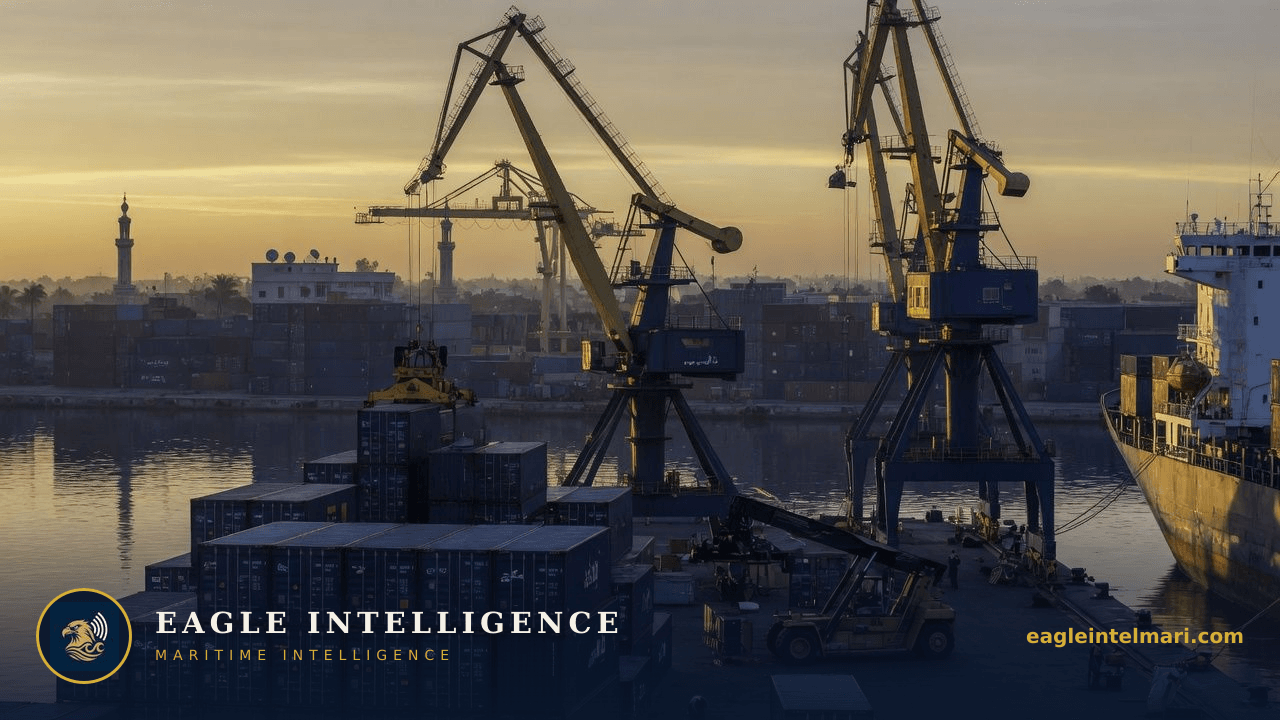
Egypt’s new port-operator partnerships may absorb diverted Mediterranean cargo if Hormuz and Red Sea premiums remain high for more than two weeks.
Iran war could last deep into 2027 Verdict: unconfirmed Fortune headline offers scenario without supporting operational data on sustained closure or military timelines.
Iranian Revolutionary Guard statement or US Central Command advisory naming the first vessel seized or diverted under the new blacklist, expected within 24 hours.
Which charter-party clauses will first be tested if Hormuz traffic is formally rerouted around the blacklist for more than one week?
The Daily Eagle Brief separates reported fact from Eagle assessment. Confidence percentages express editorial confidence based on the available sourcing, not mathematical certainty.
Advertisement
Advertisement
Live Hormuz transit status and war-risk band.
Live 1–5 shipping war-risk level across monitored chokepoints.
⚠️ Intelligence Disclaimer: This analysis is produced by Eagle Intelligence's AI-assisted automated analysis system and is provided for informational purposes only. See our editorial standards. It is not a substitute for official maritime safety advisories from UKMTO, MSCHOA, IMO, or flag state authorities. Operational decisions should always be based on official guidance and professional judgment. Eagle Intelligence accepts no liability for any loss arising from reliance on this content.
Live chokepoint status, war-risk shifts, and the daily maritime wire, straight to your inbox. Free.
Leave a comment
All comments moderated for quality
