Trump's compensation demand for deaths in the February-started U.S.-Iran conflict has removed near-term prospects for Strait of Hormuz reopening, locking in longer tanker voyages and sustained war-risk premiums. Shadow-fleet tankers continue to generate environmental liabilities, with one sanctioned vessel sinking off Oman and another spilling oil after grounding. US deployment of more than 20 warships to enforce the Iran naval blockade and Houthi strikes on the Red Sea port of Mokha and a Saudi oil facility add operational friction for owners and charterers already managing elevated insurance and routing costs.
Advertisement
Advertisement
Trump's compensation demand for deaths in the February-started U.S.-Iran conflict has removed near-term prospects for Strait of Hormuz reopening, locking in longer tanker voyages and sustained war-risk premiums. Shadow-fleet tankers continue to generate environmental liabilities, with one sanctioned vessel sinking off Oman and another spilling oil after grounding. US deployment of more than 20 warships to enforce the Iran naval blockade and Houthi strikes on the Red Sea port of Mokha and a Saudi oil facility add operational friction for owners and charterers already managing elevated insurance and routing costs.
Trump hardened the position that Iran must pay compensation, fading hopes for any near-term Hormuz deal despite ongoing Iran-Oman route talks.
Why it matters: Extended closure forces sustained Cape reroutes, higher bunker consumption and persistent war-risk premiums for all Hormuz transits.
Who is exposed: Owners and charterers of tankers and bulkers on Middle East–Asia and Europe routes; insurers writing war-risk cover.
A sanctioned tanker carrying one million barrels sank, adding to the rapid spread of oil from a second grounded shadow-fleet vessel.
Why it matters: New environmental liabilities and clean-up claims will pressure P&I clubs and raise scrutiny on shadow-fleet chartering and insurance chains.
Who is exposed: P&I clubs, coastal states Oman and Iran, traders handling sanctioned cargoes.
Houthi forces attacked the Red Sea port of Mokha and a Saudi oil facility, killing seven and injuring fifteen.
Why it matters: Direct threat to port infrastructure and oil export terminals widens the zone of elevated risk premiums and forces additional convoy or escort planning.
Who is exposed: Red Sea and Bab el-Mandeb operators, Saudi crude exporters, container lines using the Suez routing.
Drone strikes on CPC-linked assets pushed tanker rates to $400,000 per day.
Why it matters: Rate spike signals immediate chartering pressure and insurance cost pass-through for Black Sea loadings already constrained by Turkish transit permits.
Who is exposed: Black Sea crude and product charterers, Turkish Straits operators, CPC-affiliated owners.
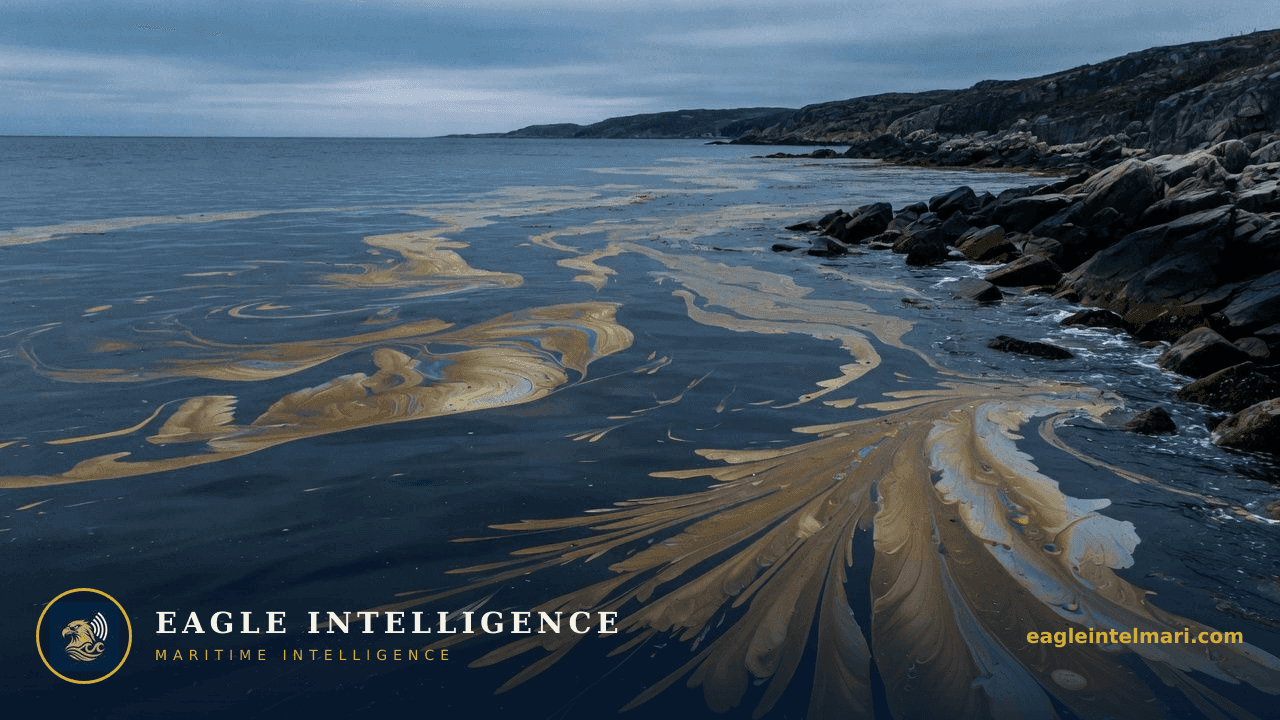
Cumulative shadow-fleet spills off Oman are creating a de-facto insurance exclusion zone along the eastern Hormuz approaches that will affect even non-sanctioned traffic seeking to avoid the main strait.
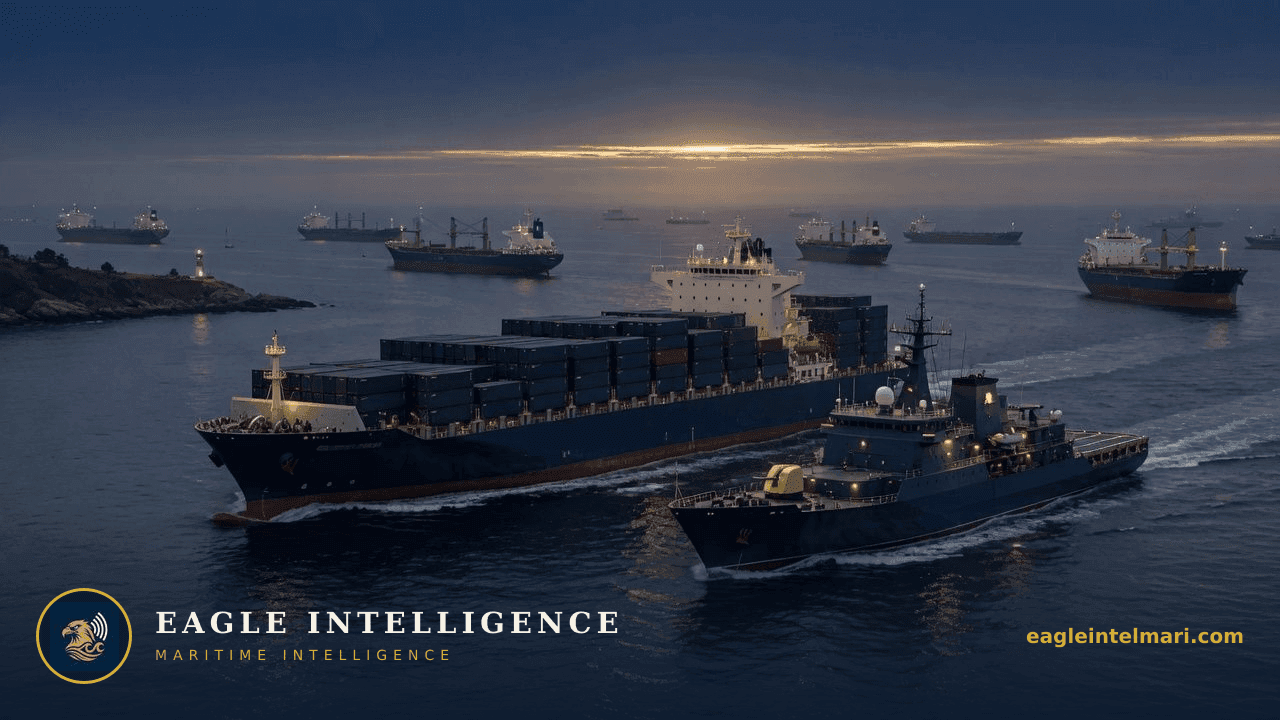
Explainer claiming the blockade has not happened Verdict: unconfirmed US deployment of more than 20 warships plus the enforced compensation demand together constitute active enforcement pressure even without a declared formal blockade.
Outcome of Iran-Oman Hormuz route talks by 12 August; any joint statement omitting US blockade removal will confirm extended closure.
How will P&I clubs price environmental cover for any vessel that has transited within 50 nm of a confirmed shadow-fleet spill site?
The Daily Eagle Brief separates reported fact from Eagle assessment. Confidence percentages express editorial confidence based on the available sourcing, not mathematical certainty.
Advertisement
Advertisement
Indicative Additional War Risk Premium (AWRP) ranges — not a binding insurance quote.
Live Hormuz transit status and war-risk band.
Live 1–5 shipping war-risk level across monitored chokepoints.
⚠️ Intelligence Disclaimer: This analysis is produced by Eagle Intelligence's AI-assisted automated analysis system and is provided for informational purposes only. See our editorial standards. It is not a substitute for official maritime safety advisories from UKMTO, MSCHOA, IMO, or flag state authorities. Operational decisions should always be based on official guidance and professional judgment. Eagle Intelligence accepts no liability for any loss arising from reliance on this content.
Live chokepoint status, war-risk shifts, and the daily maritime wire, straight to your inbox. Free.
Leave a comment
All comments moderated for quality
