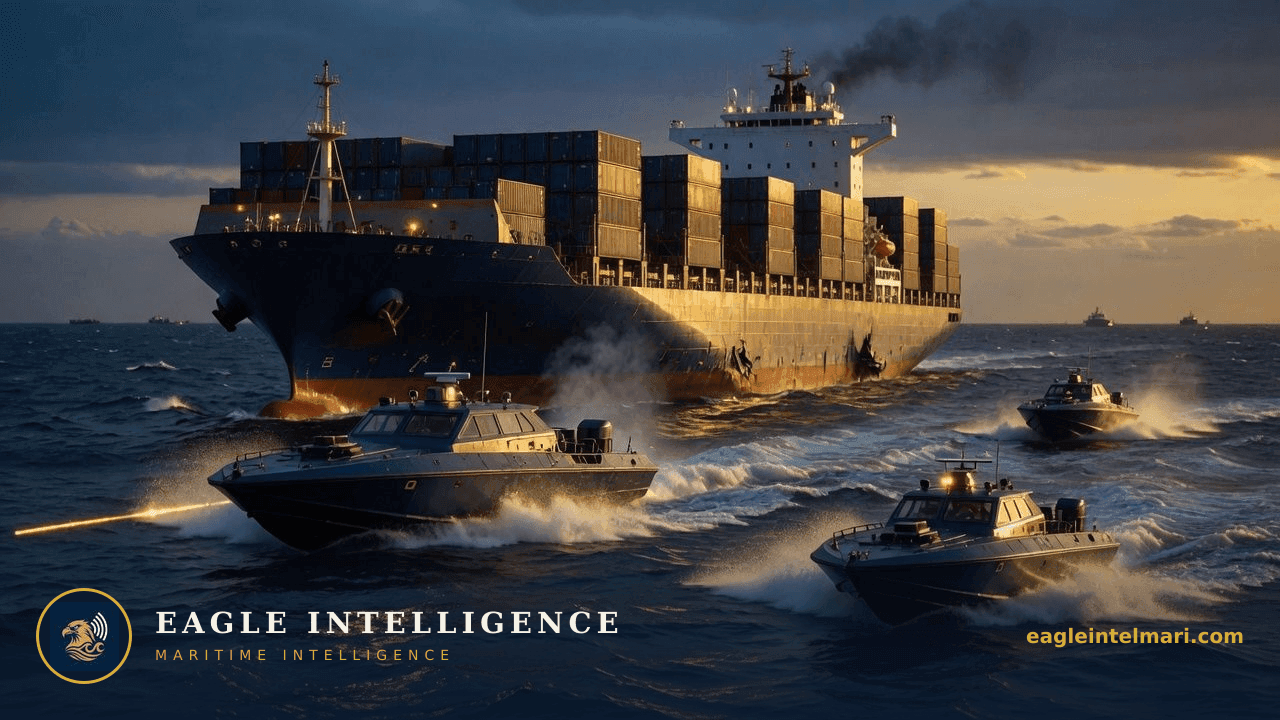
Ukrainian USV strikes sank a Rosatom-owned container ship and struck an oil tanker in the Black Sea, killing a third Filipino crew member in recent days. Separate incidents damaged an LNG carrier exiting the Strait of Hormuz and left an oil spill from a Russia-linked shadow fleet tanker off Oman. Russian grain exporters warned that sustained Black Sea attacks could cut exports and lift global food prices. Insurers and flag states now face immediate questions on crew protection and war-risk cover for civilian tonnage in both theaters.
Advertisement
Advertisement
Ukrainian USV strikes sank a Rosatom-owned container ship and struck an oil tanker in the Black Sea, killing a third Filipino crew member in recent days. Separate incidents damaged an LNG carrier exiting the Strait of Hormuz and left an oil spill from a Russia-linked shadow fleet tanker off Oman. Russian grain exporters warned that sustained Black Sea attacks could cut exports and lift global food prices. Insurers and flag states now face immediate questions on crew protection and war-risk cover for civilian tonnage in both theaters.
Ukrainian unmanned surface vessels sank a Rosatom container ship and struck an oil tanker, killing a third Filipino seafarer.
Why it matters: The shift from military to commercial targets raises crew safety, war-risk premiums and flag-state obligations for operators in the Black Sea.
Who is exposed: Owners of Russian-linked tonnage, Filipino-crewed vessels and P&I clubs writing Black Sea war risk.
UKMTO reported two tanker incidents; a GasLog LNG carrier was damaged exiting Hormuz and crude spilled from a Russia-linked tanker off Oman.
Why it matters: Disruptions to the world’s most critical LNG and crude route threaten immediate supply volatility and higher war-risk surcharges.
Who is exposed: LNG operators, shadow-fleet owners, charterers routing through Hormuz and hull insurers.
The lobby stated that continued Black Sea attacks could reduce grain shipments and push up global food prices.
Why it matters: Any sustained drop in Black Sea grain exports would tighten supply for importers in Africa and Asia within weeks.
Who is exposed: Grain charterers, traders and ports dependent on Black Sea loadings.

The cumulative effect on Filipino seafarer recruitment pipelines as families pressure crewing agencies to avoid both the Black Sea and Hormuz.

The Iran War has reopened the world’s most dangerous shipping lane Verdict: unsupported No declaration of war exists in the supplied material; attacks remain limited to specific tanker incidents without broader state-on-state naval engagement.
UKMTO’s next Hormuz incident report or any new DMW announcement on additional Filipino seafarer casualties before 03 Aug 2026.
How quickly will flag states move to restrict or condition calls at Russian Black Sea ports following the third fatality?
The Daily Eagle Brief separates reported fact from Eagle assessment. Confidence percentages express editorial confidence based on the available sourcing, not mathematical certainty.
Advertisement
Advertisement
Live Hormuz transit status and war-risk band.
Live 1–5 shipping war-risk level across monitored chokepoints.
⚠️ Intelligence Disclaimer: This analysis is produced by Eagle Intelligence's AI-assisted automated analysis system and is provided for informational purposes only. See our editorial standards. It is not a substitute for official maritime safety advisories from UKMTO, MSCHOA, IMO, or flag state authorities. Operational decisions should always be based on official guidance and professional judgment. Eagle Intelligence accepts no liability for any loss arising from reliance on this content.
Live chokepoint status, war-risk shifts, and the daily maritime wire, straight to your inbox. Free.
Leave a comment
All comments moderated for quality
