Renewed US-Iran hostilities in the Strait of Hormuz dominate the last 24 hours, generating the largest volume of reporting and directly affecting crude-carrier routing. Separate infrastructure and commercial developments in the US Gulf and European cruise sector proceed without apparent linkage to the Gulf escalation.
Advertisement
Advertisement
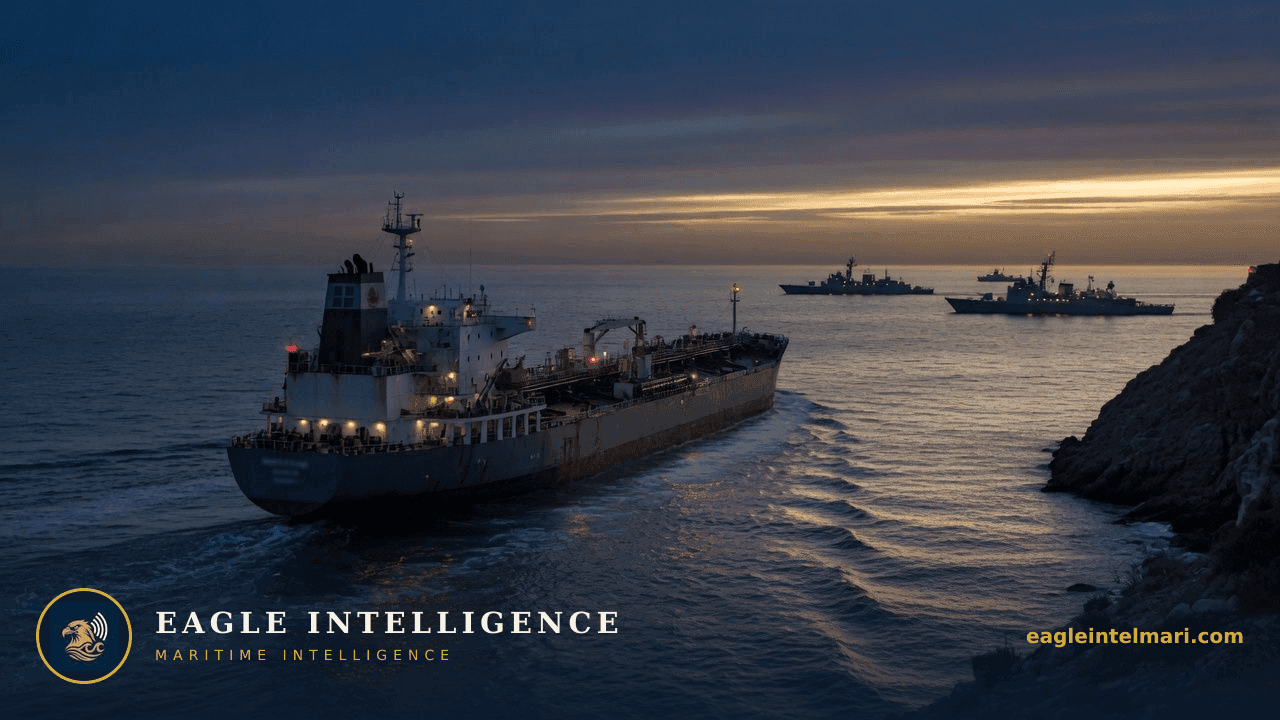
US strikes on Iran after Hormuz tanker attack force VLCC owners into immediate Cape diversion or war-risk decisions.
Renewed US-Iran hostilities in the Strait of Hormuz dominate the last 24 hours, generating the largest volume of reporting and directly affecting crude-carrier routing. Separate infrastructure and commercial developments in the US Gulf and European cruise sector proceed without apparent linkage to the Gulf escalation.

A commercial tanker was struck in the Strait of Hormuz; the US conducted additional strikes on Iranian targets, described across multiple outlets as retaliation following the ship attack.
Why it matters: Owners and charterers of VLCCs and other crude carriers in the Gulf now face 24-48 hour decisions on accepting higher war-risk cover or diverting around the Cape of Good Hope.
The multi-stakeholder read: Flag and coastal states plus major powers view the exchanges as direct escalation; shipowners, operators and insurers must price immediate exposure while seafarers face elevated threat levels.
Assessment (high confidence): Routing and insurance decisions will crystallize within the next two days; volume of traffic through the strait is already reported as reduced.
The Port of Brownsville finished its $295 million ship-channel deepening project, allowing larger tonnage to serve South Texas and northern Mexico trade.
Why it matters: Charterers and owners serving the Mexico Gulf corridor must now recalculate vessel deployment and cargo economics.
The multi-stakeholder read: US Gulf ports and regional charterers gain capacity; competing ports may see marginal volume shifts.
Assessment (high confidence): The change is operational and positive for the affected trade lane; no connection to Hormuz events is indicated.
The 12th Marine Littoral Regiment forward-deployed anti-ship missiles on Okinawa, prompting shipowners and charterers to reassess war-risk premiums and potential chokepoint closures in the first island chain.
Why it matters: Operators moving tonnage through the Western Pacific now weigh higher insurance costs and alternative routing options.
The multi-stakeholder read: Regional coastal states and major powers monitor the deployment; owners and insurers must update threat assessments for the area.
Assessment (medium confidence): Premium increases are likely but the scale and duration remain unclear pending further military posture signals.
The Hormuz escalation creates immediate, high-severity risk for energy shipping while Brownsville and cruise-sector developments reflect ongoing infrastructure and newbuilding momentum in lower-risk regions; no source material links the two sets of developments.

This is an Eagle Intelligence daily synthesis, drawn from the day's reporting and wire signals. Items marked "Assessment" are analytical judgments, not statements of fact.
Advertisement
Advertisement
Live Hormuz transit status and war-risk band.
Live 1–5 shipping war-risk level across monitored chokepoints.
⚠️ Intelligence Disclaimer: This analysis is produced by Eagle Intelligence's AI-assisted automated analysis system and is provided for informational purposes only. See our editorial standards. It is not a substitute for official maritime safety advisories from UKMTO, MSCHOA, IMO, or flag state authorities. Operational decisions should always be based on official guidance and professional judgment. Eagle Intelligence accepts no liability for any loss arising from reliance on this content.
Live chokepoint status, war-risk shifts, and the daily maritime wire, straight to your inbox. Free.
Leave a comment
All comments moderated for quality
