A Navy-operated autonomous surface vessel rescued two Army aviators after an Apache crash in the Gulf of Oman, proving unmanned systems can now perform time-critical personnel recovery in the Strait of Hormuz's high-threat environment.
Advertisement
Advertisement
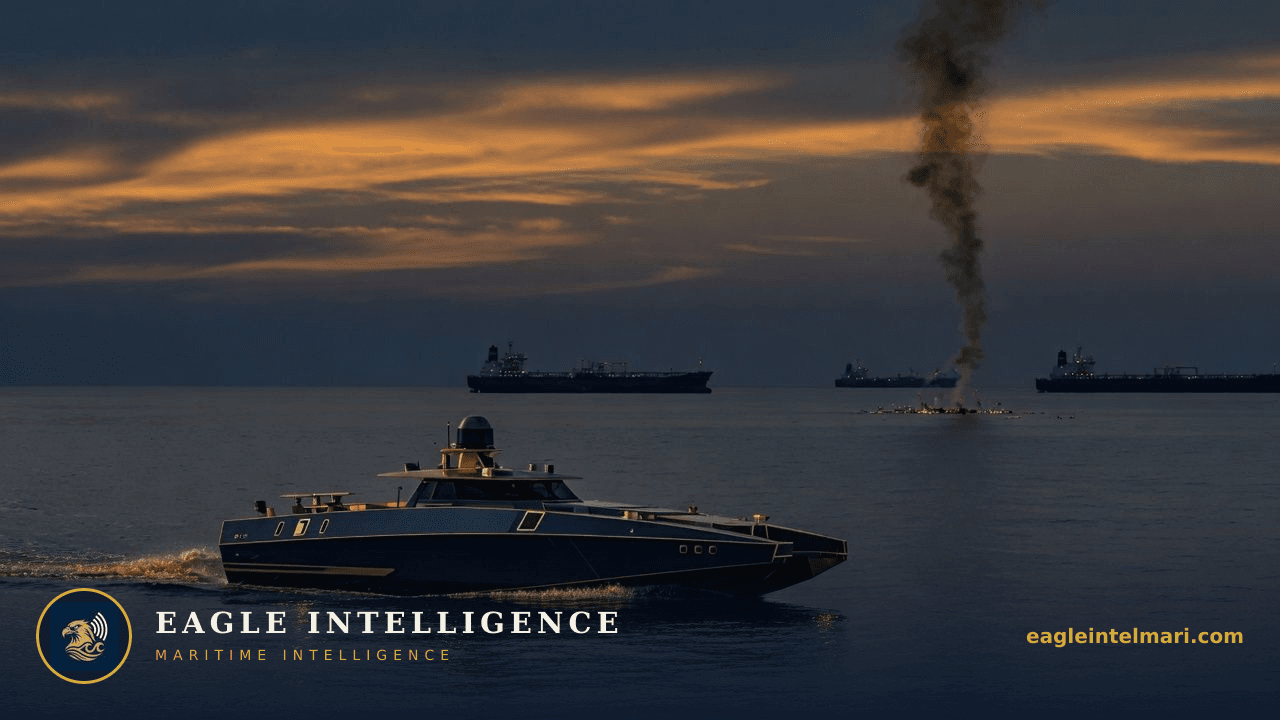
A Saronic-built autonomous surface vessel has carried out the first publicly confirmed operational rescue of downed U.S. aviators in the approaches to the Strait of Hormuz, demonstrating that unmanned platforms can now insert themselves into the most sensitive phase of a military incident without risking additional crewed assets.
The vessel located the crash site, established communications, and extracted the two AH-64 pilots before conventional search-and-rescue helicopters arrived. Because the platform operates without an onboard crew, it removed the usual requirement to expose additional personnel to whatever environmental or adversarial factors caused the original incident. This single data point shifts the risk calculus for any future mishap in the same waters.
The location is not incidental. Roughly one-fifth of global oil trade still transits the Strait; any incident that draws crewed warships into the area immediately raises the prospect of Iranian fast-boat harassment or mine-laying. An autonomous asset that can loiter, search, and extract without presenting a large radar or infrared signature changes the geometry of response. Navies have long rehearsed unmanned mine countermeasures here; they are now rehearsing unmanned search-and-rescue.
Owners and charterers running VLCCs and product tankers through the same corridor face the same threat surface. If a commercial vessel suffers a propulsion failure or minor collision and requires external assistance, the presence of proven USVs could compress response times. Conversely, the same platforms could be tasked to shadow or photograph merchant traffic, creating new questions about data sovereignty and rules of engagement. Insurers are already modelling scenarios in which an autonomous Navy asset becomes the first responder to a distressed tanker rather than a coalition warship.
Hull and P&I clubs have no established tariff for autonomous rescue assets. Underwriters are asking whether a USV that successfully extracts personnel reduces exposure or whether its mere presence in the area signals an elevated state of alert that itself warrants higher premiums. The Oman rescue supplies the first real-world loss data point; how that data is interpreted will shape war-risk pricing for the 2027 renewal cycle.
Ratings on vessels transiting the region already operate under heightened fatigue protocols. The knowledge that an unmanned platform can now perform certain rescue functions may ease some pressure on masters to launch their own boats in marginal conditions, but it also raises the prospect that port authorities in Oman or the UAE could demand proof of coordination with local unmanned traffic management systems before granting pilotage waivers.
If the U.S. Navy accelerates fielding, USVs could become routine fixtures on Hormuz transits within eighteen months, normalising their presence for commercial traffic. A second pathway sees Iran or proxy forces treat the platforms as legitimate targets, producing the first kinetic engagement between an unmanned surface vessel and an asymmetric threat. A third, slower route sees regulatory lag keep the platforms in experimental pockets while commercial operators continue to rely on crewed assets, widening the capability gap between military and merchant response times.
The Oman incident supplies concrete evidence that the first pathway is technically viable; whether it becomes the default depends on political tolerance for unmanned systems operating inside the world's busiest energy chokepoint.
Advertisement
Advertisement
Live Hormuz transit status and war-risk band.
Live 1–5 shipping war-risk level across monitored chokepoints.
⚠️ Intelligence Disclaimer: This analysis is produced by Eagle Intelligence's AI-assisted automated analysis system and is provided for informational purposes only. See our editorial standards. It is not a substitute for official maritime safety advisories from UKMTO, MSCHOA, IMO, or flag state authorities. Operational decisions should always be based on official guidance and professional judgment. Eagle Intelligence accepts no liability for any loss arising from reliance on this content.
Live chokepoint status, war-risk shifts, and the daily maritime wire, straight to your inbox. Free.
Leave a comment
All comments moderated for quality
