
Maritime update · Content type not recorded
Hormuz Tanker Strikes Reach Six as US Carrier and Saudi — Oct 3
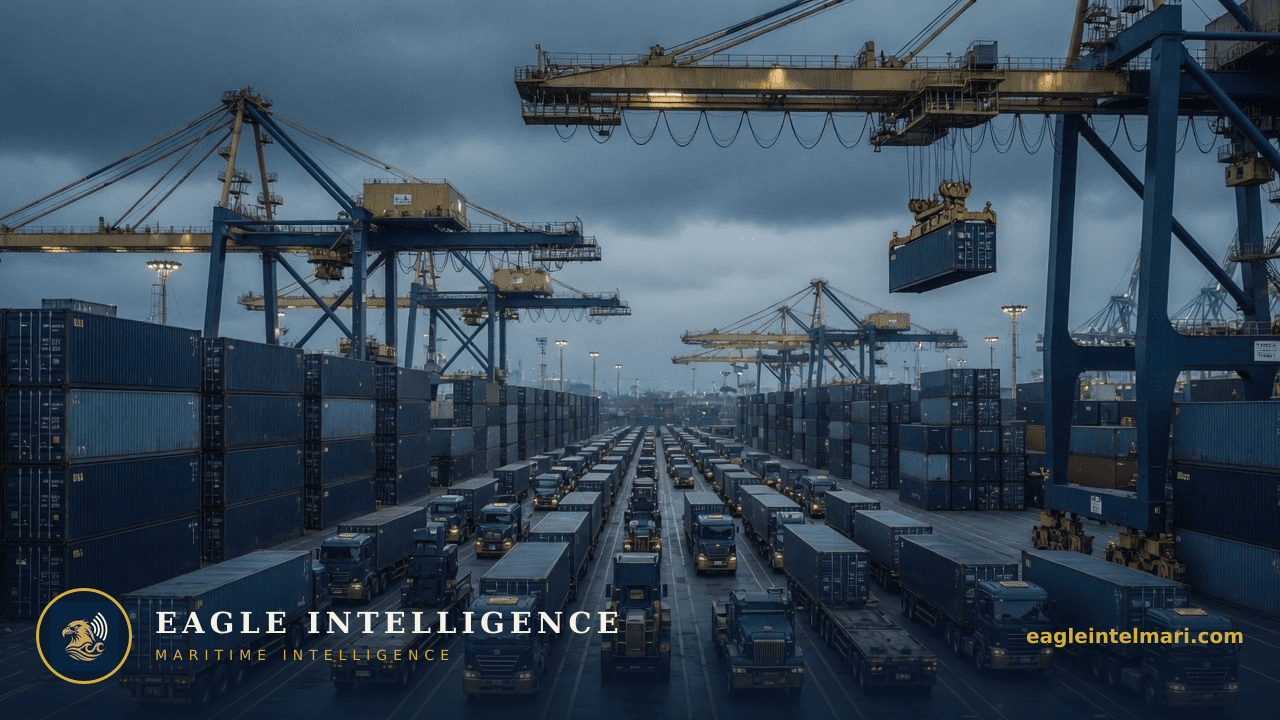
Six tankers have now been struck in the Strait of Hormuz since Sunday, prompting immediate questions over sustained rerouting around Africa or a Saudi-led ground operation against Houthi positions. The United States has added a carrier and 10,000 troops to the region while LNG shipments through Hormuz hit their highest level since the Iran war began. BIMCO committees have elevated Strait security and decarbonisation as priority issues, with direct effects on hull war-risk premiums, crew exposure, and global tanker availability. Port congestion signals remain elevated globally, and fresh attacks have also hit Saudi oil infrastructure. Decision-makers must weigh whether current force posture and commercial rerouting options will contain or amplify the disruption.
Eagle IntelligenceReview status is not recordedRecorded urgency at publication: High. Not a live alert.
Advertisement
Advertisement
The Five Minutes That Matter
Six tankers have now been struck in the Strait of Hormuz since Sunday, prompting immediate questions over sustained rerouting around Africa or a Saudi-led ground operation against Houthi positions. The United States has added a carrier and 10,000 troops to the region while LNG shipments through Hormuz hit their highest level since the Iran war began. BIMCO committees have elevated Strait security and decarbonisation as priority issues, with direct effects on hull war-risk premiums, crew exposure, and global tanker availability. Port congestion signals remain elevated globally, and fresh attacks have also hit Saudi oil infrastructure. Decision-makers must weigh whether current force posture and commercial rerouting options will contain or amplify the disruption.
Eagle Signals
#1 Hormuz Tanker Strikes Reach Six — 95/100
Two additional tankers struck in the Strait, bringing the weekly total to six.
Why it matters: Sustained attacks raise the probability of forced rerouting or kinetic response, directly lifting war-risk premiums and tightening tanker supply.
Who is exposed: Hull insurers, tanker owners on Hormuz transits, charterers of crude and product carriers.
#2 US Carrier and 10,000 Troops Deployed to Middle East — 85/100
Pentagon reinforces the region with an additional carrier strike group amid Hormuz escalation.
Why it matters: Increased naval presence may deter further strikes or escalate into direct engagement, affecting routing decisions within days.
Who is exposed: Operators on Middle East–Asia and Red Sea lanes, military-adjacent logistics providers.
#3 Saudis Plan Assault on Houthis to Break Red Sea Chokehold — 75/100
Saudi Arabia signals intent for ground operations against Houthi positions threatening maritime routes.
Why it matters: A land campaign could either reopen Red Sea traffic or trigger wider regional conflict with knock-on effects for Hormuz.
Who is exposed: Red Sea and Hormuz traders, Saudi energy exporters, regional ports.
#4 BIMCO Committees Prioritise Hormuz Security — 70/100
BIMCO has placed Strait of Hormuz security at the top of its agenda alongside decarbonisation.
Why it matters: Industry standards and contracting language are likely to shift rapidly on war-risk clauses and crew protections.
Who is exposed: Shipowners, P&I clubs, charterers negotiating new fixtures.
Confidence Board
- 65% — Sustained Hormuz attacks will force measurable rerouting within 14 days: Six strikes in one week plus US carrier deployment indicate threshold crossing, though Saudi ground plans remain unconfirmed.
- 80% — LNG volumes through Hormuz will stay elevated despite risk: September shipments already at post-war highs; charterers appear willing to pay premiums for shorter routes.
What Everyone Is Missing
Crew mental-health and retention effects from repeated Hormuz transits have not yet been quantified by owners or unions.
Winners, Losers and the Exposed
- Very Large Crude Carriers on Hormuz–Asia runs — most exposed: Direct strike risk plus highest war-risk surcharges now applying.
- African-route product tankers — better positioned: Capacity demand rising as some cargoes divert south of the Cape.
If I Were
- owners operators: Lock in war-risk cover for the next 30 days and accelerate crew rotation planning for Hormuz transits.
- insurers pandi: Issue updated guidance on Hormuz declarations and consider temporary premium floors tied to daily strike counts.
- charterers traders: Secure Cape-route options now while spot rates remain below the expected post-escalation peak.
Noise Filter
Asian port congestion could drag on until 2027 Verdict: unconfirmed Backlog data supports near-term pressure but no structural evidence yet rules out faster clearance once Hormuz risk stabilises.
The One Thing to Watch
Saudi public confirmation of ground-operation orders against Houthi coastal sites within 24 hours.
Question of the Day
If Saudi ground operations begin, will tanker operators accept higher Hormuz risk or accept the Cape route as the new baseline for 2026?
The Daily Eagle Brief separates reported fact from Eagle assessment. Confidence percentages express editorial confidence based on the available sourcing, not mathematical certainty.
Advertisement
Advertisement
Sources and corrections
No source link is recorded on this article.