US forces seized the sanctioned stateless tanker Davina in the Indian Ocean, a move that tightens pressure on the shadow fleet and signals expanded military involvement in sanctions patrols far from the Gulf.
Advertisement
Advertisement
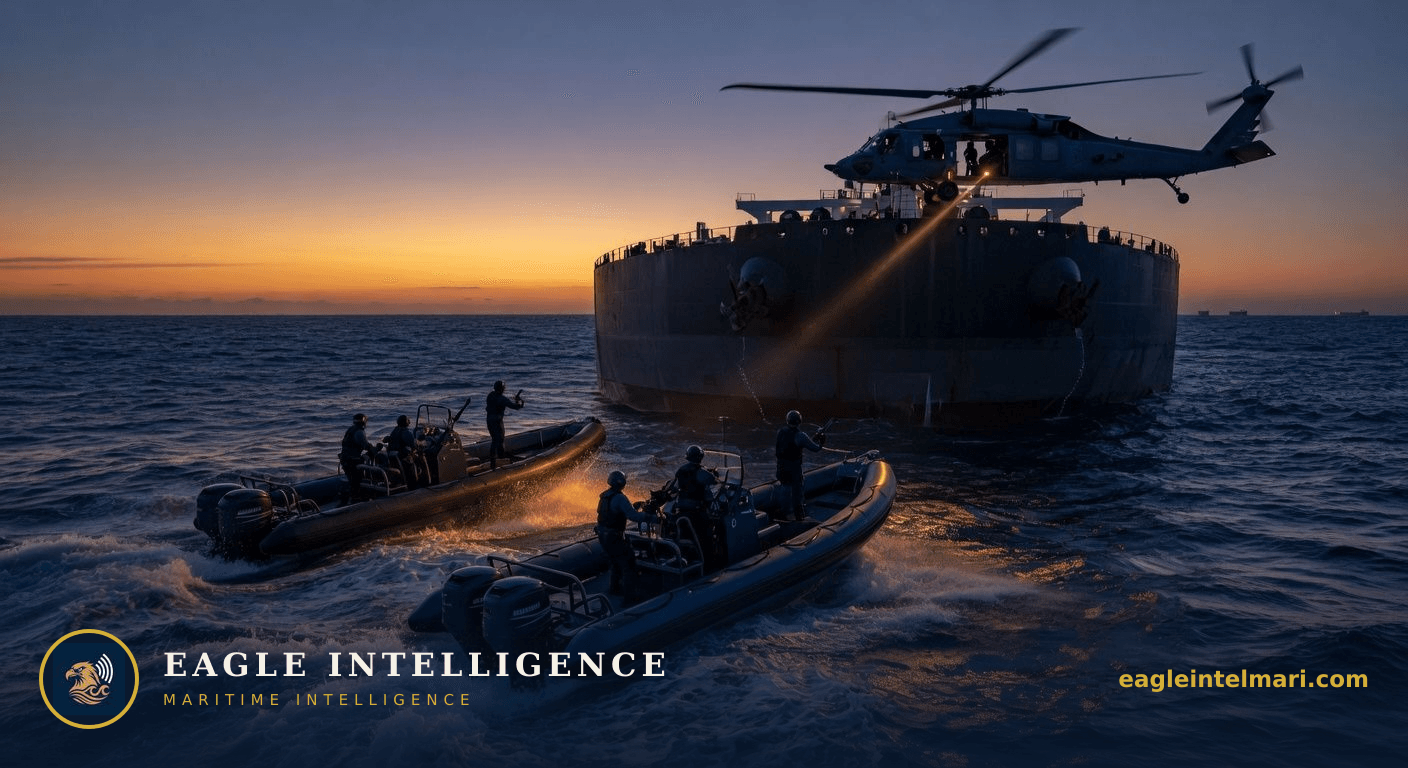
US forces intercepted the sanctioned stateless tanker Davina in the Indian Ocean, demonstrating that Washington is now prepared to conduct high-seas boardings well beyond traditional choke points to disrupt illicit oil movements.
A vessel without flag-state protection loses the diplomatic shield that normally complicates interdictions. Davina’s stateless status allowed Indo-Pacific Command to treat the operation as a straightforward sanctions enforcement action rather than a potential sovereignty dispute. This legal shortcut reduces the window for the vessel’s operators to seek third-country intervention and shortens the time available for the crew to scuttle or jettison evidence.
The command’s public confirmation that it led the overnight boarding marks a geographic expansion of US sanctions enforcement. Previously focused on the Arabian Gulf and Strait of Hormuz, the command now treats the broader Indian Ocean as part of its sanctions patrol envelope. This shift stretches US surface and aviation assets across a larger area but also complicates coordination with European and Middle Eastern partners whose rules of engagement remain narrower.
Owners running older tonnage under opaque flags already absorb elevated insurance premiums and limited port access. The Davina interdiction raises the prospect of direct asset seizure, forcing operators to weigh whether the risk premium on Iranian or sanctioned Russian cargoes still justifies the voyage. Charterers who previously accepted “no questions asked” fixtures will now face steeper P&I club scrutiny and potential denial of cover if vessels appear on US sanctions lists.
Stateless tankers often employ mixed-nationality crews recruited through third-party managers. When a vessel is seized, mariners can spend weeks or months in limbo while flag, ownership, and cargo claims are adjudicated. The Davina case will likely prompt seafarer unions and welfare organizations to demand clearer protocols for rapid crew repatriation and wage protection in future interdictions.
If additional boardings follow within 60 days, the shadow fleet will likely accelerate re-flagging attempts through smaller registries and increase reliance on ship-to-ship transfers in the Arabian Sea. A second scenario sees insurers impose blanket exclusions for any vessel that has operated without a verifiable flag for more than 30 days, raising daily hire rates across the dirty-tanker segment. A third, lower-probability path involves quiet bilateral understandings between Washington and key Asian buyers that allow limited cargoes to proceed under strict monitoring, provided no further military boardings occur.
Administrations that have accepted rapid flag changes for aging tankers now confront the possibility of secondary sanctions if those vessels appear in future US interdictions. Ports in South Asia and East Africa that have served as convenient STS locations may tighten anchorage rules to avoid becoming associated with seized tonnage.
Advertisement
Advertisement
⚠️ Intelligence Disclaimer: This analysis is produced by Eagle Intelligence's AI-assisted automated analysis system and is provided for informational purposes only. See our editorial standards. It is not a substitute for official maritime safety advisories from UKMTO, MSCHOA, IMO, or flag state authorities. Operational decisions should always be based on official guidance and professional judgment. Eagle Intelligence accepts no liability for any loss arising from reliance on this content.
Live chokepoint status, war-risk shifts, and the daily maritime wire, straight to your inbox. Free.
Leave a comment
All comments moderated for quality
