The decision to station the first three Arctic Security Cutters in Kodiak and later Seward accelerates U.S. surface presence above the Bering Strait and forces immediate infrastructure, crewing, and logistics planning across Alaska.
Advertisement
Advertisement
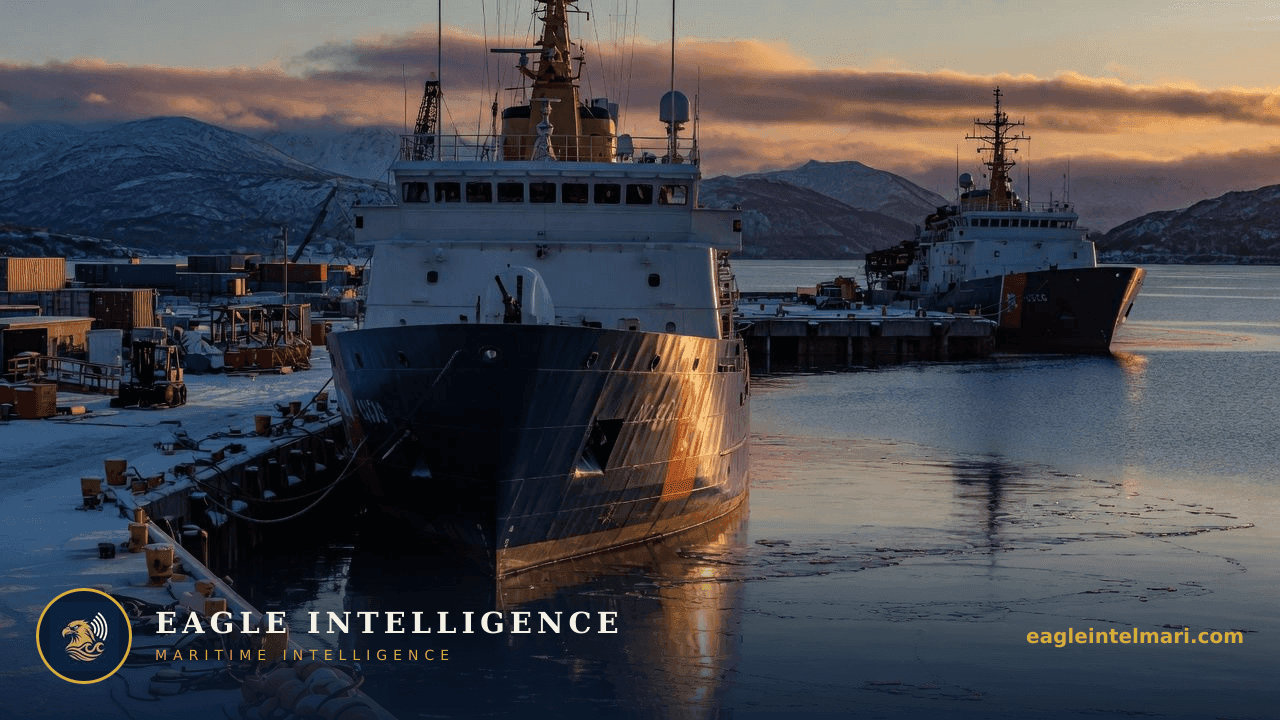
The U.S. Coast Guard’s selection of Kodiak for the first two Arctic Security Cutters and Seward for the third once piers and support facilities exist marks the first permanent homeporting of purpose-built ice-capable cutters north of the Aleutians.
Kodiak already hosts the service’s largest Pacific-area air station and the only deep-draft Coast Guard pier capable of handling the new 360-foot cutters without major dredging. The cutters will share the existing 1,200-foot marginal wharf and the recently upgraded fuel farm that stores 1.8 million gallons of marine diesel. This co-location reduces the need for new construction at Kodiak but will intensify competition for pier space during the summer fisheries surge.
Seward’s smaller harbor requires new sheet-pile bulkheads, 25-foot dredge depths, and an expanded electrical substation before it can accept the third hull. Local estimates place the work at three to five years, aligning with the projected delivery of the third cutter in 2030. Until then, Seward functions mainly as a seasonal forward refueling and crew-swap point rather than a true homeport.
With hulls now permanently based above 57°N, the Coast Guard can sustain 60–90 day patrols through the Bering Strait without rotating vessels from the Lower 48. Russian Northern Fleet surface groups and Chinese research icebreakers operating near the Northern Sea Route will encounter U.S. hulls on a more predictable schedule. The basing also shortens response times to fisheries enforcement and search-and-rescue cases inside the U.S. exclusive economic zone north of St. Lawrence Island.
Hull and P&I underwriters are already modeling higher port-risk surcharges for vessels calling Dutch Harbor and Nome once the cutters begin routine patrols. Charterers moving project cargo for Alaska LNG and mining developments now face the possibility of Coast Guard boardings inside the Bering Strait during the July–October open-water window. Premium adjustments are expected to remain modest provided the cutters maintain standard safety and pollution-response protocols.
Each cutter will require roughly 110 billets, with families likely to settle in Kodiak rather than Seward given the latter’s limited housing stock. The Coast Guard must expand its child-development center and medical clinic in Kodiak while negotiating additional berthing contracts with local hotels for surge maintenance periods. Fuel, food, and spare-parts resupply will rely on the twice-weekly barge service from Seattle, creating a single point of failure during winter storms.
If congressional funding for Seward infrastructure slips by two years, the service will likely homeport the third cutter temporarily in Kodiak, compressing pier capacity and accelerating plans for a floating dry dock. Should Russia conduct sustained surface transits through the Bering Strait, the cutters could shift to 180-day patrol cycles with crew swaps by air from Nome. Conversely, a sustained decline in Arctic traffic due to lower global LNG prices would allow the Coast Guard to rotate one hull south for Gulf of Alaska fisheries enforcement, reducing pressure on Alaska logistics.
Advertisement
Advertisement
⚠️ Intelligence Disclaimer: This analysis is produced by Eagle Intelligence's AI-assisted automated analysis system and is provided for informational purposes only. See our editorial standards. It is not a substitute for official maritime safety advisories from UKMTO, MSCHOA, IMO, or flag state authorities. Operational decisions should always be based on official guidance and professional judgment. Eagle Intelligence accepts no liability for any loss arising from reliance on this content.
Live chokepoint status, war-risk shifts, and the daily maritime wire, straight to your inbox. Free.
Leave a comment
All comments moderated for quality
