British forces have detained the suspected Russian shadow tanker Smyrtos in the English Channel, signalling a sharper enforcement turn against sanctions-evading crude shipments.
Advertisement
Advertisement
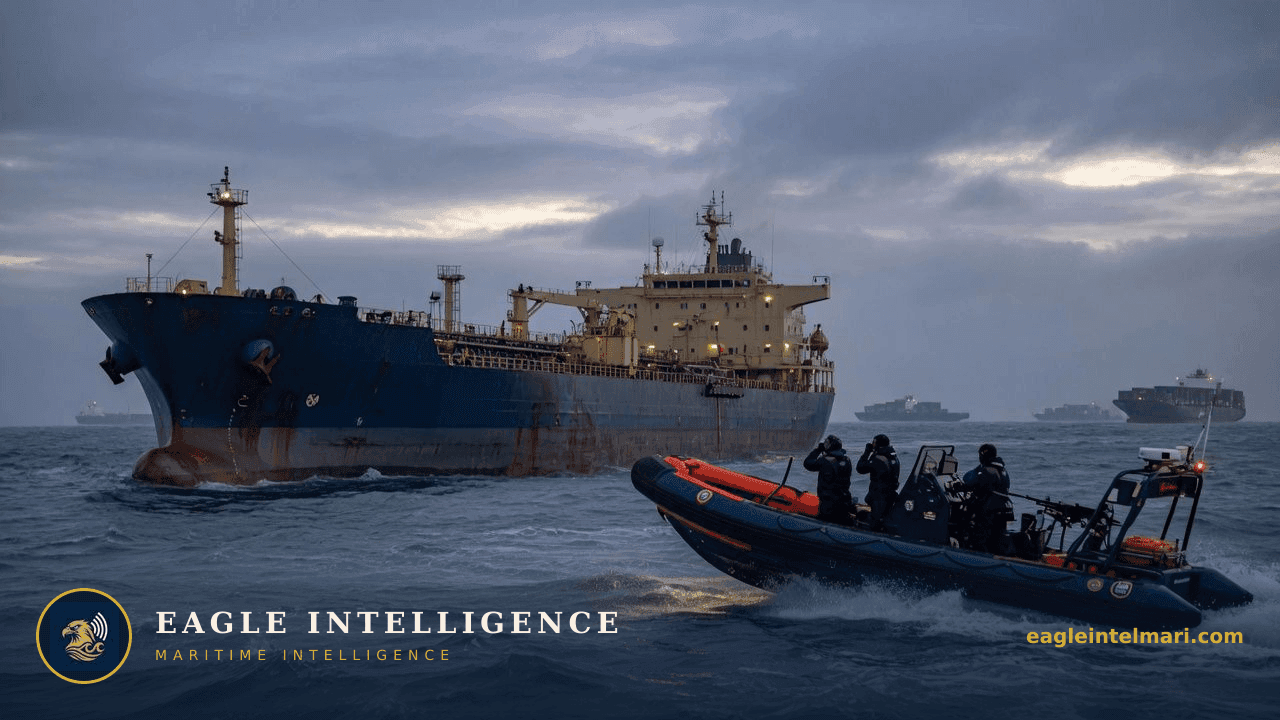
British forces have detained the suspected Russian shadow tanker Smyrtos in the English Channel after a six-hour boarding, the first publicly confirmed UK seizure of its kind and a direct test of how far Western navies will push physical interdiction against the covert fleet moving Russian oil.
The operation occurred in one of the world’s busiest shipping corridors where territorial waters, contiguous zones and international straits overlap. Any boarding therefore required rapid coordination between the Ministry of Defence, the Maritime and Coastguard Agency and likely legal sign-off from the attorney general. The six-hour duration suggests a thorough search for documentation, AIS manipulation gear and cargo papers rather than a simple flag-state verification stop.
Shadow tankers typically operate without Western insurance, rely on ship-to-ship transfers and toggle between obscure flags. Smyrtos’s capture removes one hull from a fleet that still moves roughly 1.2 million barrels per day of Russian crude and products outside price-cap compliance. Replacement tonnage is scarce; many older vessels already carry inflated war-risk premiums or have been blacklisted by multiple jurisdictions.
Even if Smyrtos sailed under a non-Western flag and carried no mainstream P&I cover, its seizure will prompt every club to re-examine exposure to vessels that may have previously called UK or EU ports. Hull underwriters will likely widen exclusions for “sanctioned trade” and raise deductibles on any tanker that has conducted STS operations in the Mediterranean or off West Africa within the past 18 months.
Detention of a shadow vessel instantly complicates crew welfare. Seafarers from third countries often sign contracts through layered manning agents and may now face prolonged port-state control or criminal investigation. Flag states that have tolerated shadow registrations will come under pressure to delist remaining tankers or risk losing Paris and Tokyo MoU white-list status.
If the UK releases Smyrtos after fines or documentation fixes, the shadow fleet will interpret the episode as costly but survivable and continue routing through the Channel. A second pathway sees the vessel held for forfeiture proceedings, triggering a scramble among remaining shadow owners to avoid UK and EU waters entirely and lengthening voyages around the Cape. The most escalatory outcome would be reciprocal detentions by Russia of Western-linked tonnage in the Baltic or Black Sea, rapidly widening war-risk zones and pushing VLCC and Suezmax fixtures higher by $4-6 million per month.
London, Rotterdam and Antwerp terminals will now apply stricter pre-arrival questionnaires on recent Channel transits. Traders holding Russian barrels on the water must decide whether to divert cargoes to non-Western discharge ports in India or China, adding 12-18 days and roughly $2.50 per barrel in extra freight before any insurance surcharge is applied.
Advertisement
Advertisement
⚠️ Intelligence Disclaimer: This analysis is produced by Eagle Intelligence's AI-assisted automated analysis system and is provided for informational purposes only. See our editorial standards. It is not a substitute for official maritime safety advisories from UKMTO, MSCHOA, IMO, or flag state authorities. Operational decisions should always be based on official guidance and professional judgment. Eagle Intelligence accepts no liability for any loss arising from reliance on this content.
Live chokepoint status, war-risk shifts, and the daily maritime wire, straight to your inbox. Free.
Leave a comment
All comments moderated for quality
