The 14,000-kilometre transit of ROKS Dosan Ahn Chang-ho to Victoria is a deliberate showcase ahead of Ottawa’s decision on its next submarine class, highlighting range, reliability and political alignment.
Advertisement
Advertisement
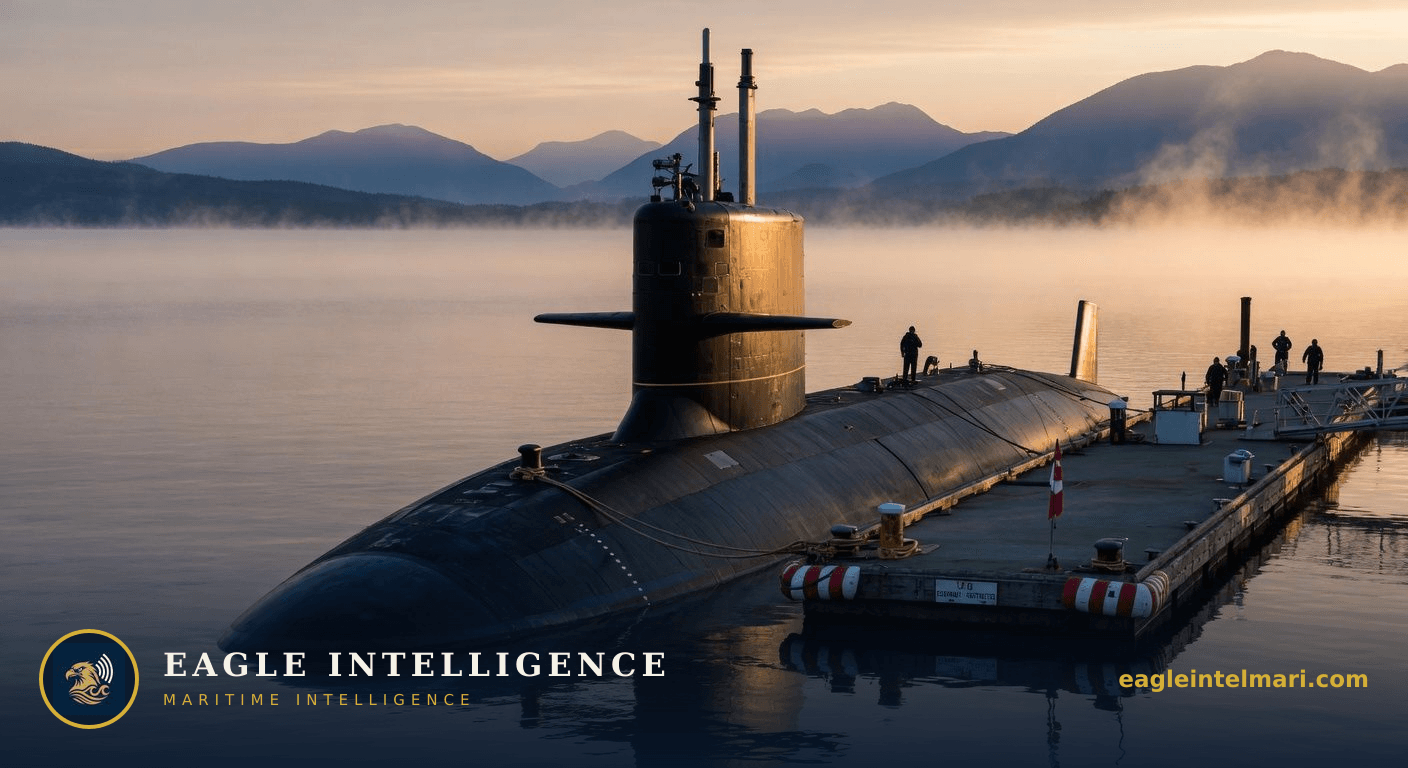
The arrival of the Republic of Korea Navy’s lead KSS-III boat at Canada’s Pacific Fleet base is not a routine port call but a calculated message timed for Ottawa’s imminent submarine procurement decision.
ROKS Dosan Ahn Chang-ho berthed at CFB Esquimalt after a March-to-May transit that covered 14,000 kilometres without reported mechanical issues. The voyage itself serves as live demonstration data for Canadian evaluators who have long questioned whether any non-Western design can reliably operate across the vast distances required for Arctic and Pacific patrols. Local naval staff hosted the crew for technical briefings, giving Canadian submariners and procurement officials direct access to the boat’s systems while it remained alongside.
KSS-III boats are designed for 10,000-nautical-mile transits on a single fuel load with air-independent propulsion. The Canadian leg validates that claim under real Pacific conditions, including weather systems that mirror those encountered on northern routes. For a navy whose current Victoria-class boats struggle with reliability beyond coastal waters, the Korean demonstration addresses a core operational requirement that European bids must now match or exceed.
Ottawa is weighing the Korean KSS-III against France’s Barracuda and Germany’s Type 212CD. While the European options carry established NATO interoperability credentials, the Korean boat arrives with lower unit cost, rapid delivery timelines and explicit willingness to incorporate Canadian industrial participation. The timing of the Victoria visit also coincides with heightened Canadian interest in deeper Indo-Pacific engagement, a factor that may tilt political weighting beyond pure technical scores.
Should Canada select the KSS-III, Esquimalt and Halifax will require upgrades to support lithium-ion battery systems and Korean-sourced combat management software. These modifications would create multi-year work packages for local shipyards already engaged in Arctic Offshore Patrol Vessel sustainment. Commercial port operators in both harbours would face temporary berth restrictions during fitting-out periods, an issue familiar from past submarine refits but now amplified by the scale of a full class replacement.
A larger, more capable Canadian submarine force would alter risk calculations for hull and P&I underwriters covering vessels transiting the North Pacific and Arctic routes. Enhanced underwater surveillance could reduce the probability of state-on-state incidents, yet it also raises the chance of miscalculation during periods of heightened tension with China or Russia. Crewing demands for the new boats would draw experienced personnel from a global pool already stretched by commercial shipping shortages, potentially increasing wage pressure on qualified mariners.
If South Korea secures the contract, first boats could arrive by 2032, accelerating Canadian ability to patrol the Northwest Passage year-round. A French or German win would likely stretch timelines to 2035 and lock Canada more tightly into European supply chains. A delayed decision beyond 2027 risks extending Victoria-class service life into the 2030s, increasing the probability of capability gaps during any future Pacific contingency.
Advertisement
Advertisement
⚠️ Intelligence Disclaimer: This analysis is produced by Eagle Intelligence's AI-assisted automated analysis system and is provided for informational purposes only. See our editorial standards. It is not a substitute for official maritime safety advisories from UKMTO, MSCHOA, IMO, or flag state authorities. Operational decisions should always be based on official guidance and professional judgment. Eagle Intelligence accepts no liability for any loss arising from reliance on this content.
Live chokepoint status, war-risk shifts, and the daily maritime wire, straight to your inbox. Free.
Leave a comment
All comments moderated for quality
