Ulstein Digital has released AI-driven platforms that automate EU/UK MRV, EU ETS and Norwegian NOx quarterly filings, cutting manual workload for operators already stretched by layered emissions rules.
Advertisement
Advertisement
Ulstein Digital’s launch of dedicated AI modules for MRV/EU ETS and Norwegian NOx reporting arrives at a moment when verification paperwork threatens to overwhelm both shipboard and shore-side teams already managing dense regulatory calendars.
Ship operators have watched administrative hours for emissions data climb steadily since the EU MRV regime expanded and the ETS surcharge mechanism took effect. Ulstein’s new tools ingest sensor feeds and voyage records directly, applying validated algorithms to generate the required quarterly and annual submissions without repeated manual transcription.
Under the EU ETS, every tonne of verified CO2 now carries a direct cash cost. Faster, cleaner data reduces the window for misreported emissions that could trigger penalties or retrospective allowance purchases. Charterers negotiating fuel-cost pass-through clauses will increasingly favour owners who can demonstrate automated, auditable trails rather than spreadsheet reconciliations.
Operators trading regularly in Norwegian waters face separate quarterly NOx declarations tied to coastal and port calls. Ulstein’s dedicated NOx module aligns these filings with the same data architecture used for EU MRV, eliminating duplicate entry points and lowering the probability of inconsistent figures across jurisdictions.
P&I clubs and hull underwriters have begun scrutinising emissions-reporting procedures as a governance factor. Early adopters of verified AI compliance stacks may eventually see differentiated treatment in condition surveys or premium calculations, particularly where human-error claims have historically arisen from misfiled data.
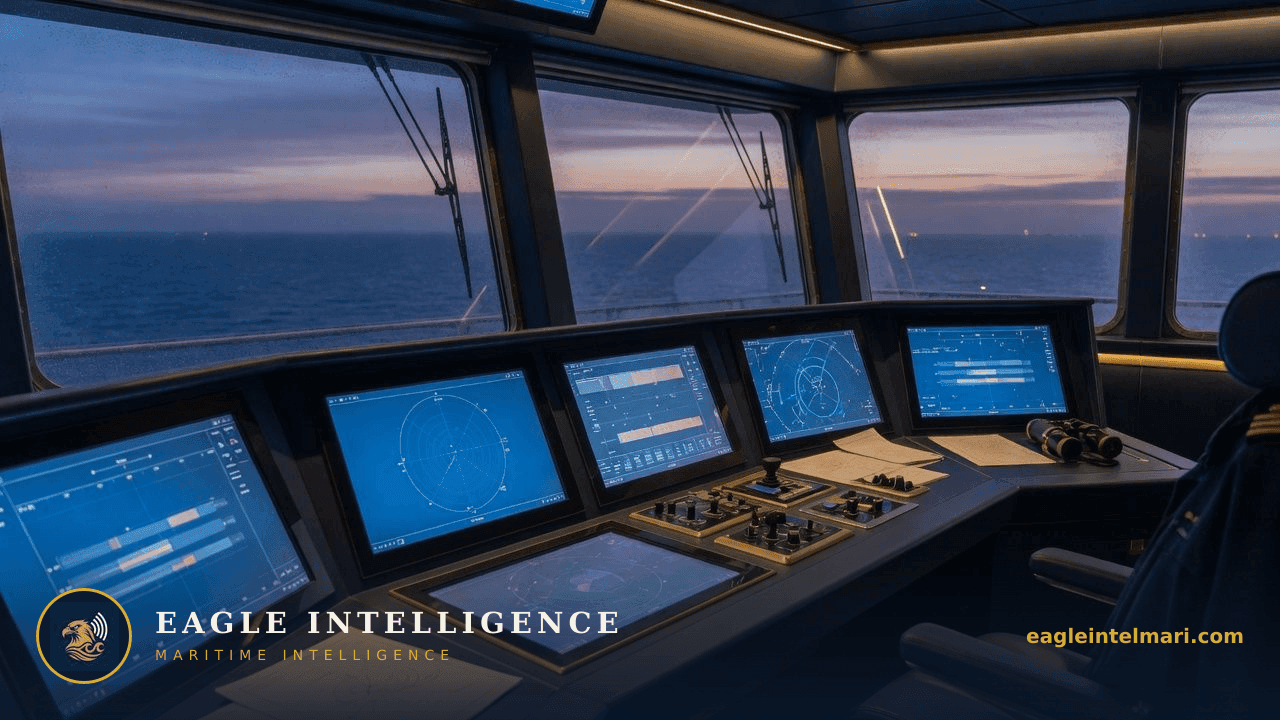
Ulstein enters a market already populated by class-society platforms and specialist emissions software vendors. Its advantage lies in tight integration with existing Ulstein bridge and automation systems already installed on numerous offshore and short-sea vessels, potentially accelerating uptake among that installed base.
Widespread uptake hinges on class-society validation of the AI outputs and flag-state acceptance letters. A fast-track scenario sees major Norwegian owners and EU short-sea operators completing pilot audits by year-end 2026. A slower path unfolds if competing platforms secure first-mover endorsements from the larger classification societies. A hybrid outcome is most probable: selective adoption on vessels already fitted with Ulstein systems while wider fleets await proven regulatory sign-off.
Advertisement
Advertisement
⚠️ Intelligence Disclaimer: This analysis is produced by Eagle Intelligence's AI-assisted automated analysis system and is provided for informational purposes only. See our editorial standards. It is not a substitute for official maritime safety advisories from UKMTO, MSCHOA, IMO, or flag state authorities. Operational decisions should always be based on official guidance and professional judgment. Eagle Intelligence accepts no liability for any loss arising from reliance on this content.
Live chokepoint status, war-risk shifts, and the daily maritime wire, straight to your inbox. Free.
Leave a comment
All comments moderated for quality
