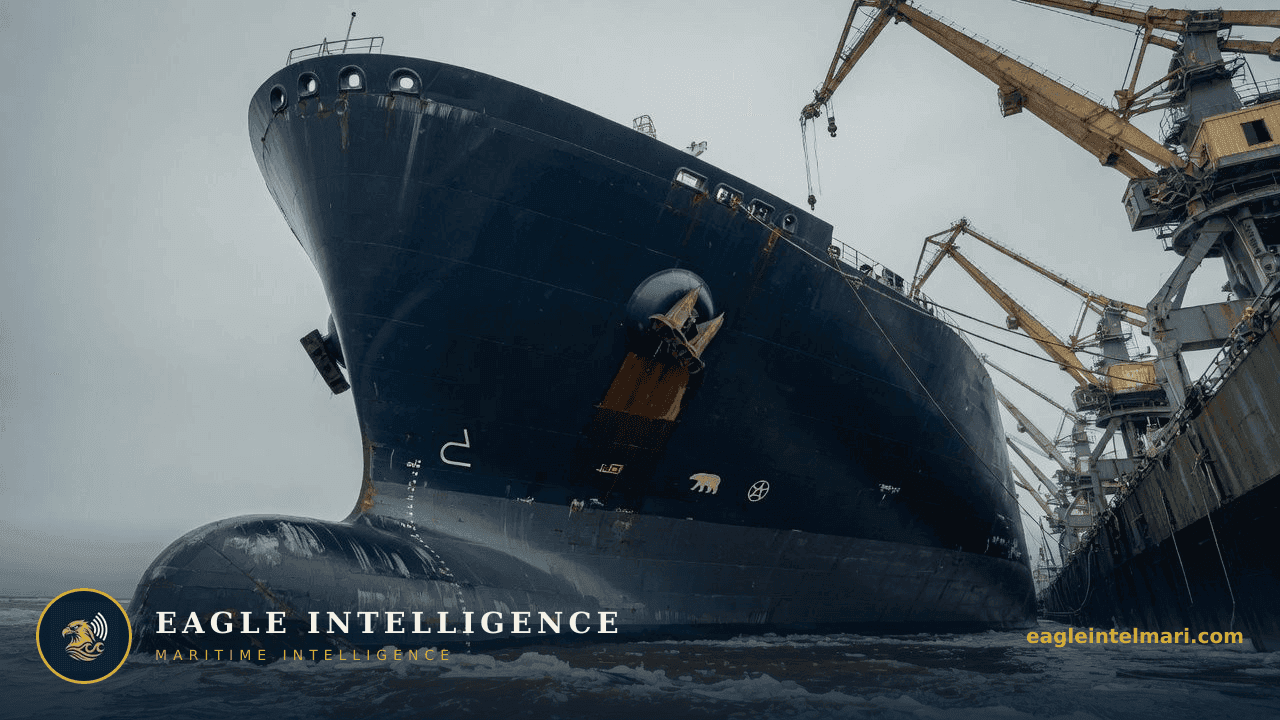
Owners and charterers of Arc7 LNG carriers now face a narrowing window for European maintenance as Denmark’s Fayard yard handles another Yamal vessel, forcing decisions on sanctions exposure versus Asian alternatives.
Advertisement
Advertisement
Owners and charterers locked into long-term Yamal LNG contracts must decide whether to keep routing their Arc7 carriers through the single remaining European yard or accept longer off-hire periods and higher insurance costs by shifting dry-dockings to China or South Korea.
The arrival of Rudolf Samoylovich at Odense marks the third Arc7-class vessel to use the facility since 2024. Fayard’s ice-class slipways and LNG-compatible gas-handling systems remain unmatched in Europe. No other Western yard currently holds the combination of technical approvals, spare-part stocks and regulatory clearances needed for the 300-metre carriers that break ice up to 2.1 metres thick.
Yamal LNG’s 16.5 million tonne annual output relies on year-round sailings through the Northern Sea Route. Each Arc7 vessel requires a scheduled 25- to 30-day dry-docking every 30 months to inspect rudders, propellers and reinforced hull plating. Loss of Fayard access would compress available maintenance slots and could force operators to extend intervals, raising the risk of mechanical failures during winter transits.
P&I clubs and hull underwriters have already applied additional premiums for any vessel calling Russian Arctic ports. A shift to Asian yards would add 18–25 days of extra steaming plus new survey requirements from flag states that have grown cautious about Russian-linked tonnage. For clubs still covering these hulls, the choice is between accepting Odense calls under tight compliance checks or withdrawing cover altogether.
Long-term buyers such as TotalEnergies and CNPC face direct volume risk. An Arc7 sidelined for an unplanned 40-day Asian docking instead of a 28-day European one translates into roughly 180,000 cubic metres of missed liftings per vessel. With summer spot LNG prices already above $12 per million Btu in Europe, even a single extended outage ripples into charter-party disputes over off-hire and substitute tonnage.
Zvezda shipyard in Bolshoy Kamen has begun Arc7-scale work, yet it still lacks full cryogenic testing infrastructure and Western-class society approvals. Turkish and Indian yards have expressed interest but face the same certification gaps. Until those facilities close the gap, Moscow’s fleet remains tethered to the Danish facility for critical maintenance.
Track the next Arc7 dry-dock nomination scheduled for late 2026. If that vessel diverts to Asia, expect immediate premium hikes and fresh charter-party clauses restricting European yard calls.
Advertisement
Advertisement
⚠️ Intelligence Disclaimer: This analysis is produced by Eagle Intelligence's AI-assisted automated analysis system and is provided for informational purposes only. See our editorial standards. It is not a substitute for official maritime safety advisories from UKMTO, MSCHOA, IMO, or flag state authorities. Operational decisions should always be based on official guidance and professional judgment. Eagle Intelligence accepts no liability for any loss arising from reliance on this content.
Live chokepoint status, war-risk shifts, and the daily maritime wire, straight to your inbox. Free.
Leave a comment
All comments moderated for quality
