The seizure of MT Tagor 400 nautical miles west of Brittany underscores Europe's growing willingness to board and detain sanctioned Russian crude carriers operating under dubious registries.
Advertisement
Advertisement
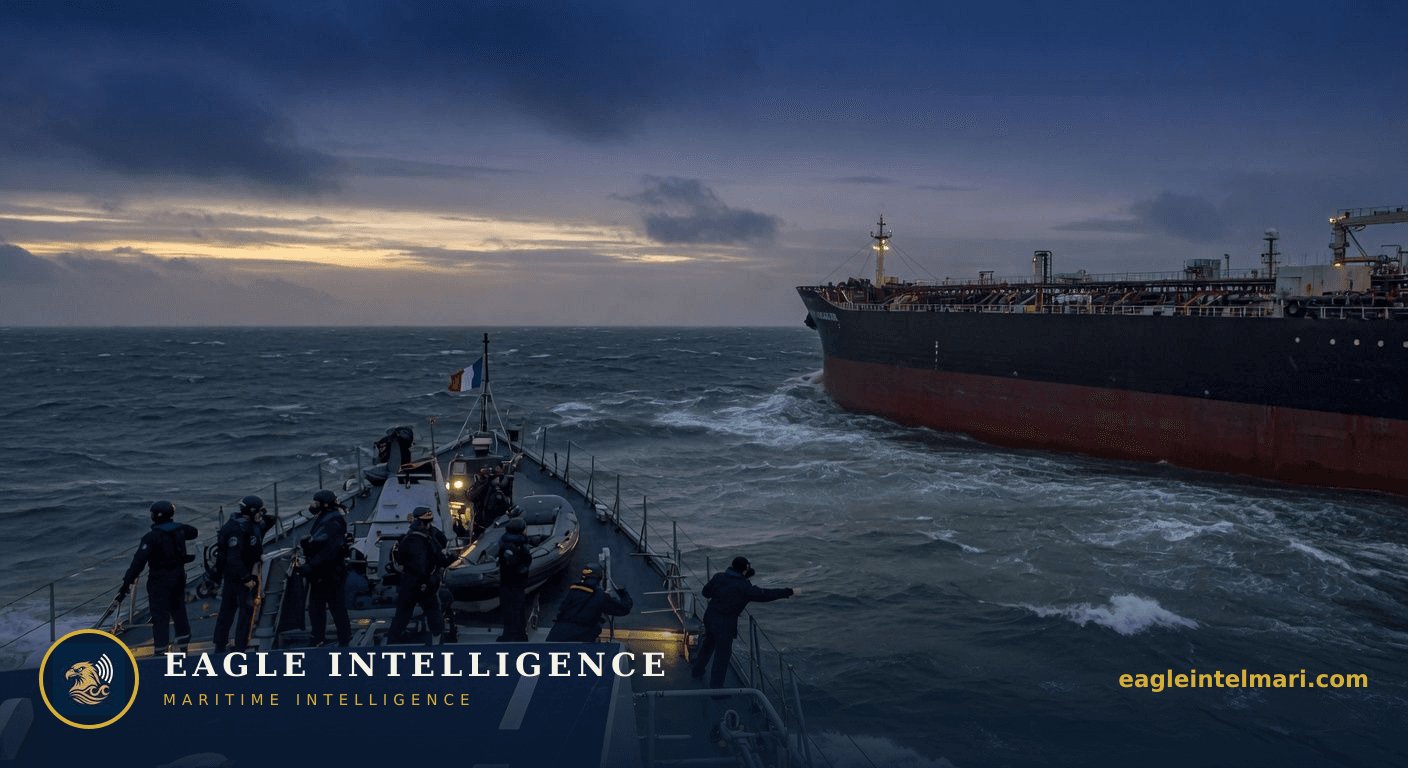
French naval forces have added another Russian-linked tanker to their ledger of detentions, pulling MT Tagor out of the Atlantic on suspicion of flying a counterfeit Cameroonian ensign and routing it into Douarnenez Bay under the authority of the Maritime Prefecture of the Atlantic.
The boarding took place well beyond France's territorial waters yet inside the zone where the Maritime Prefect exercises operational command. Tagor had departed Murmansk laden with Russian crude and was making for points unknown when French surface units closed and ordered the vessel to alter course. The 400-nautical-mile distance from the Breton coast placed the action in international waters but still under the legal umbrella of flag-state verification and EU sanctions enforcement.
Investigators cited the absence of valid documentation linking the vessel to Cameroon as the immediate cause for detention. Cameroonian authorities have repeatedly disavowed shadow-fleet tonnage purporting to sail under their flag; the French action therefore rests on straightforward registry fraud rather than novel legal theory. Once diverted, the ship was escorted into Douarnenez Bay where it remains under armed guard pending further inspection of its ownership chain and cargo documentation.
This marks the fourth such French seizure since September, a tempo that reflects both improved intelligence sharing among European navies and the growing number of tankers attempting to mask Russian origin through African or Pacific island registries. Each boarding removes a vessel from the active trading pool for weeks or months, forcing shadow-fleet managers to absorb lay-up costs, legal fees and the risk of cargo confiscation. The pattern suggests French authorities are prioritizing Atlantic transit routes that avoid the more crowded choke points of the English Channel and Strait of Gibraltar.
With Tagor sidelined, any cargo bound for non-sanctioned destinations faces re-routing or storage complications. Charterers who had accepted the vessel on the basis of its purported Cameroonian papers now confront potential claims from cargo owners and the prospect of having to secure alternative tonnage at short notice. Freight rates for compliant, non-Russian crude carriers on the Atlantic route have already firmed as operators price in the elevated probability of further boardings.
Protection-and-indemnity clubs and hull underwriters are reassessing cover for vessels whose flag documentation appears inconsistent with port-state records. A fourth French detention within nine months raises the statistical likelihood that any tanker claiming an African registry while carrying Russian-origin oil will face boarding. Premium loadings of 15–25 percent are already appearing in the market for similar tonnage, and several clubs have begun requiring additional declarations on flag validity before renewing annual cover.
If French and allied navies maintain current patrol density, another two to three detentions by December become probable, tightening the availability of shadow tonnage and supporting a further 10–15 percent rise in compliant Aframax rates. Should EU capitals coordinate joint tasking under a single operational commander, the seizure rate could double, prompting some shadow operators to abandon the Atlantic entirely and concentrate on longer Cape routes. Conversely, a diplomatic accommodation between Paris and Moscow that releases Tagor in exchange for unrelated concessions would signal a temporary pause in enforcement and allow freight markets to ease.
European enforcement is no longer episodic; it has settled into a predictable rhythm whose cumulative effect is steadily eroding the economic viability of the Russian shadow fleet in the Atlantic basin.
Advertisement
Advertisement
⚠️ Intelligence Disclaimer: This analysis is produced by Eagle Intelligence's AI-assisted automated analysis system and is provided for informational purposes only. See our editorial standards. It is not a substitute for official maritime safety advisories from UKMTO, MSCHOA, IMO, or flag state authorities. Operational decisions should always be based on official guidance and professional judgment. Eagle Intelligence accepts no liability for any loss arising from reliance on this content.
Live chokepoint status, war-risk shifts, and the daily maritime wire, straight to your inbox. Free.
Leave a comment
All comments moderated for quality
