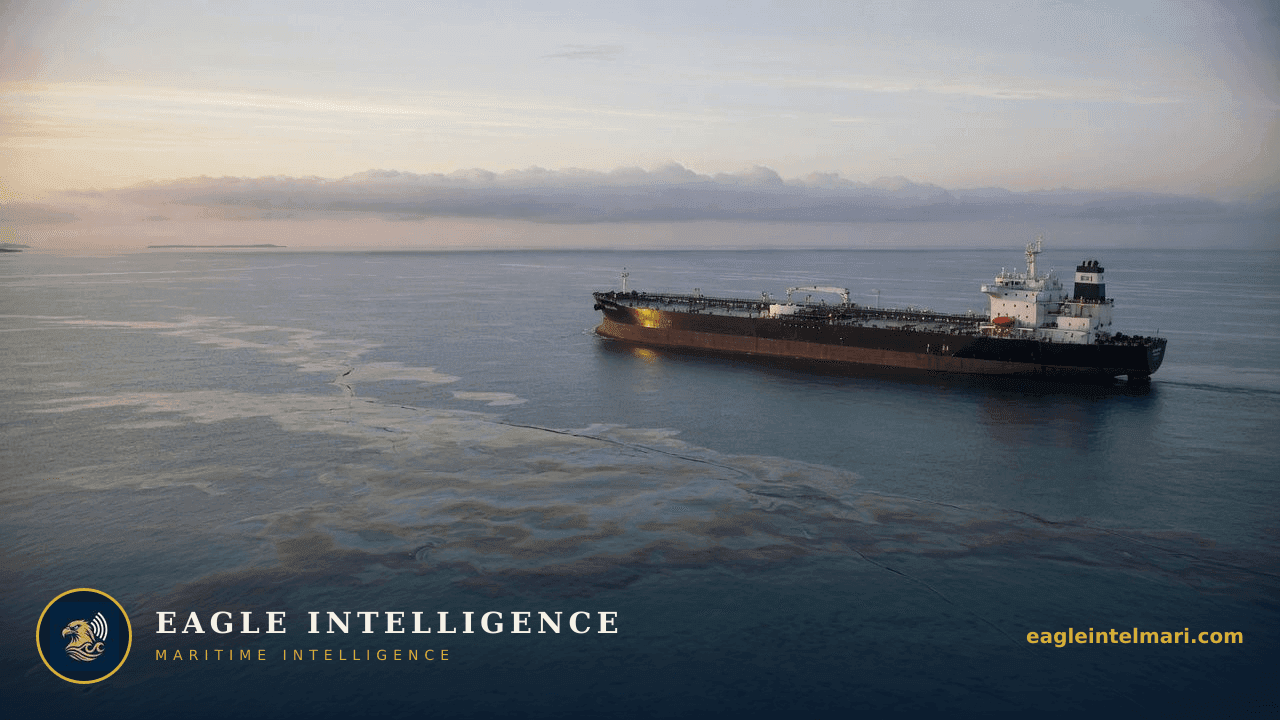
A vessel already under sanctions for carrying Russian fuel is now likely leaking oil inside a protected marine zone near Oman, raising immediate questions about detection failures, environmental liability and whether current sanctions regimes can prevent secondary damage when vessels continue operating.
Advertisement
Advertisement
A single sanctioned tanker now leaking oil in Omani waters has surfaced as the clearest operational failure in the day's reporting, eclipsing broader narratives of regional tension because it converts abstract sanctions lists into a measurable spill risk inside a sovereign protected area.
Reuters reporting on 17 July 2026 states that the unnamed vessel, already sanctioned for moving Russian fuel, is likely leaking oil near Oman. No name, IMO number, flag or exact position has been released. The location is described only as a protected marine area off the Omani coast. No volume of oil released, no photographs and no statement from Omani authorities appear in the available material.
The vessel's sanctions designation stems from its role in Russian fuel transport. The designation itself supplies the only verified link to Russia in the record. No further details on the timing of the designation, the specific entities named or any prior port calls are supplied.
What is known is limited to the Reuters statement that the vessel is sanctioned and is assessed as likely leaking. What remains unknown includes identity of the ship, volume and type of cargo or oil released, exact coordinates, any notification to coastal authorities, whether the vessel is still underway or anchored, and whether Oman has activated its national contingency plan. The Eagle assessment is that the evidence base is currently too thin to determine either the scale of the environmental threat or the effectiveness of sanctions enforcement; the story functions primarily as a warning flag rather than a concluded event.
A leaking tanker inside a protected zone immediately raises routing and port-state questions. Oman maintains strict environmental controls around its marine protected areas. Any vessel in distress or leaking must notify authorities under standard SOLAS and MARPOL obligations, yet no such notification is recorded in the supplied reporting. The absence of detail leaves open whether the vessel attempted covert transit or whether detection occurred only after oil reached the surface.
Hull and P&I clubs routinely exclude cover for vessels on sanctions lists. If the vessel is trading in breach of those exclusions, the spill response and clean-up costs may fall first on coastal-state funds or the shipowner's assets. No information is given on whether the vessel holds valid insurance or whether any club has already issued a notice of cancellation.
For Omani regulators the immediate task is containment before monsoon currents spread the slick. For P&I clubs and hull underwriters the incident will be studied for gaps in sanctions screening of chartered tonnage. For Russian oil traders the episode may accelerate the shift toward covert ship-to-ship transfers further offshore, increasing the distance between origin and final discharge. For seafarers aboard the vessel, any detention or arrest by Omani authorities would create immediate crew-welfare and repatriation issues under the Maritime Labour Convention.
The strongest alternative reading is that the leak is an ordinary mechanical failure unrelated to sanctions status. A single hull penetration or valve failure on any aging tanker can produce the same surface sheen. Evidence that would support this reading would be an official statement from the vessel's managers confirming a non-sanctions-related defect and evidence that the same vessel had passed recent port-state inspections without sanctions flags. Until such information appears, the sanctions connection remains the dominant public fact.
Next 24 hours: any Omani coast-guard or environment-agency statement giving coordinates or spill volume. Next seven days: confirmation or denial of vessel identity and insurance status by classification societies or clubs. Next thirty days: whether Oman initiates port-state control action or criminal proceedings against the operator and whether any parallel sanctions designation follows from the United States or European Union.
Advertisement
Advertisement
⚠️ Intelligence Disclaimer: This analysis is produced by Eagle Intelligence's AI-assisted automated analysis system and is provided for informational purposes only. See our editorial standards. It is not a substitute for official maritime safety advisories from UKMTO, MSCHOA, IMO, or flag state authorities. Operational decisions should always be based on official guidance and professional judgment. Eagle Intelligence accepts no liability for any loss arising from reliance on this content.
Live chokepoint status, war-risk shifts, and the daily maritime wire, straight to your inbox. Free.
Leave a comment
All comments moderated for quality
