BREAKINGChina-linked hackers step up attacks on European shipping
← Eagle Intelligence News
IntelligenceHIGH ALERT

The Daily Eagle Brief — 2026-07-26: Hormuz Tanker Crossings Fall to Two-Month Low Amid US Strikes and Stranded Seafarers

Eagle Intelligence·Eagle Intelligence Analysis·July 26, 2026 · 14:49 UTC·4 min read
Why This Matters

Iranian interdictions and US strikes on merchant vessels have reduced Strait of Hormuz tanker transits to the lowest level in two months. Roughly 6,000 seafarers are now stranded in the affected region, prompting a UN call for Gulf states to assist evacuation. Oman-mediated talks remain the primary channel to restore safe passage before a potential 40-nation naval coalition alters the operational environment. Energy markets face immediate pressure from the dual choke-point risk involving both Hormuz and the Red Sea. Decision-makers must weigh rerouting options against the risk of further interdictions in the next 24-48 hours.
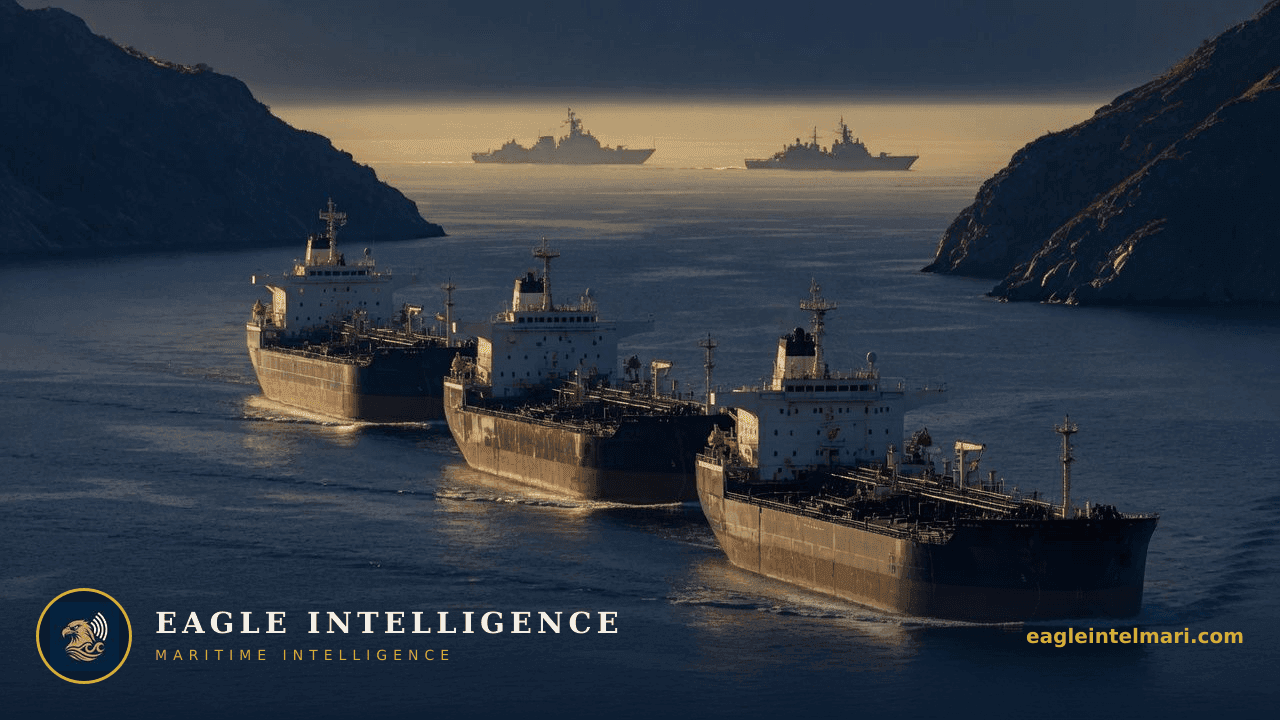
The Daily Eagle Brief — 2026-07-26: Hormuz Tanker Crossings Fall to Two-Month Low Amid US Strikes and Stranded Seafarers

Advertisement

The Five Minutes That Matter

Iranian interdictions and US strikes on merchant vessels have reduced Strait of Hormuz tanker transits to the lowest level in two months. Roughly 6,000 seafarers are now stranded in the affected region, prompting a UN call for Gulf states to assist evacuation. Oman-mediated talks remain the primary channel to restore safe passage before a potential 40-nation naval coalition alters the operational environment. Energy markets face immediate pressure from the dual choke-point risk involving both Hormuz and the Red Sea. Decision-makers must weigh rerouting options against the risk of further interdictions in the next 24-48 hours.

Eagle Signals

#1 Hormuz Crossings at Two-Month Low — 95/100

Iranian interdictions and US strikes on tankers have cut crossings sharply while stranding 6,000 seafarers.

Why it matters: The Strait remains the critical export route for Gulf crude; sustained low transits directly threaten supply volumes and force charterers into longer, costlier alternatives.

Who is exposed: Owners and operators of tankers in the Gulf, charterers of Middle East crude, and insurers covering war-risk premiums.

#2 US-Iran Tanker Incidents Escalate — 90/100

US forces struck at least one additional merchant vessel attempting to breach the blockade of Iranian ports; reports also cite an LPG tanker with Indian crew attacked in Iranian waters.

Why it matters: Direct kinetic engagement between US forces and commercial tonnage raises the threshold for safe transit and accelerates coalition planning.

Who is exposed: Vessels flagged or owned by states aligned with either side, plus any operator still routing through the Strait without war-risk cover.

#3 UN Seafarer Evacuation Call — 80/100

The United Nations has urged Gulf nations to help evacuate 6,000 seafarers from the war-torn region.

Why it matters: Crew welfare and rotation failures compound operational delays and create liability exposure for owners and P&I clubs.

Who is exposed: Shipowners with Indian, Filipino and other crews in the area, plus insurers facing prolonged detention claims.

#4 Red Sea-Hormuz Linkage Tightens — 75/100

Houthi strikes on Saudi targets and coalition warnings have extended the perceived risk zone from Bab Al-Mandab to Hormuz.

Why it matters: Simultaneous pressure on two major chokepoints multiplies the impact on global crude and product flows.

Who is exposed: Saudi-linked tonnage and any operator without flexible routing options.

Eagle Intelligence daily signals

Confidence Board

  • 35% — Oman-mediated talks will restore partial safe transit within 72 hours: No confirmed progress reported; both sides continue kinetic actions.
  • 55% — A 40-nation naval coalition will form before month-end: US and UK discussions confirmed but no formal commitments or force contributions announced.
  • 70% — Crude supply disruptions will remain above 500,000 bpd for the next week: Sustained low crossings and ongoing strikes directly limit loadings.

What Everyone Is Missing

Continued low Hormuz traffic will accelerate shadow-fleet routing through the Gulf of Oman, increasing collision and sanctions exposure for non-Chinese operators who have so far avoided the area.

Winners, Losers and the Exposed

  • Chinese-flagged tankers — better positioned: Reportedly continuing passages while others divert.
  • Saudi-linked tonnage — under pressure: Direct Houthi targeting and Hormuz exposure.
  • Indian and Filipino crewed vessels — most exposed: Highest number of seafarers currently stranded.

Eagle Intelligence maritime watch

If I Were

  • owners operators: Activate war-risk routing protocols and confirm crew rotation windows with flag states before next Gulf transit.
  • insurers pandi: Review detention and crew-welfare clauses for policies covering Hormuz and Red Sea calls; prepare for elevated claims volume.
  • charterers traders: Secure alternative liftings from non-Gulf sources or accept higher war-risk surcharges on existing fixtures.
  • seafarers: Confirm current location with company and request updated evacuation status through flag or union channels.
  • ports regulators: Prepare contingency berth allocations for diverted tonnage and update security assessments for incoming vessels.

Noise Filter

Full-scale US-Iran war has begun Verdict: unsupported Source material shows targeted strikes and interdictions but no declaration of war or broad military campaign.

The One Thing to Watch

Outcome of Oman-mediated talks on safe Hormuz transit, measured by any public statement or resumption of tanker crossings above the two-month low by 27 July.

Question of the Day

Which flag states will be first to issue formal routing advisories for the Strait of Hormuz if coalition planning advances?


The Daily Eagle Brief separates reported fact from Eagle assessment. Confidence percentages express editorial confidence based on the available sourcing, not mathematical certainty.

Advertisement

Related Eagle hubs

⚠️ Intelligence Disclaimer: This analysis is produced by Eagle Intelligence's AI-assisted automated analysis system and is provided for informational purposes only. See our editorial standards. It is not a substitute for official maritime safety advisories from UKMTO, MSCHOA, IMO, or flag state authorities. Operational decisions should always be based on official guidance and professional judgment. Eagle Intelligence accepts no liability for any loss arising from reliance on this content.

Get Eagle maritime risk alerts by email

Live chokepoint status, war-risk shifts, and the daily maritime wire, straight to your inbox. Free.

📰 Related Analysis

Intel

Daily Brief: Hormuz Tanker Attacks Escalate as Diesel Hits Records and Crews Face… — Sep 22

Two additional tankers were struck by unknown projectiles in the Strait of Hormuz in the last 24 hours, injuring at least two crew members and adding to a mounting pattern of attacks. The incidents coincide with wars already curtailing exports from Russia, Saudi Arabia and the UAE, pushing diesel prices to record levels and lifting tanker rates. US forces have redirected 109 commercial vessels to enforce a naval blockade while shielding other traffic from Iranian missiles. Owners, operators and charterers must now decide whether to reroute, accept higher war-risk premiums or delay cargoes through the chokepoint. The immediate operational question is how many more transits will proceed before crew refusal or insurance withdrawal forces a broader pause.

Sep 22, 2026
Intel

Daily Brief: Hormuz tanker attacks resume as Iran downs US drone and warns of closure — Sep 21

Two additional tankers were struck in the Strait of Hormuz in the past 24 hours amid mounting attacks, while Iranian forces downed a US Orbiter reconnaissance drone. Saudi Aramco halted crude deliveries to European customers and the Yanbu pipeline incident continued to ripple through freight and gas markets. Oil flows through Hormuz reached a six-month high even as Iran stated the strait would remain closed for now. Owners, charterers and insurers must reassess routing, war-risk premiums and crew safety protocols with immediate effect. The central decision now is whether to maintain transits or divert cargoes before the next reported incident.

Sep 21, 2026
Intel

Daily Brief: Hormuz Attacks Persist as CENTCOM Reports Six-Month-High Volumes — Sep 20

Three tanker attacks and an oil spill in the Strait of Hormuz over the past 24 hours have kept routing and crew-risk questions live, even as CENTCOM states that 1 billion barrels moved through the strait in the last six months. Iranian statements asserting control and US military reaffirmations of joint patrols have not yet produced measurable rerouting or premium spikes in the supplied reporting. Italy’s decision to escort a container ship in the Red Sea adds a second chokepoint response layer. The central operational decision now facing owners and charterers is whether to accept elevated war-risk exposure or absorb longer-haul costs while volumes remain high.

Sep 20, 2026
Intel

Daily Brief: Hormuz Attacks Surge as LNG Tanker Reports Suspected Cyber Failure — Sep 19

Multiple tanker attacks in the Strait of Hormuz over the past 48 hours have forced rerouting decisions and insurance adjustments, while a separate US-Europe LNG carrier suffered a crew-reported systems failure attributed to cyber intrusion. Iran has used one incident to assert control over the strait, coinciding with Trump statements on regime options and European naval moves in the Red Sea. Owners and charterers now face simultaneous physical and digital exposure across three chokepoints, with Black Sea drone strikes adding further crew and hull risk. The combination elevates the urgency of route and systems reviews rather than isolated incident response.

Sep 19, 2026

Comments & Corrections

0Spot an error? Flag it below ↓

Leave a comment

All comments moderated for quality

Be the first to comment on this story
Corrections policy: Flag inaccuracies using the ⚠️ Correction type. Eagle Intelligence will review flagged corrections. Verified corrections result in an article update with a notice appended. Comments are stored locally in your browser and are not shared with other readers.