No articles were published today, leaving the brief reliant on wire signals that cluster heavily around the Strait of Hormuz with multiple high-severity items on grounding, strikes, and Iranian warnings. Separate high-severity signals also record Indian Navy interdictions of piracy attempts in the Gulf of Aden. Lower-severity items cover shadow-fleet detentions, port projects, and naval deployments that do not yet show direct linkage to the Hormuz events.
Advertisement
Advertisement
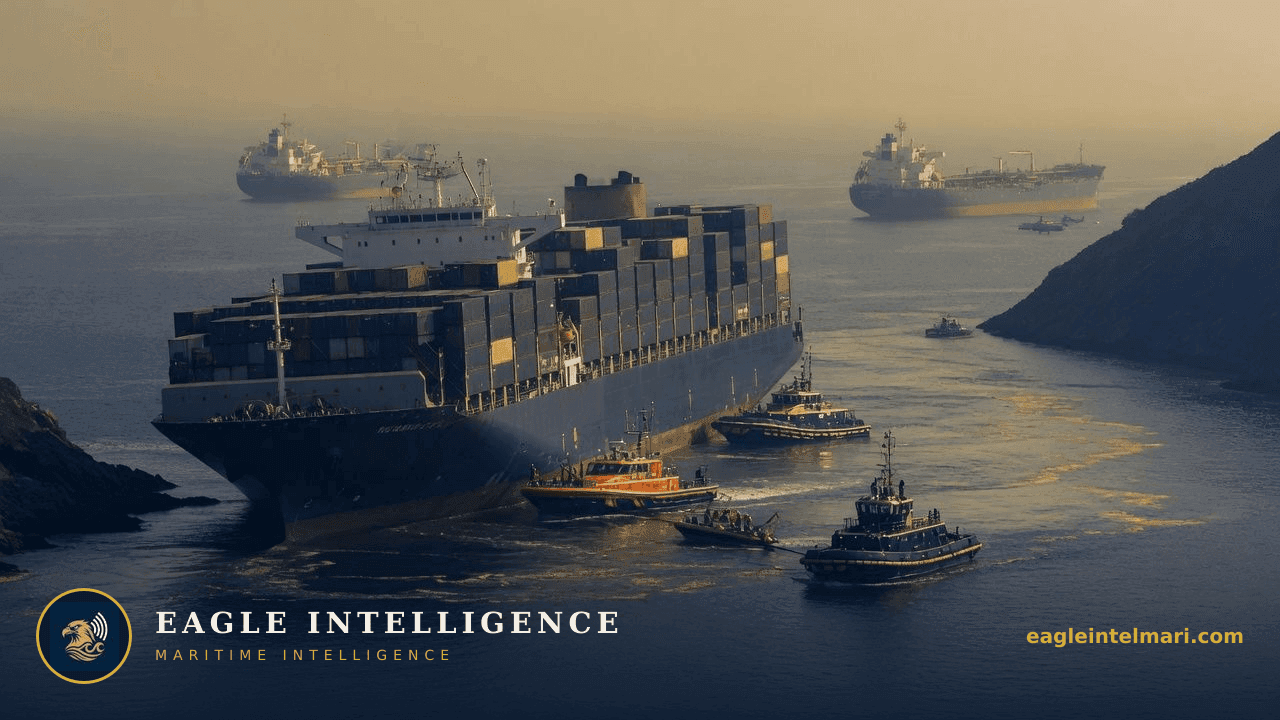
Vessel grounding in the Strait of Hormuz amid reported Iranian strikes and route threats creates immediate disruption for Hormuz transits.
No articles were published today, leaving the brief reliant on wire signals that cluster heavily around the Strait of Hormuz with multiple high-severity items on grounding, strikes, and Iranian warnings. Separate high-severity signals also record Indian Navy interdictions of piracy attempts in the Gulf of Aden. Lower-severity items cover shadow-fleet detentions, port projects, and naval deployments that do not yet show direct linkage to the Hormuz events.

A vessel ran aground in the Strait of Hormuz; Iran is reported to have prevented evacuation, blamed the United States, and separately threatened forceful response against ships using unapproved routes. Additional signals note seized ships, stranded tankers, and cargo congestion linked to the same waterway.
Why it matters: The grounding plus active enforcement threats directly affect daily transits through the chokepoint that carries a large share of global oil and container traffic.
The multi-stakeholder read: Owners face immediate routing and insurance decisions; coastal states assert control over passage; seafarers encounter heightened personal risk during any incident response.
Assessment (high confidence): Hormuz transits are likely to see sustained scrutiny and possible delays while the grounding status and Iranian enforcement posture remain unresolved.
Indian Navy units prevented a hijacking attempt on a bulk carrier and secured another cargo ship following a pirate attack in the Gulf of Aden.
Why it matters: Successful interventions reduce immediate loss of hull and cargo but confirm continued pirate capability and crew exposure in the same region.
The multi-stakeholder read: Seafarers receive direct protection; owners and insurers record avoided claims yet must still price ongoing risk; flag states note operational reach of their naval assets.
Assessment (medium confidence): Piracy attempts are assessed to persist at current levels absent broader changes in regional naval presence or coastal-state capacity.
EU navies intercepted Russian shadow-fleet tankers falsely using Cameroon’s flag; France released one tanker after a $1.1 million fine payment.
Why it matters: Enforcement raises operating costs and flag-state compliance burdens for sanctioned tonnage without yet altering overall shadow-fleet availability.
The multi-stakeholder read: Insurers and P&I clubs face clearer liability questions; operators must weigh fine exposure against continued trading; regulators gain enforcement precedents.
Assessment (medium confidence): Further detentions or fines are likely in the near term as European navies maintain current patrol patterns.
Hormuz signals dominate severity-weighted coverage and connect to broader questions of route compliance and naval presence, while Gulf of Aden interdictions and shadow-fleet actions operate on separate geographic and legal tracks; no wire indicates direct operational linkage between the three threads, yet all increase the aggregate compliance and insurance burden on operators active in multiple high-risk zones simultaneously.

This is an Eagle Intelligence daily synthesis, drawn from the day's reporting and wire signals. Items marked "Assessment" are analytical judgments, not statements of fact.
Advertisement
Advertisement
Live Hormuz transit status and war-risk band.
⚠️ Intelligence Disclaimer: This analysis is produced by Eagle Intelligence's AI-assisted automated analysis system and is provided for informational purposes only. See our editorial standards. It is not a substitute for official maritime safety advisories from UKMTO, MSCHOA, IMO, or flag state authorities. Operational decisions should always be based on official guidance and professional judgment. Eagle Intelligence accepts no liability for any loss arising from reliance on this content.
Live chokepoint status, war-risk shifts, and the daily maritime wire, straight to your inbox. Free.
Leave a comment
All comments moderated for quality
