BREAKINGChina-linked hackers step up attacks on European shipping
← Eagle Intelligence News
IntelligenceHIGH ALERT

Daily Eagle Brief — 2026-07-03: Iran escalates armed warnings over Strait of Hormuz routing amid repeated groundings and sanctions exposure for operators.

Eagle Intelligence·Eagle Intelligence Analysis·July 3, 2026 · 15:34 UTC·3 min read
Why This Matters

Multiple incidents and statements over the past 24 hours center on the Strait of Hormuz, where Iranian authorities have asserted control over designated corridors following groundings and unauthorized transits. These developments intersect with ongoing sanctions pressure on Iranian-linked and shadow-fleet tankers as well as a separate humanitarian alert on the hijacked MT HONOUR 25. The convergence forces immediate routing, insurance and contract reviews for owners, charterers and insurers active in the region.
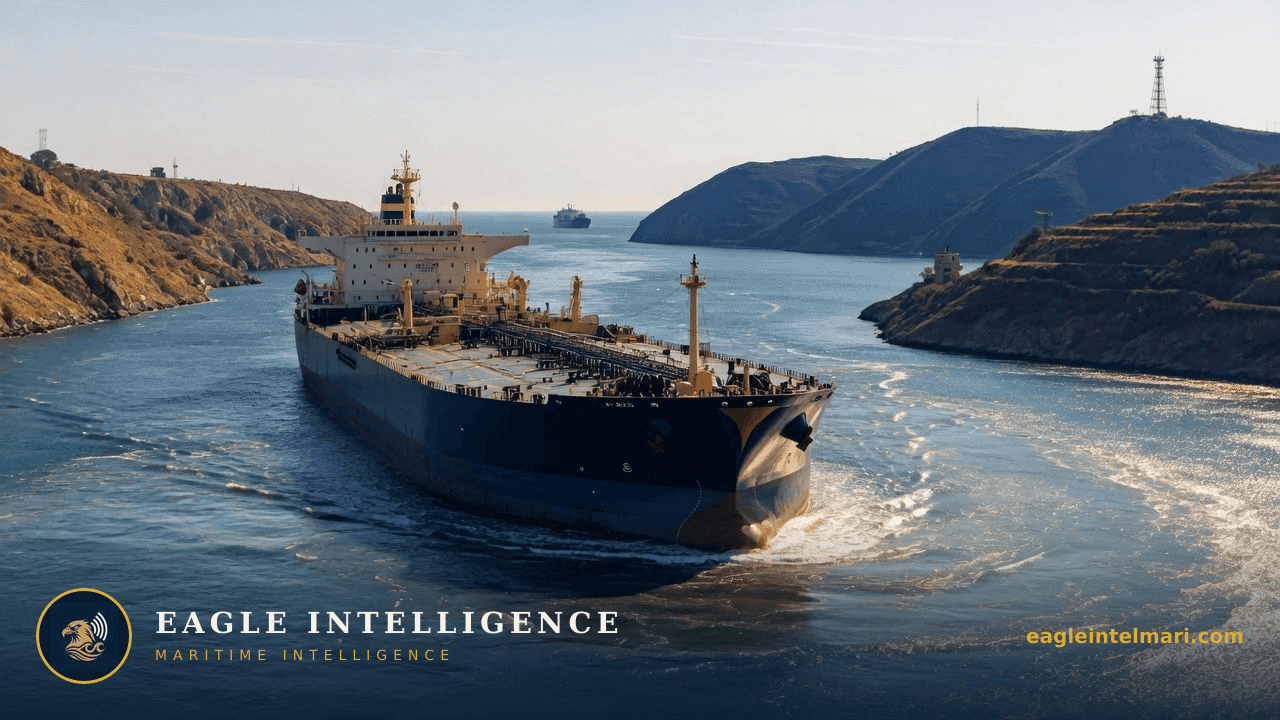
Daily Eagle Brief — 2026-07-03: Iran escalates armed warnings over Strait of Hormuz routing amid repeated groundings and sanctions exposure for operators.

Advertisement

Iran escalates armed warnings over Strait of Hormuz routing amid repeated groundings and sanctions exposure for operators.

Multiple incidents and statements over the past 24 hours center on the Strait of Hormuz, where Iranian authorities have asserted control over designated corridors following groundings and unauthorized transits. These developments intersect with ongoing sanctions pressure on Iranian-linked and shadow-fleet tankers as well as a separate humanitarian alert on the hijacked MT HONOUR 25. The convergence forces immediate routing, insurance and contract reviews for owners, charterers and insurers active in the region.

Eagle Intelligence maritime analysis

Key threads

Hormuz corridor enforcement and vessel groundings

Iranian authorities stated that a container ship ran aground during an unauthorised transit and blamed the United States, while tracking data showed otherwise; additional reports noted a projectile-hit boxship preparing to depart and seized or stranded vessels observed by BBC correspondents.

Why it matters: Operators must now weigh compliance with Iranian-designated routes against the risk of armed forces intervention, delays and premium increases.

The multi-stakeholder read: Flag and coastal states view the corridor rules as sovereign enforcement; owners and charterers see heightened operational and legal exposure.

Assessment (high confidence): Further non-compliant transits are likely to trigger additional Iranian statements or actions in the near term.

Humanitarian alert on hijacked MT HONOUR 25

The Djibouti Code chair warned of a rapidly worsening humanitarian situation aboard the Palau-flagged tanker, prompting owners and P&I clubs to reassess crew extraction and negotiation options.

Why it matters: The alert adds pressure on decision timelines for ransom or release talks while the vessel remains under pirate control.

The multi-stakeholder read: Seafarers and labour bodies prioritise crew safety; owners and insurers balance extraction costs against prolonged detention risks.

Assessment (medium confidence): Negotiations or extraction attempts are expected to accelerate in the coming days.

Shadow-fleet and Hormuz sanctions measures

UK designations targeted shadow-fleet tankers in a new Russia sanctions round, while OFAC's May advisory placed pre-payment deals for Iranian-linked Hormuz services under scrutiny.

Why it matters: Charterers and owners handling Russian crude or Iranian-linked services face immediate designation and sanctions exposure before funds move.

The multi-stakeholder read: Insurers and underwriters must re-evaluate cover; major powers and regional actors differ on enforcement scope.

Assessment (high confidence): Contract reviews and routing changes will continue as new designations are monitored.

Cross-currents

Hormuz enforcement actions and sanctions measures reinforce each other by raising compliance costs, yet the hijacking of MT HONOUR 25 remains geographically and operationally distinct, creating separate decision tracks for the same owner and insurer communities. European actions against falsely flagged shadow vessels add another layer without direct linkage to the Hormuz incidents.

Eagle Intelligence maritime analysis

What to watch

  • Next reported Iranian response to a non-designated Hormuz transit
  • Outcome of P&I and owner decisions on MT HONOUR 25 crew extraction within 72 hours
  • Publication of any new UK or EU shadow-fleet designations in the coming week
  • Indian Navy patrol activity following the Golden Arsenal incident

So what, and for whom

  • owners operators: Re-examine Hormuz routing contracts and shadow-fleet exposure before next transit.
  • insurers pandi: Assess cover for Hormuz corridor deviations and MT HONOUR 25 negotiation costs.
  • charterers traders: Review pre-payment terms for any Iranian-linked services and alternative routing options.
  • seafarers: Monitor crew welfare updates on hijacked and detained vessels.
  • ports policymakers: Track potential delays at Hormuz entry points and related congestion signals.

This is an Eagle Intelligence daily synthesis, drawn from the day's reporting and wire signals. Items marked "Assessment" are analytical judgments, not statements of fact.

Advertisement

Related Eagle hubs

⚠️ Intelligence Disclaimer: This analysis is produced by Eagle Intelligence's AI-assisted automated analysis system and is provided for informational purposes only. See our editorial standards. It is not a substitute for official maritime safety advisories from UKMTO, MSCHOA, IMO, or flag state authorities. Operational decisions should always be based on official guidance and professional judgment. Eagle Intelligence accepts no liability for any loss arising from reliance on this content.

Get Eagle maritime risk alerts by email

Live chokepoint status, war-risk shifts, and the daily maritime wire, straight to your inbox. Free.

📰 Related Analysis

Intel

Daily Brief: Hormuz Tanker Attacks Escalate as Diesel Hits Records and Crews Face… — Sep 22

Two additional tankers were struck by unknown projectiles in the Strait of Hormuz in the last 24 hours, injuring at least two crew members and adding to a mounting pattern of attacks. The incidents coincide with wars already curtailing exports from Russia, Saudi Arabia and the UAE, pushing diesel prices to record levels and lifting tanker rates. US forces have redirected 109 commercial vessels to enforce a naval blockade while shielding other traffic from Iranian missiles. Owners, operators and charterers must now decide whether to reroute, accept higher war-risk premiums or delay cargoes through the chokepoint. The immediate operational question is how many more transits will proceed before crew refusal or insurance withdrawal forces a broader pause.

Sep 22, 2026
Intel

Daily Brief: Hormuz tanker attacks resume as Iran downs US drone and warns of closure — Sep 21

Two additional tankers were struck in the Strait of Hormuz in the past 24 hours amid mounting attacks, while Iranian forces downed a US Orbiter reconnaissance drone. Saudi Aramco halted crude deliveries to European customers and the Yanbu pipeline incident continued to ripple through freight and gas markets. Oil flows through Hormuz reached a six-month high even as Iran stated the strait would remain closed for now. Owners, charterers and insurers must reassess routing, war-risk premiums and crew safety protocols with immediate effect. The central decision now is whether to maintain transits or divert cargoes before the next reported incident.

Sep 21, 2026
Intel

Daily Brief: Hormuz Attacks Persist as CENTCOM Reports Six-Month-High Volumes — Sep 20

Three tanker attacks and an oil spill in the Strait of Hormuz over the past 24 hours have kept routing and crew-risk questions live, even as CENTCOM states that 1 billion barrels moved through the strait in the last six months. Iranian statements asserting control and US military reaffirmations of joint patrols have not yet produced measurable rerouting or premium spikes in the supplied reporting. Italy’s decision to escort a container ship in the Red Sea adds a second chokepoint response layer. The central operational decision now facing owners and charterers is whether to accept elevated war-risk exposure or absorb longer-haul costs while volumes remain high.

Sep 20, 2026
Intel

Daily Eagle Brief — 2026-07-11: US-Iran clashes collapse Hormuz ceasefire, reopen war-risk pricing and force southern tanker reroutes.

The day's reporting is dominated by renewed attacks on shipping in the Strait of Hormuz after the ceasefire ended, accompanied by new US sanctions and Iranian statements admitting error while seeking continued talks. Multiple sources confirm that non-Iranian tonnage still handled 70 percent of June transits, yet southern-route usage has fallen sharply. Secondary items on port upgrades, crew abandonment cases and exercises in other regions remain disconnected from the Hormuz developments.

Jul 11, 2026

Comments & Corrections

0Spot an error? Flag it below ↓

Leave a comment

All comments moderated for quality

Be the first to comment on this story
Corrections policy: Flag inaccuracies using the ⚠️ Correction type. Eagle Intelligence will review flagged corrections. Verified corrections result in an article update with a notice appended. Comments are stored locally in your browser and are not shared with other readers.