The 2 July 2026 material is dominated by repeated high-severity reporting of a container vessel grounding in the Strait of Hormuz, alongside implementation of revised Filipino seafarer employment rules and the first Chinese 174k cbm LNG carrier deliveries. These developments intersect on route compliance, crewing cost structures and newbuilding slot allocation, with secondary signals on European Arc7 maintenance capacity and lender climate-risk tools.
Advertisement
Advertisement
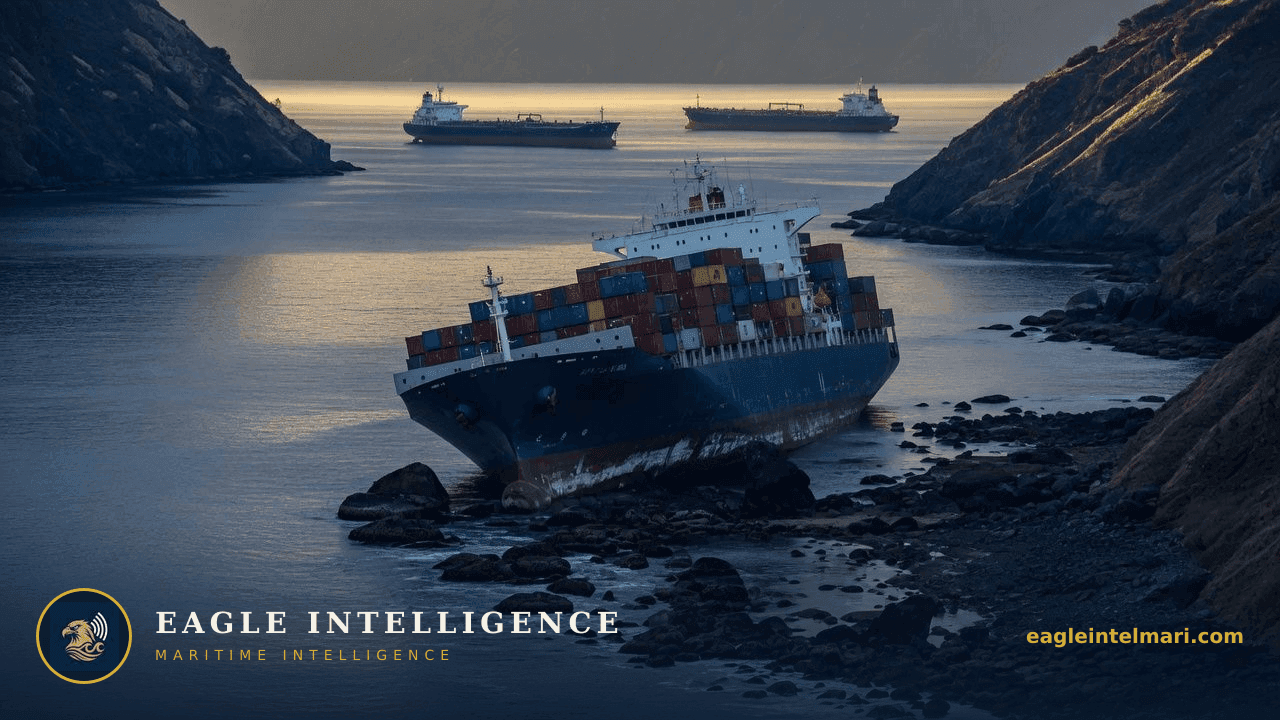
Container ship grounds in Strait of Hormuz outside approved route as Iran asserts control over transit lanes.
The 2 July 2026 material is dominated by repeated high-severity reporting of a container vessel grounding in the Strait of Hormuz, alongside implementation of revised Filipino seafarer employment rules and the first Chinese 174k cbm LNG carrier deliveries. These developments intersect on route compliance, crewing cost structures and newbuilding slot allocation, with secondary signals on European Arc7 maintenance capacity and lender climate-risk tools.

Multiple wire services report a container ship ran aground in the Strait of Hormuz after bypassing the approved route; Iranian state media state the vessel was outside the Iran-approved transit lane.
Why it matters: The incident coincides with Iranian assertions of control over the strait and follows earlier attacks on vessels including HMM Namu, raising questions on routing discipline and war-zone treatment by the global fleet.
The multi-stakeholder read: Flag and coastal states emphasise approved-lane compliance; owners and operators face potential delays and sanctions exposure; insurers assess war-risk cover implications.
Assessment (medium confidence): The grounding adds operational friction to an already sensitive chokepoint but does not yet indicate broader closure.
Two DMW circulars effective 2-3 July 2026 replace the 2010 POEA contract, introducing higher disability benefits, mental-health provisions, revised abandonment definitions and war-risk consent requirements for Filipino seafarers.
Why it matters: The changes directly affect manning agencies, shipowners, charterers and P&I clubs through altered liability, consent and welfare obligations.
The multi-stakeholder read: Seafarers and unions gain expanded protections; owners and P&I clubs must update contracts and risk models; manning agencies face compliance costs.
Assessment (high confidence): Immediate contractual and insurance adjustments will be required for Filipino-crewed tonnage.
China handed over the first two independent 174,000-cbm LNG carriers, establishing a viable third yard cluster for this size segment.
Why it matters: Owners and charterers gain an alternative to Korean and Japanese builders, prompting recalibration of delivery slots and pricing.
The multi-stakeholder read: Shipowners obtain additional newbuilding options; charterers may see improved availability; Korean and Japanese yards face competitive pressure.
Assessment (high confidence): The new supply source is likely to influence 2026-2028 contracting patterns.
The Hormuz grounding occurs against a backdrop of new crewing rules that explicitly address war-risk consent, while Chinese LNG deliveries and Fayard’s Arc7 work expand geographic options for owners seeking to manage sanctions or maintenance exposure. These threads create tension between route compliance pressures in the Gulf and the search for diversified yard and crewing solutions elsewhere.

This is an Eagle Intelligence daily synthesis, drawn from the day's reporting and wire signals. Items marked "Assessment" are analytical judgments, not statements of fact.
Advertisement
Advertisement
Live Hormuz transit status and war-risk band.
⚠️ Intelligence Disclaimer: This analysis is produced by Eagle Intelligence's AI-assisted automated analysis system and is provided for informational purposes only. See our editorial standards. It is not a substitute for official maritime safety advisories from UKMTO, MSCHOA, IMO, or flag state authorities. Operational decisions should always be based on official guidance and professional judgment. Eagle Intelligence accepts no liability for any loss arising from reliance on this content.
Live chokepoint status, war-risk shifts, and the daily maritime wire, straight to your inbox. Free.
Leave a comment
All comments moderated for quality
