P&I clubs and manning agents tracking Iranian crude voyages must now weigh faster crew release timelines after the 22 seafarers reached Karachi for onward travel to Iran.
Advertisement
Advertisement
P&I clubs and manning agents tracking Iranian crude voyages must now weigh faster crew release timelines after the 22 seafarers reached Karachi for onward travel to Iran.
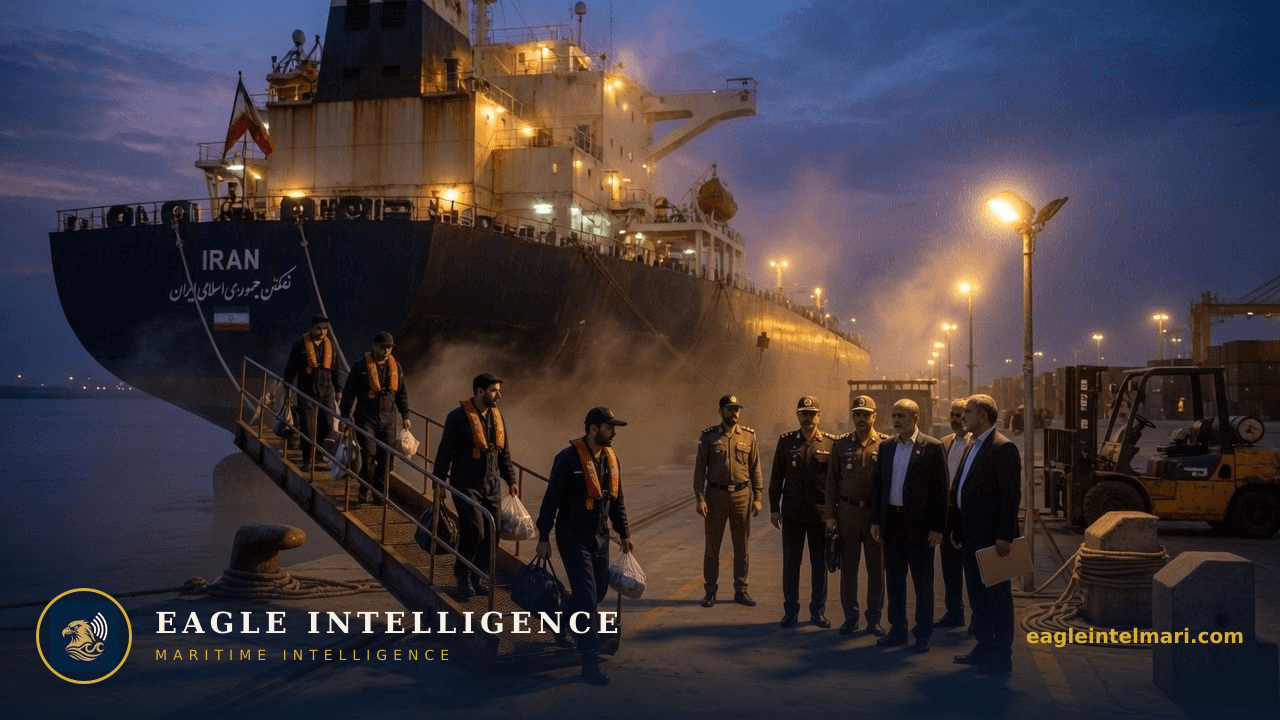
The group landed in the Pakistani port city after US forces seized their vessel during sanctions enforcement operations in international waters. Local authorities coordinated with Iranian diplomats to arrange onward movement, avoiding the prolonged consular delays that have kept other crews aboard detained tankers for months. For manning agencies rotating Iranian nationals, the swift hand-off reduces immediate exposure to unpaid wage claims and medical liabilities.
Hull and P&I underwriters covering any residual Iranian-linked risk will review this case for precedent on release speed. When a vessel is interdicted, clubs typically face immediate demands for crew repatriation costs and wage guarantees. The Karachi arrival shows that third-country facilitation can shorten the payout window from six months to a few weeks, lowering the reserve they must hold against each seizure. Owners with similar tonnage now have a concrete benchmark to negotiate lower deductibles on future policies.
Operators running older tankers under opaque flags often rely on Iranian or third-country crews willing to accept higher hazard pay. This episode demonstrates that even successful interdictions need not strand personnel indefinitely when Pakistan acts as a neutral transit point. Manning agents are already recalculating rotation schedules; any further seizures could force them to insert Karachi or Muscat stopovers into contracts, adding both cost and administrative friction.
US authorities gain a public-relations advantage when crews are not left indefinitely aboard seized ships. The decision to route the 22 mariners through Pakistan rather than hold them signals that enforcement targets cargo and ownership structures, not individual seafarers. This distinction matters for charterers who fear accusations of complicity; it reduces the chance that cargo owners will be portrayed as endangering crew welfare in future enforcement actions.
The episode arrives at a moment when VLCC and Suezmax rates for Iranian-origin crude have already softened on the back of increased shadow-fleet scrutiny. Charterers who previously accepted Iranian barrels at modest premiums may now demand explicit clauses covering crew repatriation costs in the event of interdiction. Owners without watertight sanctions compliance warranties face higher rejection rates from reputable traders, tightening the already narrow pool of acceptable tonnage.
Monitor whether Pakistan repeats the facilitation role within the next 60 days; repeated use of Karachi would indicate a tacit bilateral channel that could become the default exit route for future interdicted crews. Iranian officials will likely test the speed of that channel by scheduling additional repatriation flights, giving owners and clubs a live indicator of how long any new detention is likely to last.
Advertisement
Advertisement
⚠️ Intelligence Disclaimer: This analysis is produced by Eagle Intelligence's AI-assisted automated analysis system and is provided for informational purposes only. See our editorial standards. It is not a substitute for official maritime safety advisories from UKMTO, MSCHOA, IMO, or flag state authorities. Operational decisions should always be based on official guidance and professional judgment. Eagle Intelligence accepts no liability for any loss arising from reliance on this content.
Live chokepoint status, war-risk shifts, and the daily maritime wire, straight to your inbox. Free.
Leave a comment
All comments moderated for quality
