
Corporate · Daily brief
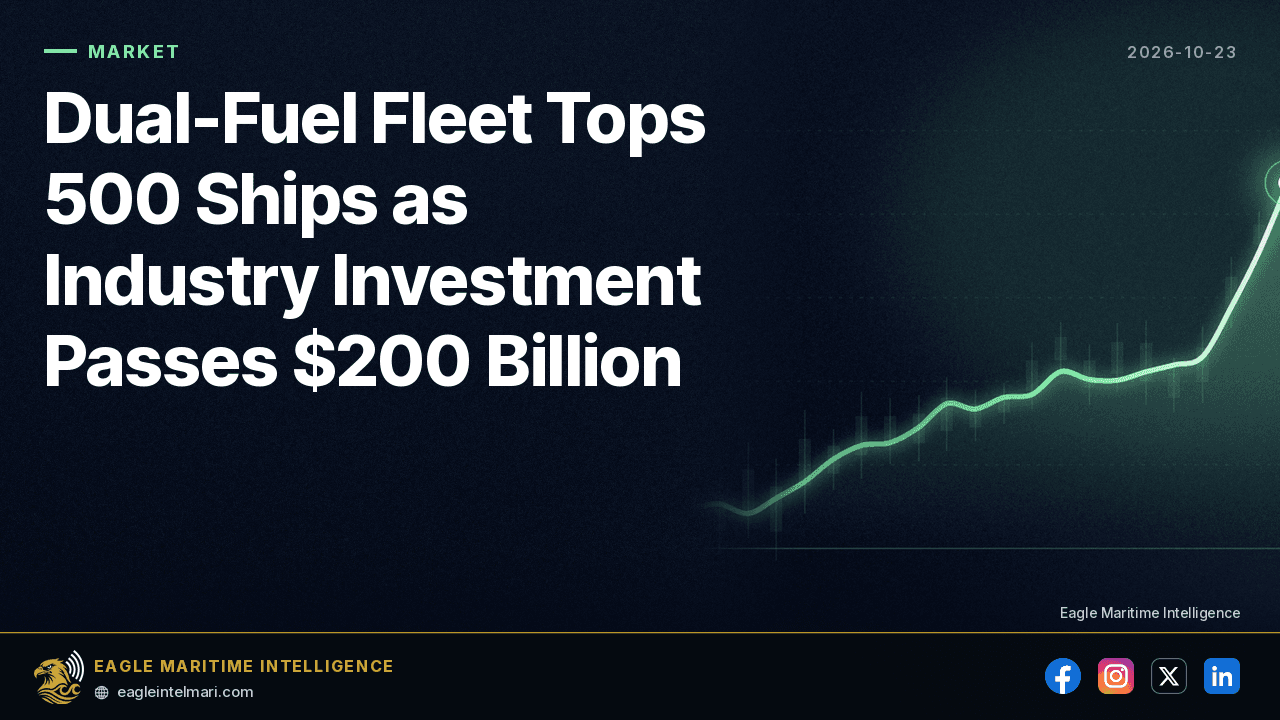
Dual-Fuel Fleet Tops 500 Ships — Oct 23
Milestone underscores accelerating capital deployment into alternative fuels while charterers face new compliance and availability questions.
Eagle IntelligenceDrafted by the Eagle desk system, not individually reviewedRecorded urgency at publication: High. Not a live alert.
Advertisement
Advertisement
This evening's brief is a different story from this morning's flagship: Greece Affirms Iran Sanctions Implementation Amid Hormuz Tanker Attacks — 23 October 2026.
The Five Minutes That Matter
The global dual-fuel fleet crossed 500 ships in service this week, with cumulative investment now exceeding $200 billion. Operators have ordered and taken delivery of LNG, methanol and ammonia-capable tonnage at a pace that outstrips earlier forecasts. The milestone coincides with a 13 percent expansion of the overall shipyard order book, further concentrating capacity in Chinese yards. Charterers and financiers now confront tighter availability of dual-fuel units and rising premiums for compliant fuel supply chains. Insurers are adjusting risk models for the growing cohort of vessels operating on new fuels.
Eagle Signals
#1 Dual-fuel fleet reaches 500 ships — 85/100
Active dual-fuel tonnage passed the 500-ship mark with more than $200 billion committed across LNG, methanol and ammonia platforms.
Why it matters: Scale is now sufficient to influence fuel availability, yard scheduling and second-hand values for years ahead.
Who is exposed: Owners without dual-fuel options, charterers seeking tonnage, and fuel suppliers outside established LNG corridors.
#2 Shipyard order book grows 13 percent — 78/100
Global order book expanded 13 percent year-on-year, with China securing the largest share of new contracts.
Why it matters: Yard slots through 2028 are tightening, raising newbuilding prices and extending delivery times for non-Chinese owners.
Who is exposed: European and Japanese owners competing for remaining capacity; financiers assessing yard concentration risk.
#3 Kuehne+Nagel sea freight volumes recover — 62/100
Kuehne+Nagel reported a 53 percent jump in Q3 profit as sea freight volumes returned to growth.
Why it matters: Forwarder recovery signals sustained demand for container and project cargo despite elevated rates in several trades.
Who is exposed: Smaller forwarders losing share; carriers negotiating contract renewals with improved leverage.
Confidence Board
- 75% — Dual-fuel investment will remain above $40 billion annually through 2028: Order book data and stated owner commitments in Hellenic Shipping News and gCaptain reports.
- 80% — Chinese yards will hold at least 55 percent of the global order book by end-2027: 13 percent growth figure and stated market share in the same sources.
What Everyone Is Missing
The surge in dual-fuel newbuildings is creating a parallel shortage of experienced officers and engineers certified for methanol and ammonia operations, an issue not yet priced into crewing budgets.
Winners, Losers and the Exposed
- Owners with dual-fuel newbuildings on order — better positioned: Locked-in slots and fuel flexibility ahead of tightening regulation.
- Charterers reliant on conventional tonnage — under pressure: Narrowing pool of suitable vessels and rising fuel surcharges.
- Chinese shipyards — better positioned: Dominant share of expanding order book and faster delivery capability.
If I Were
- Owners and operators: Prioritise methanol and ammonia conversion studies on existing LNG-ready hulls before 2027 delivery queues lengthen further.
- Insurers and P&I clubs: Update loss-of-hire and pollution clauses for methanol and ammonia carriage; model crew-certification gaps as an emerging risk factor.
- Charterers and traders: Secure multi-year dual-fuel options now while second-hand premiums remain below replacement cost.
- Seafarers: Pursue methanol and ammonia endorsement courses before demand outstrips certified manpower.
- Ports and regulators: Accelerate bunkering infrastructure planning for methanol; flag-certification delays are already visible.
- Investors: Weight portfolios toward owners with confirmed dual-fuel deliveries and diversified fuel supply contracts.
Noise Filter
All dual-fuel investment is driven by regulatory compliance alone. Verdict: Not supported by the material reviewed Source material shows commercial ordering momentum and fuel-price arbitrage as additional drivers, not solely regulation.
The One Thing to Watch
First methanol dual-fuel VLAC conversion contract award by Maersk Tankers, expected within 30 days.
Question of the Day
Which fuel pathway will see the first sustained premium for certified officers once more than 100 vessels are trading?
The Daily Eagle Brief separates reported fact from Eagle assessment. Confidence percentages express editorial confidence based on the available sourcing, not mathematical certainty.
Advertisement
Advertisement
Sources
- hellenicshippingnews.com — Dual-fuel fleet passes 500 ships on the water as investment exceeds $200 billion — 2026-10-22
- hellenicshippingnews.com — Global shipyard order book grows 13%, strengthening China’s lead — 2026-10-22
- gcaptain.com — Dual-Fuel Ship Fleet Tops 500 as Industry Investment Passes $200 Billion — 2026-10-22